Review
. 2021 Apr 29;9(5):492.
doi: 10.3390/biomedicines9050492.

20-Hydroxyecdysone, from Plant Extracts to Clinical Use: Therapeutic Potential for the Treatment of Neuromuscular, Cardio-Metabolic and Respiratory Diseases

Affiliations
Review

20-Hydroxyecdysone, from Plant Extracts to Clinical Use: Therapeutic Potential for the Treatment of Neuromuscular, Cardio-Metabolic and Respiratory Diseases

Laurence Dinan et al. Biomedicines. .

Abstract

There is growing interest in the pharmaceutical and medical applications of 20-hydroxyecdysone (20E), a polyhydroxylated steroid which naturally occurs in low but very significant amounts in invertebrates, where it has hormonal roles, and in certain plant species, where it is believed to contribute to the deterrence of invertebrate predators. Studies in vivo and in vitro have revealed beneficial effects in mammals: anabolic, hypolipidemic, anti-diabetic, anti-inflammatory, hepatoprotective, etc. The possible mode of action in mammals has been determined recently, with the main mechanism involving the activation of the Mas1 receptor, a key component of the renin-angiotensin system, which would explain many of the pleiotropic effects observed in the different animal models. Processes have been developed to produce large amounts of pharmaceutical grade 20E, and regulatory preclinical studies have assessed its lack of toxicity. The effects of 20E have been evaluated in early stage clinical trials in healthy volunteers and in patients for the treatment of neuromuscular, cardio-metabolic or respiratory diseases. The prospects and limitations of developing 20E as a drug are discussed, including the requirement for a better evaluation of its safety and pharmacological profile and for developing a production process compliant with pharmaceutical standards.

Keywords: COVID-19; Duchenne muscular dystrophy; Mas1; anabolic; cardiometabolic diseases; diabetes; ecdysteroid; ecdysterone; osteoporosis; respiratory diseases; sarcopenia; β-ecdysone.


Conflict of interest statement

The authors declare no conflict of interest.

Figures
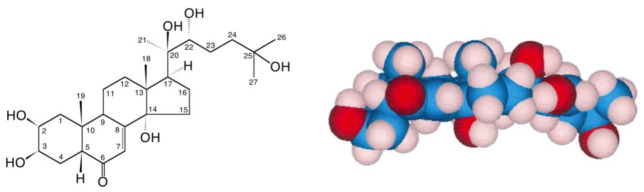
Figure 1
Figure 1
20-hydroxyecdysone (20E; β-ecdysone; crustecdysone; ecdysterone; BIO101; CAS 5289-74-7; IUPAC 2β,3β,14α,20R,22R,25-hexahydroxy-5β-cholest-7-en-6-one).
Figure 2
Figure 2
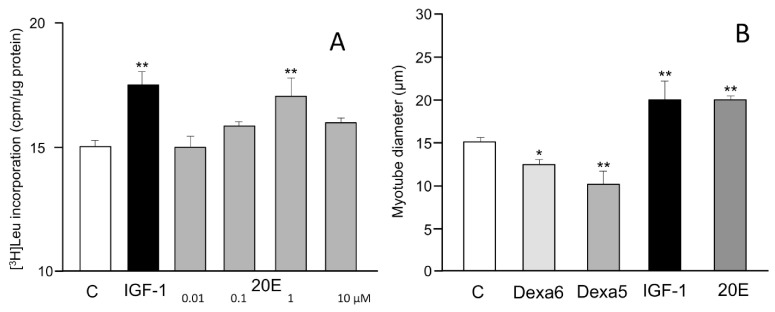
(A) The effects of 20E (0.01–10 μM) on protein synthesis in C2C12 cells, showing the anabolic effect of 20E on optimal value for 1 µM 20E. C2C12 cells were grown on 24-well plates at a density of 30,000 cells/well in 0.5 mL of growth medium (Dulbecco’s Modified Eagle Medium (DMEM) 4.5 g/L glucose supplemented with 10% fetal bovine serum). Twenty-four hours after plating, the differentiation induction into multinucleated myotubes was carried out, and after 5 days, cells were pre-incubated in Krebs medium 1 h at 37 °C before being incubated in DMEM media without serum for 2.5 h in the presence of [3H]-Leucine (5 µCi/mL) and DMSO (control condition) or IGF-1 (100 ng/mL) or 20E (0.01–0.1–1–10 µM). At the end of incubation, supernatants were discarded and cells were lysed in 0.1 N NaOH for 30 min. The cell soluble fraction-associated radioactivity was then counted and protein was quantified using the Lowry method (after [103]). (B) Effects of dexamethasone (Dexa 6 = 10−6 M, Dexa 5 = 10−5 M), IGF-1 (10 ng/mL), and 20E (10−6 M) on the diameter of C2C12 myotubes. Four- to six-day-old myotubes were incubated for 48 h with test chemicals, and were fixed and photographed by glutaraldehyde-induced autofluorescence. *: p = < 0.05; **: p = 0.01. (redrawn and modified from [54]).
Figure 3
Figure 3
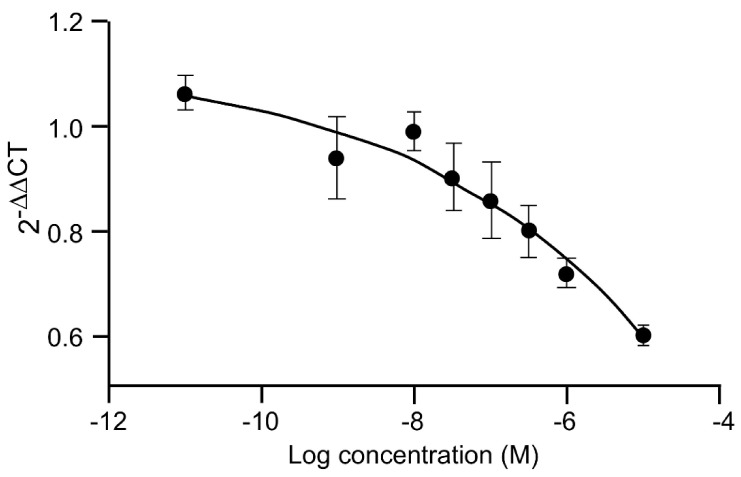
Dose-dependent inhibition of myostatin gene expression in C2C12 cells by 20E. C2C12 mouse myoblasts were differentiated for 6 days into myotubes. They were then treated for 6 h with concentrations of 20E ranging from 0.001 to 10 μM. Myostatin gene expression was detected by qRT-PCR. Results are shown as means ± standard error of the mean (SEM) ([103]).
Figure 4
Figure 4
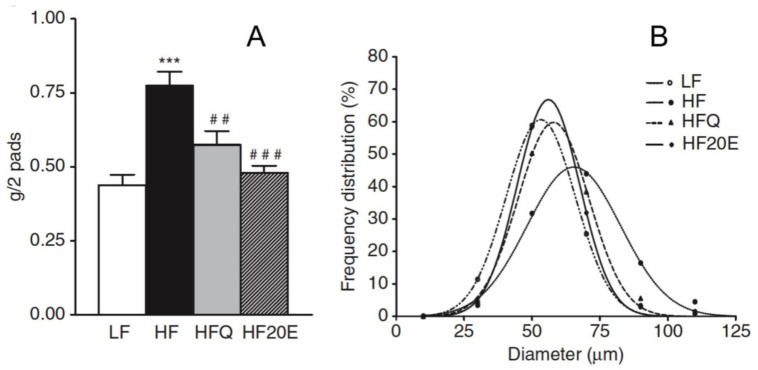
Effect of 20E on mice fed a high-fat diet (HF), when compared to mice fed a low-fat diet (LF). The animals received either pure 20E (50 mg/kg/day) or the same amount of 20E as a quinoa extract (Q). Panel (A) shows the impact on the mass of epididymal adipose tissue (*** p < 0.01 when compared to LF; ## p < 0.01 and ### p < 0.001 when compared to HF) and panel (B) shows the effect on adipocyte diameter (reproduced, with permission, from [59]).
Figure 5
Figure 5
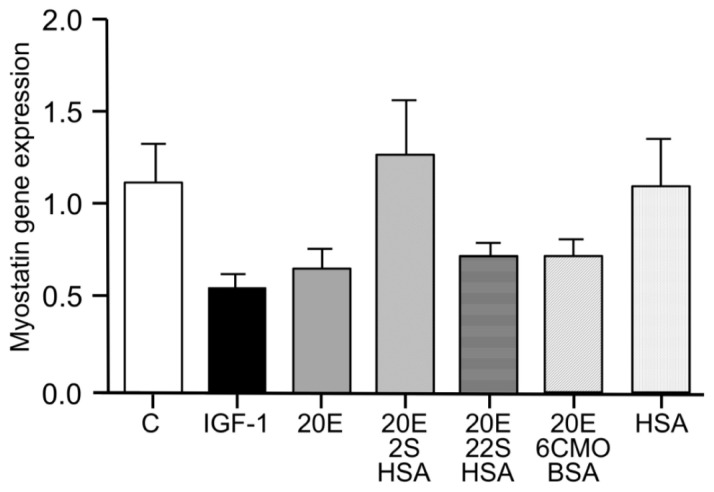
20E reduction of myostatin gene expression in C2C12 cells (differentiated for 6 days into myotubules) is mediated by binding to receptor sites on the external surface of the cells. The histogram compares the activities of IGF-1 (100 nM) and 20E (10 μM) with those of conjugates of 20E covalently bound to protein (HSA or BSA) through different C-atoms (C-2 and C-22-hemisuccinates or C-6 [6-carboxymethoxime]), all at nominal 10 μM hapten concentration. BSA bovine serum albumin; HSA: human serum albumin; error bars = standard error of the mean [103,114].
Figure 6
Figure 6
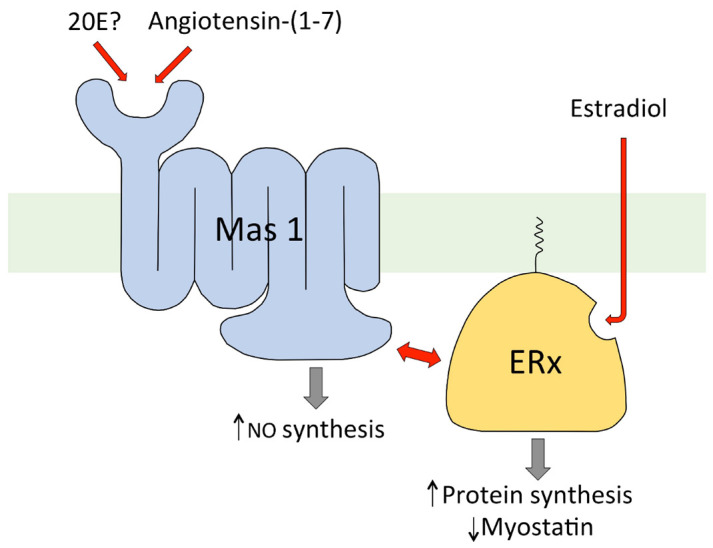
Diagrammatic representation of the proposed mode of action of 20E in the regulation of protein synthesis in C2C12 muscle cells in vitro ([113]).
Figure 7
Figure 7
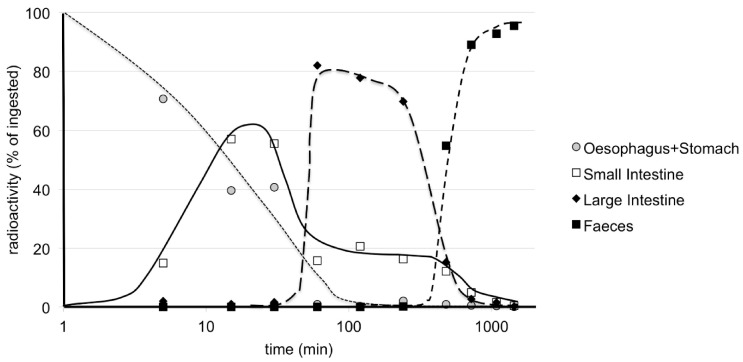
Time-course of the distribution of radioactivity in the stomach/intestine/feces in mice after the oral application of [1α,2α-3H2]20E. Note the logarithmic scale for abscissa. Each value is a mean of 2 animals. Note the plateau of small intestine content that is best explained by an entero-hepatic cycle and consistent with the prolonged concentration of radioactivity in bile as observed by Wu et al. [124] (reproduced, with permission, from [127]).
Figure 8
Figure 8
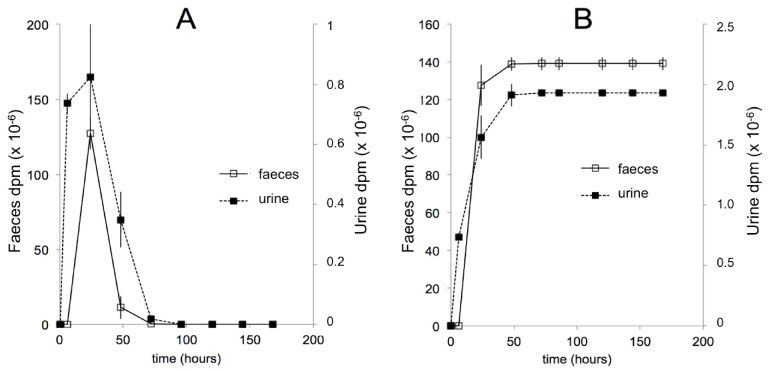
Comparison of the temporal (A) and cumulative (B) urinary and fecal elimination of radioactivity after the oral application of [5,7,9-3H]20E to 6–7 week-old male Wistar rats. After oral application of [3H]20E, elimination of radioactively labelled 20E and its metabolites is completed within 48 h. The amount of radioactivity recovered from the feces is by far the major route of excretion, since the amount in the urine corresponds to only 1.40% of the total radioactivity recovered. (Reproduced, with permission, from [127]).
Figure 9
Figure 9
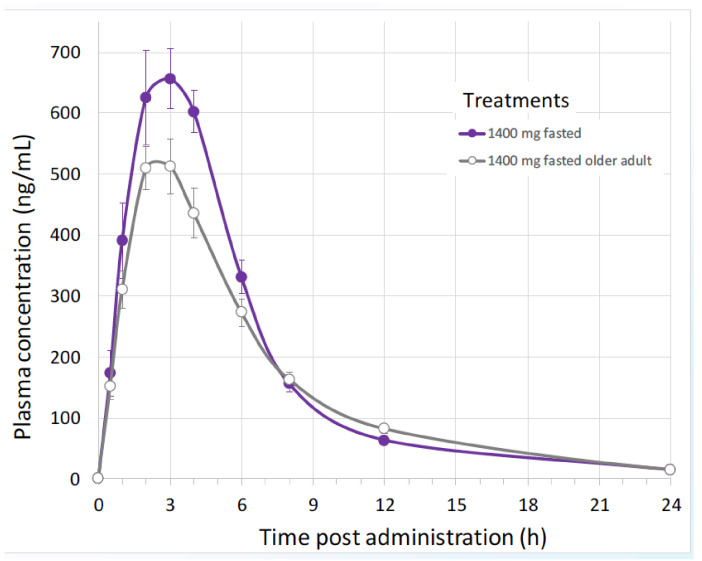
Pharmacokinetics of 20E in young and elderly humans given a single dose of 1400 mg. 20E was quantified by HPLC-MS [136,137].
Figure 10
Figure 10
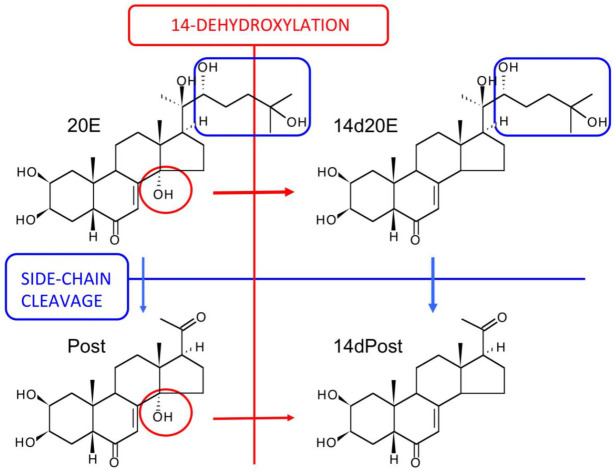
The principal routes of metabolism of 20E in rodents and humans (modified from Kumpun et al., 2011). The circles and arrows in red highlight the changes associated with 14-dehydroxylation, while the boxes and arrows in blue highlight the changes associated with side-chain cleavage.
Figure 11
Figure 11
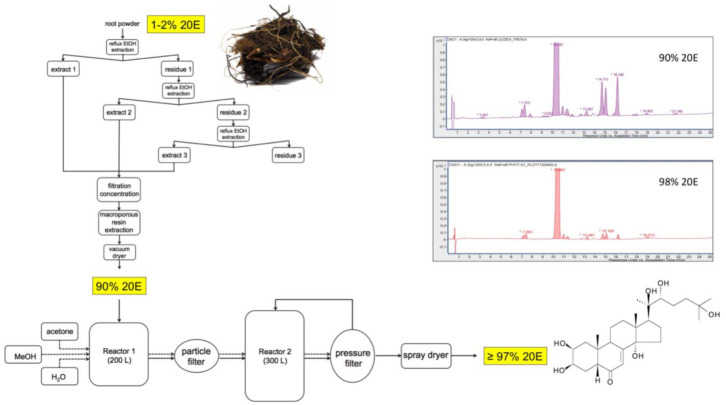
A representative flow-diagram for the large-scale extraction and purification of 20E from roots of Cyanotis sp.
Figure 12
Figure 12
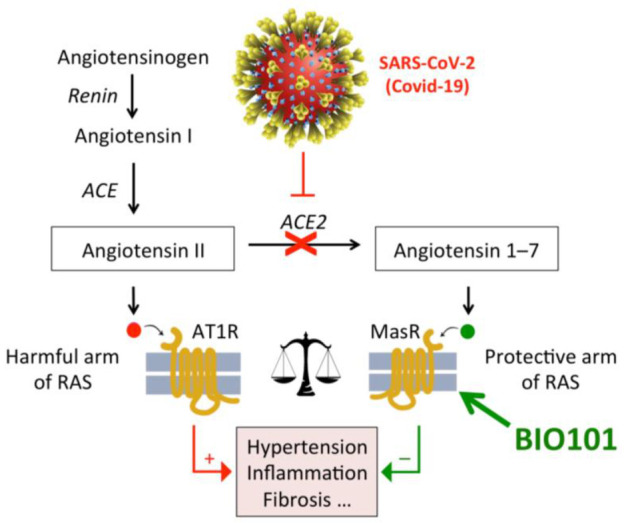
SARS-CoV-2 infection will result in a strong impairment of the activity of angiotensin converting enzyme 2 (ACE2), hence a lack of angiotensin-(1-7) production and a disequilibrium between the harmful and protective arms of the renin–angiotensin system (RAS). Treatment with BIO101 (20E) is expected to activate Mas receptor and the protective arm of RAS, thus preventing inflammation and lung damage.

References

    1. Koolman J., editor. Ecdysone: From Chemistry of Mode of Action. Thieme Verlag; Stuttgart, Germany: 1989. 482p
    1. Dinan L., Savchenko T., Whiting P. On the distribution of phytoecdysteroids in plants. Cell Mol. Life Sci. 2001;58:1121–1132. doi: 10.1007/PL00000926. - DOI - PMC - PubMed
    1. Dinan L., Harmatha J., Volodin V., Lafont R. Phytoecdysteroids: Diversity, biosynthesis and distribution. In: Smagghe G., editor. Ecdysone: Structures and Functions. Springer Science & Business Media B.V.; Berlin, Germany: 2009. pp. 3–45.
    1. Lafont R., Harmatha J., Marion-Poll F., Dinan L., Wilson I.D. The Ecdysone Handbook. [(accessed on 1 April 2021)];2002 continuously updated. Available online: http://ecdybase.org/
    1. Dinan L., Mamadalieva N., Lafont R. Dietary Phytoecdysteroids. In: Xiao J., Sarker S.D., Asakawa Y., editors. Handbook of Dietary Phytochemicals. Springer Nature Singapore Pte Ltd.; Singapore: 2020. pp. 1–54.