Review
. 2021 May;40(21):3655-3664.
doi: 10.1038/s41388-021-01811-8. Epub 2021 May 4.

Antibody-based cancer therapy

Affiliations
Review

Antibody-based cancer therapy

Rebecca S Goydel et al. Oncogene. 2021 May.

Abstract

Over the past 25 years, antibody therapeutics have emerged as clinically and commercially successful pharmaceuticals, rapidly approaching 100 Food and Drug Administration approvals with combined annual global sales exceeding $100 billion. Nearly half of the marketed antibody therapeutics are used in oncology. These antibody-based cancer therapies can be broken down into three categories based on their different mechanisms of action, i.e., (i) natural properties, (ii) engagement of cytotoxic T cells, and (iii) delivery of cytotoxic payloads. Both natural and engineered properties of the antibody molecule are founded on its highly stable and modular architecture. In this review we provide an overview and outlook of the rapidly evolving landscape of antibody-based cancer therapy.


Conflict of interest statement

Conflict of interest

There is no conflict of interest to disclose.

Figures
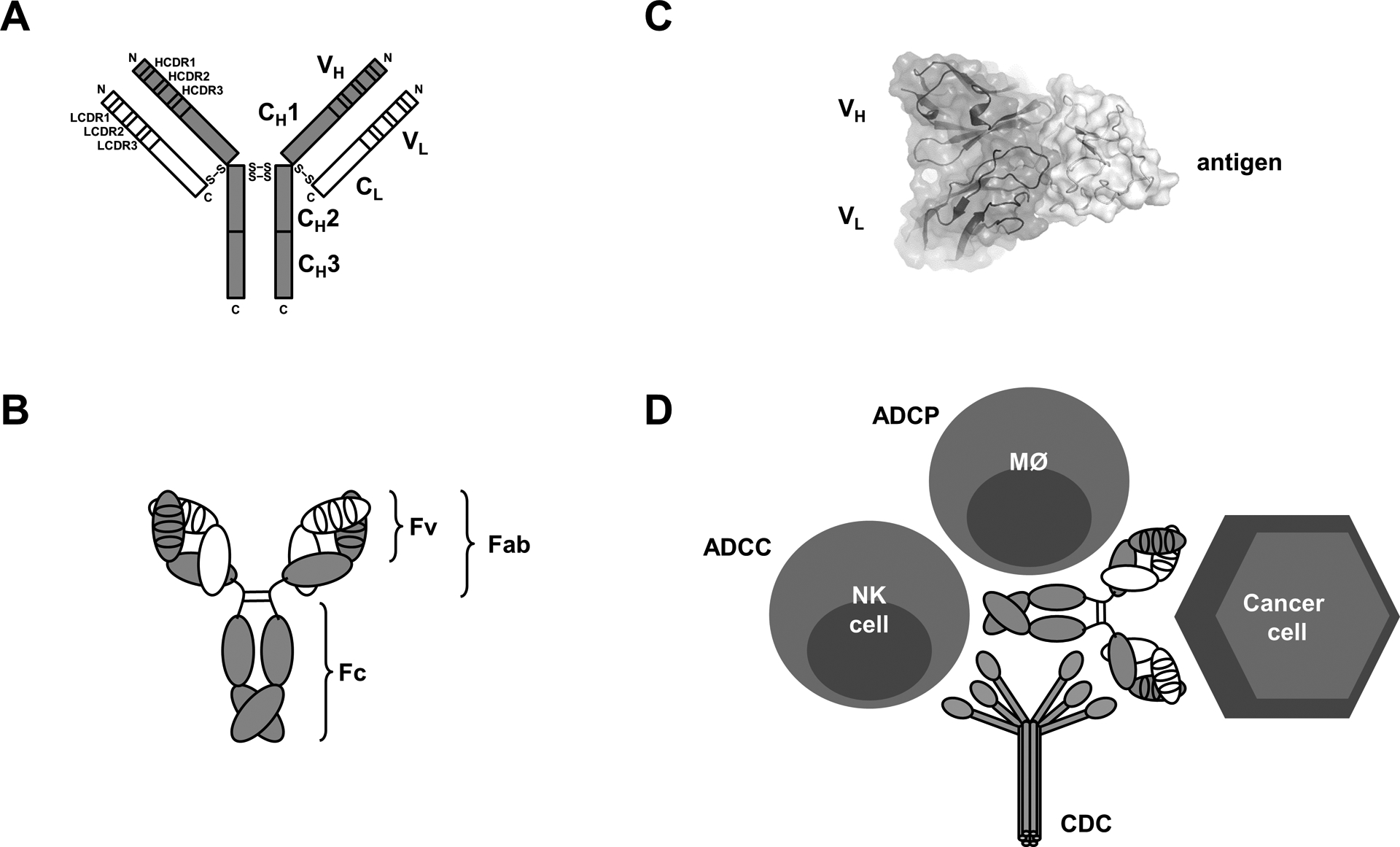
Figure 1.
Figure 1.. Structural and functional modularity of the antibody molecule.
Two-dimensional (A) and three-dimensional (B) depictions of the light and heavy chain assembly of the IgG1 molecule. The Y-shaped IgG1 format is composed of two Fab arms linked through the Fc stem and consists of a total of twelve Ig domains organized into two light chains (white) and two heavy chains (gray) that are connected by a total of four interchain disulfide bridges (S-S). The four N-termini and four C-termini are indicated as N and C, respectively. The N-terminal four Ig domains are known as the variable domains; VL for the light chain and VH for the heavy chain, each consisting of three CDRs depicted as smaller rectangles or ovals. Together, VL and VH and their six CDRs form the Fv that harbors the unique paratope that binds a distinct antigen with high affinity and specificity. (C) The antibody-antigen interaction is defined by complementary shapes and charges of paratope (on the antibody) and epitope (on the antigen), shown here in a co-crystal structure determined by X-ray crystallography at 1.4-Å resolution (PDB: 6OSV) [54]. The interaction of paratope (left) and epitope (right) typically involves a large buried surface area, which was determined to be 720-Å2 in this example. (D) The Fc stem is formed by the two C-terminal constant domains of the heavy chain (CH2 and CH3) and mediates the prolonged circulatory half-life of the IgG1 molecule through interaction with FcRn and its various effector functions (CDC, ADCC, and ADCP) through interactions with complement component C1q as well as NK cells, macrophages, and other FcγR-expressing myeloid and lymphoid cells. In cancer therapy, the natural effector functions are triggered upon arrayed engagement of the mAb with cancer cell surface antigens.
Figure 2.
Figure 2.. Structural and functional diversity of FDA-approved T-cell engaging antibodies.
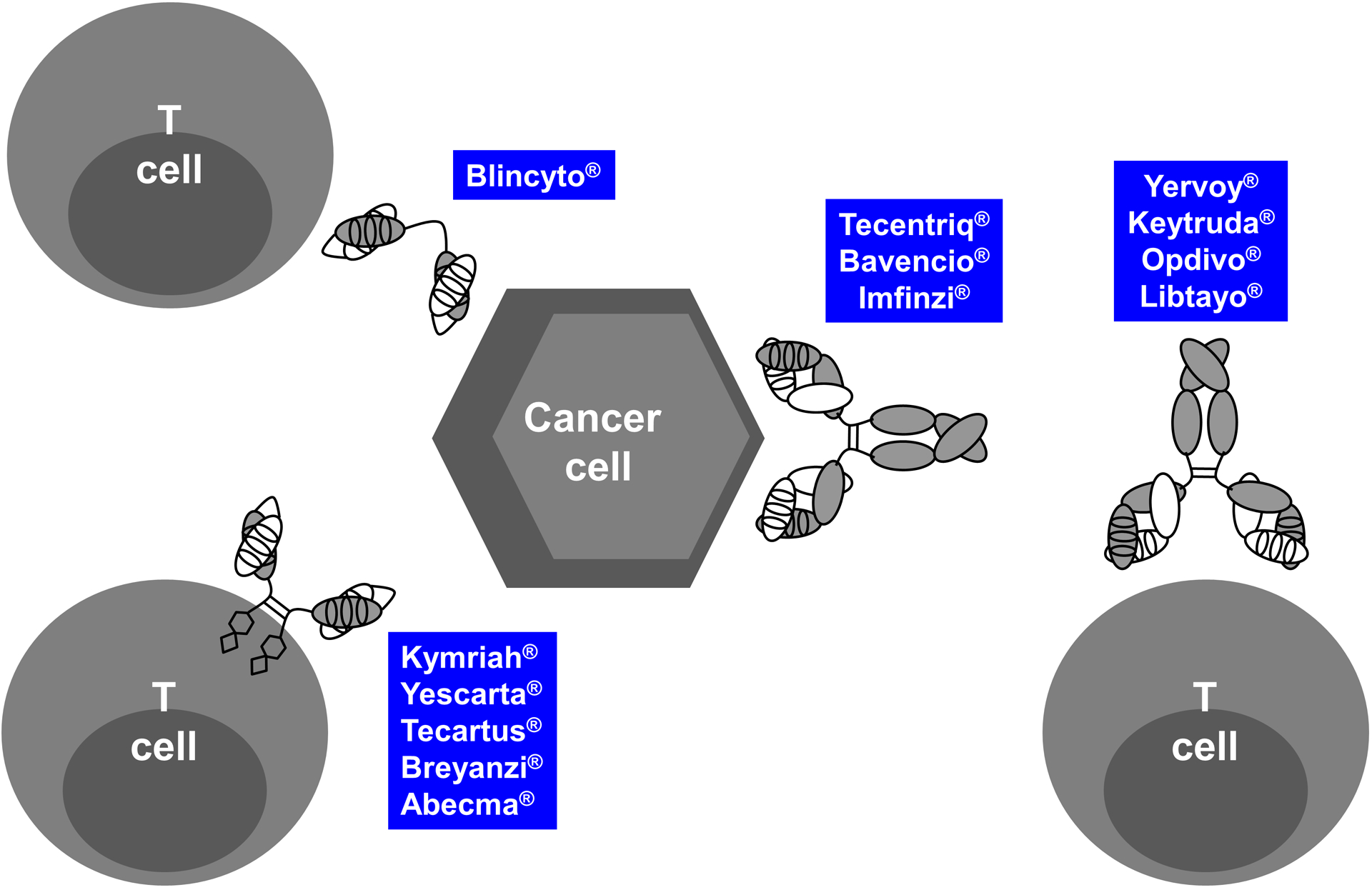
T-cell engaging antibodies, which fall into the category of IO drugs, can have numerous different structures and functions. Shown here are the 13 FDA-approved and marketed antibody-based cancer therapies that directly interface with T cells in one of four principal ways, including as T-biAbs (upper left), CAR-Ts (lower left), or ICIs that target inhibitory receptors on T cells (right) or their ligands on cancer cells (middle) and APCs in the TME (not shown).
Figure 3.
Figure 3.. Composition of FDA-approved ADCs.
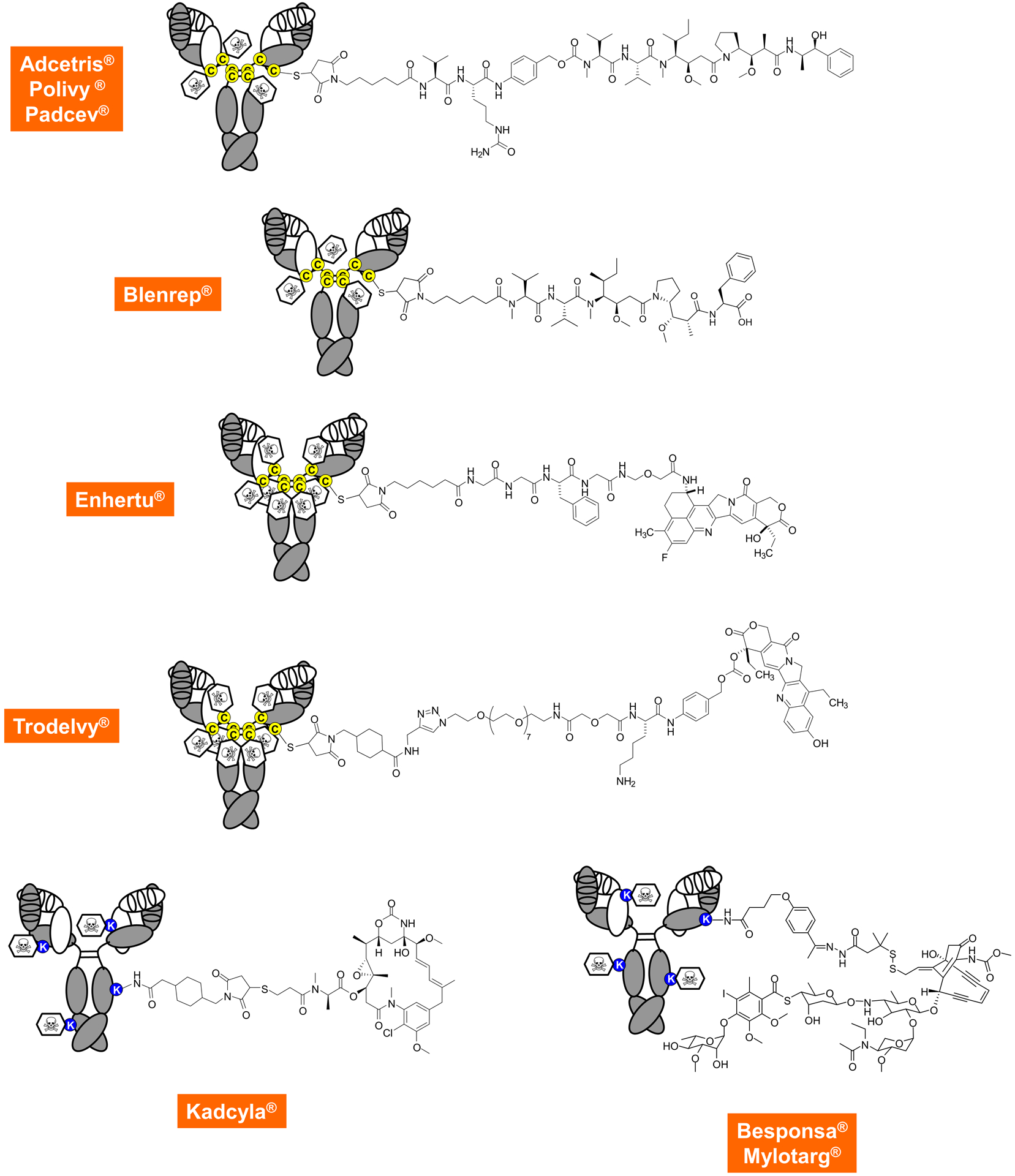
The top row shows first-generation heterogeneous ADCs targeting CD30, CD79B, and NECTIN4, respectively, in which the drug is stochastically linked to reduced cysteine residues in the hinge region using a thiosuccinimide, a caproyl spacer, an enzymatically cleavable unit (a valine-citrulline dipeptide fused to a para-aminobenzylcarbamate), followed by the cytotoxic payload which is monomethylauristatin E (MMAE), a subnanomolar inhibitor of tubulin polymerization. The mean DAR is approximately 4, ranging from 0 to 8. The second row shows another auristatin-based and stochastically assembled ADC that targets BCMA and links monomethylauristatin F (MMAF) through a non-cleavable linker to hinge cysteine residues. Recently, the first homogeneous ADCs shown in the third and fourth row received FDA approval. They target HER2 and TROP2, respectively, and use the same thiosuccinimide connector to hinge cysteine residues but rather than doing this stochastically, all eight cysteines are involved. This requires the use of more hydrophilic linkers but, due to their high DAR, also affords slightly less cytotoxic payloads, which are two different camptothecin derivatives that inhibit topoisomerase I. The bottom row shows the three first-generation ADCs that target HER2, CD22, and CD33, respectively, and use surface lysine residues for drug attachment. With 80–90 of these in the average antibody molecule, the location and distribution is even more stochastic. Cytotoxic payloads include tubulin polymerization inhibitor maytansine linked through a non-cleavable linker (left) and the DNA damaging calicheamicin linked through a hydrazone-disulfide linker that gets cleaved in acidic or reducing conditions (right).

References

    1. https://www.pharmacompass.com/radio-compass-blog/top-drugs-and-pharmaceu....
    1. Kaplon H, Reichert JM. Antibodies to watch in 2021. MAbs 2021; 13: 1860476. - PMC - PubMed
    1. Wang LX, Tong X, Li C, Giddens JP, Li T. Glycoengineering of antibodies for modulating functions. Annu Rev Biochem 2019; 88: 433–459. - PMC - PubMed
    1. Rajewsky K. Clonal selection and learning in the antibody system. Nature 1996; 381: 751–758. - PubMed
    1. Briney B, Inderbitzin A, Joyce C, Burton DR. Commonality despite exceptional diversity in the baseline human antibody repertoire. Nature 2019; 566: 393–397. - PMC - PubMed

Publication types

MeSH terms

Substances