


Treatment of infants with ureteropelvic junction obstruction: findings from the PURSUIT network
- PMID: 33948809
- PMCID: PMC8282718
- DOI: 10.1007/s11255-021-02866-y
Treatment of infants with ureteropelvic junction obstruction: findings from the PURSUIT network
Abstract
Purpose: Studies based on administrative databases show that infant pyeloplasty is associated with minority race/ethnicity but lack clinical data that may influence treatment. Our objective was to identify clinical and demographic factors associated with pyeloplasty in infants from three large tertiary centers.
Methods: We reviewed infants with unilateral Society for Fetal Urology (SFU) grade 3-4 hydronephrosis seen at three tertiary centers from 2/1/2018 to 9/30/2019. Patients were excluded if > 6 months old or treated surgically prior to the initial visit. Outcomes were: pyeloplasty < age 1 year and SFU grade on most recent ultrasound (US) within the first year. Covariables included: age at the initial visit, race/ethnicity, treating site, insurance type, febrile UTI, and initial imaging findings. Univariable and multivariable analyses were performed using log-rank tests and Cox proportional hazards models, respectively.
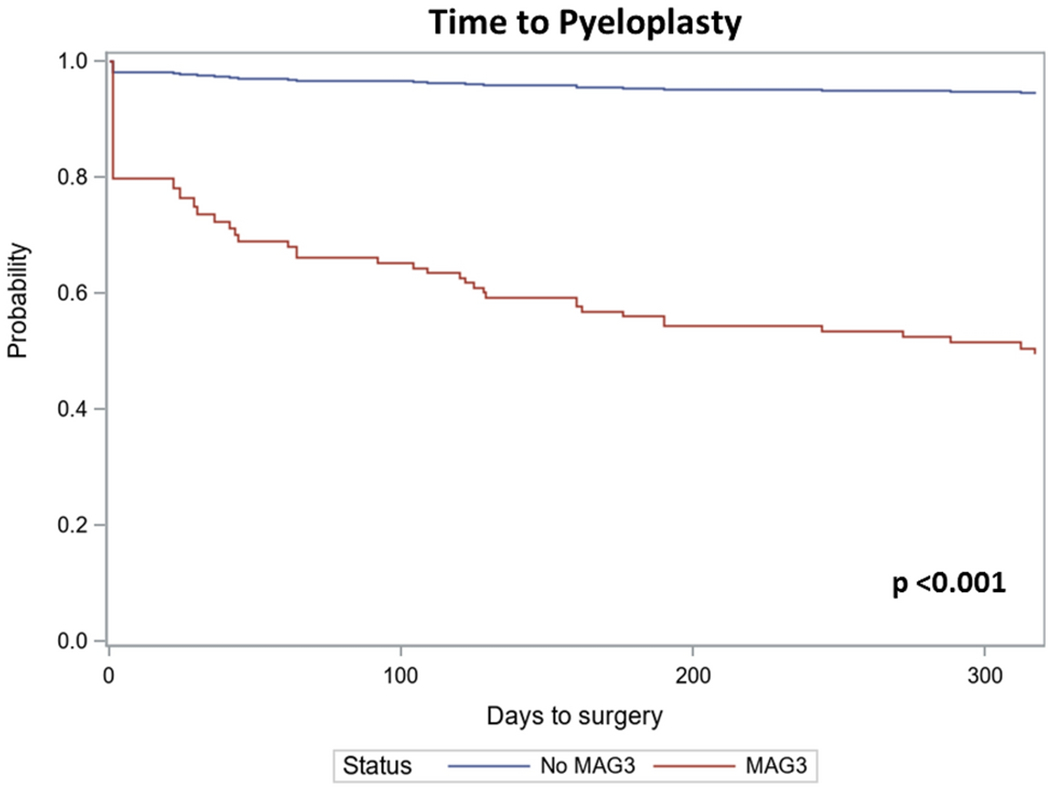
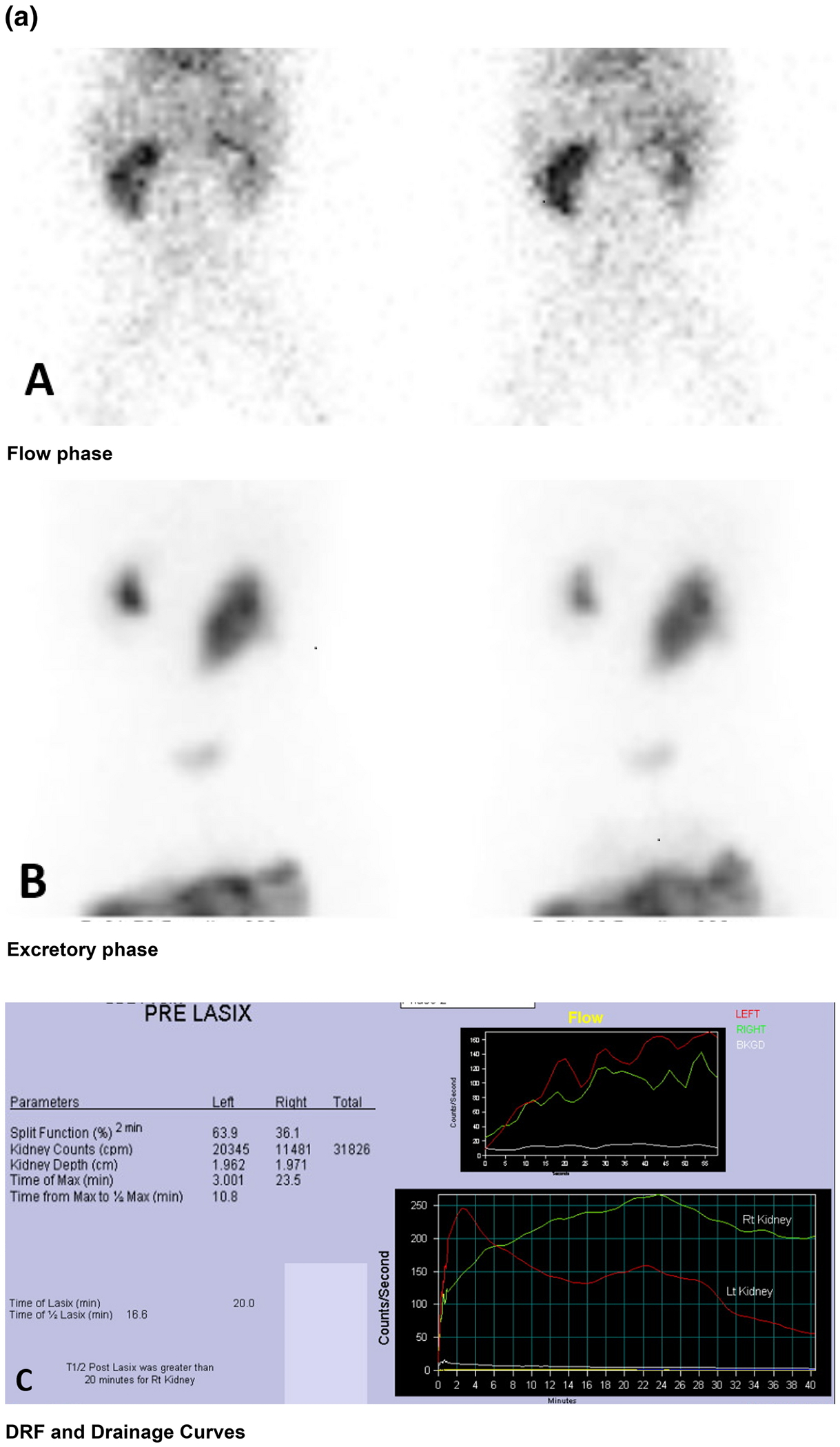
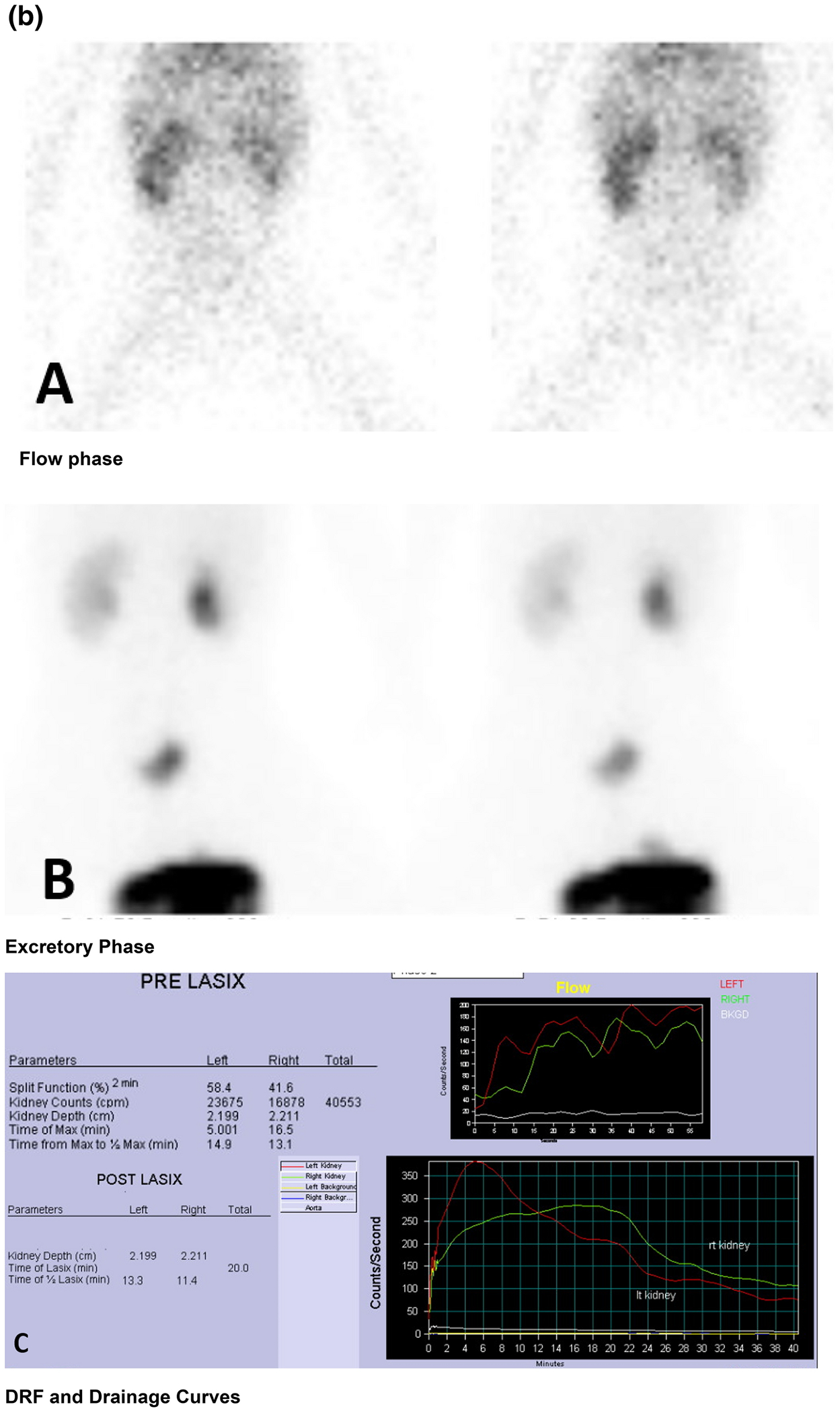
Results: 197 patients met study criteria; 19.3% underwent pyeloplasty. Pyeloplasty was associated with: treating site (p = 0.03), SFU 4 on initial US (p = 0.001), MAG-3 (p < 0.001), and T½ > 20 min (p < 0.001) in patients undergoing a MAG-3 (n = 107). MAG-3 (p < 0.001) and location (p = 0.08) were associated with earlier time to pyeloplasty on multivariable Cox analysis. In infants with follow-up US (n = 115), initial SFU grade, MAG-3 evaluation or findings, and pyeloplasty were not associated with improvement of hydronephrosis.
Conclusions: We found that infant pyeloplasty rates vary between sites. Prolonged T½ was associated with surgery despite prior studies suggesting this is a poor predictor of worsening dilation or function. These findings suggest the need to standardize evaluation and indications for intervention in infants with suspected UPJ obstruction.
Keywords: Electronic health record; Practice patterns; Prenatal hydronephrosis; Ureteropelvic junction obstruction.
© 2021. The Author(s), under exclusive licence to Springer Nature B.V.
Conflict of interest statement
Figures
References
-
- Mesrobian HG, Mirza SP. Hydronephrosis: a view from the inside. Pediatr Clin North Am 2012. August; 59(4): 839–51. - PubMed
-
- Siemens DR, Prouse KA, MacNeily AE, Sauerbrei EE. Antenatal hydronephrosis: threshholds of renal pelvic diameter to predict insignificant postnatal pelvicaliectasis. Tech Urol 1998; 4(4): 198–201. - PubMed
-
- Fefer S, Ellsworth P. Prenatal hydronephrosis. Pediatr Clin North Am 2006; 53:429–47. - PubMed
-
- Riccabona M, Avni FE, Blickman JG, Dcher JN, Darge K, Lobo ML, Willi U. Imaging recommendations in paediatric uroradiology. Minutes of the ESPR uroradiology task force session on childhood obstructive uropathy, high-grade fetal hydronephrosis, childhood haematuria, and urolithiasis in childhood. ESPR Annual Congress, Edinburgh, UK, June 2008.Pediatr Radiol; 2009. August; 39(8): 891–8. - PubMed
Publication types
MeSH terms
Grants and funding
LinkOut - more resources
Full Text Sources
Research Materials
Miscellaneous
