


Diagnostic accuracy of the 4AT for delirium detection in older adults: systematic review and meta-analysis
- PMID: 33951145
- PMCID: PMC8099016
- DOI: 10.1093/ageing/afaa224
Diagnostic accuracy of the 4AT for delirium detection in older adults: systematic review and meta-analysis
Abstract
Objective: Detection of delirium in hospitalised older adults is recommended in national and international guidelines. The 4 'A's Test (4AT) is a short (<2 minutes) instrument for delirium detection that is used internationally as a standard tool in clinical practice. We performed a systematic review and meta-analysis of diagnostic test accuracy of the 4AT for delirium detection.
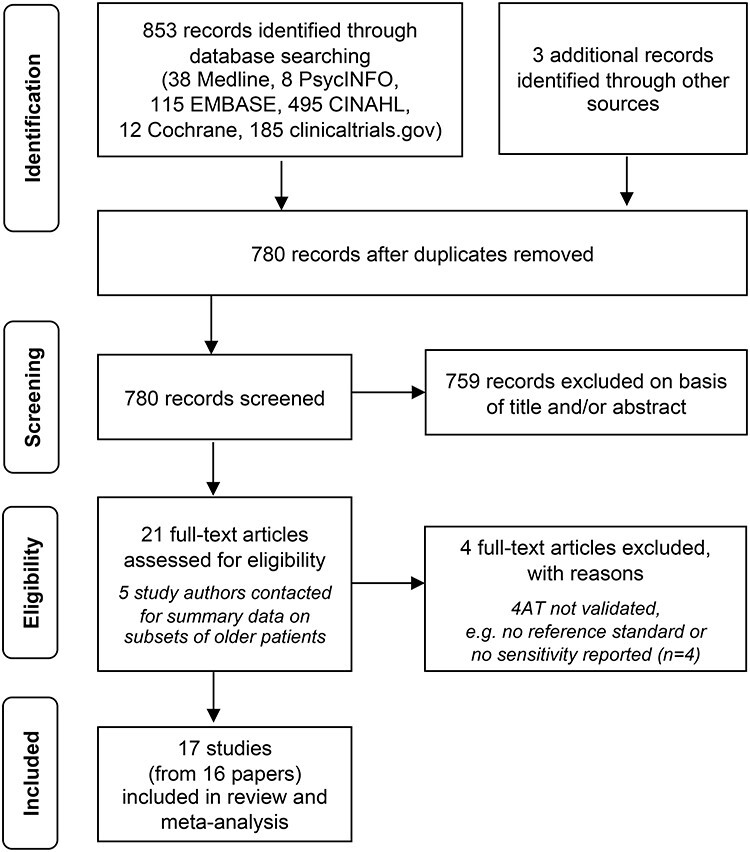
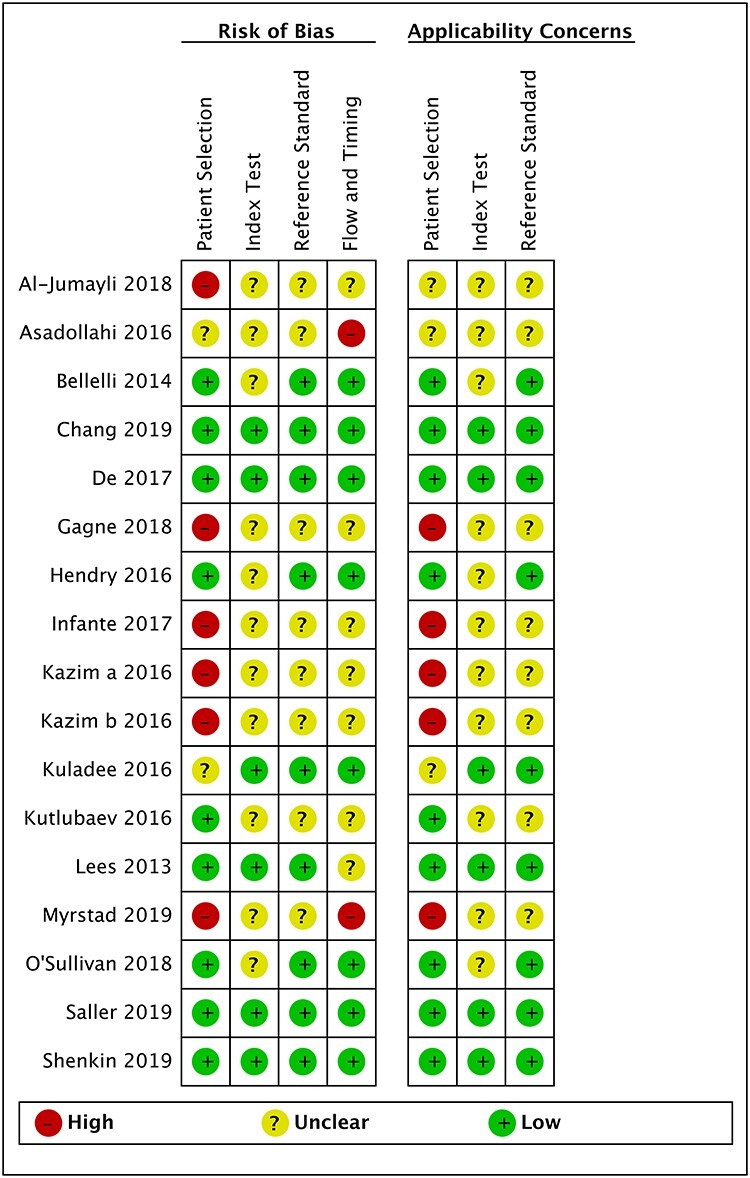
Methods: We searched MEDLINE, EMBASE, PsycINFO, CINAHL, clinicaltrials.gov and the Cochrane Central Register of Controlled Trials, from 2011 (year of 4AT release on the website www.the4AT.com) until 21 December 2019. Inclusion criteria were: older adults (≥65 years); diagnostic accuracy study of the 4AT index test when compared to delirium reference standard (standard diagnostic criteria or validated tool). Methodological quality was assessed using the Quality Assessment of Diagnostic Accuracy Studies-2 tool. Pooled estimates of sensitivity and specificity were generated from a bivariate random effects model.
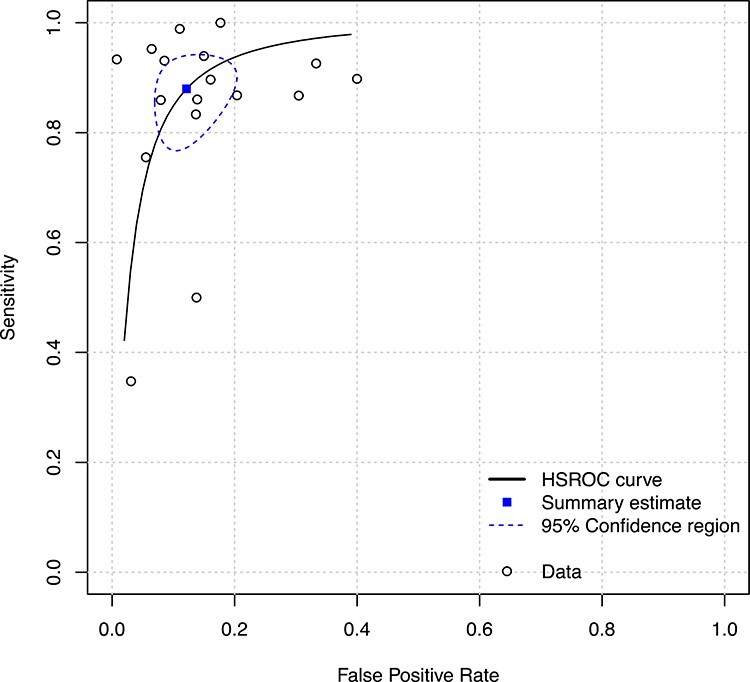
Results: Seventeen studies (3,702 observations) were included. Settings were acute medicine, surgery, a care home and the emergency department. Three studies assessed performance of the 4AT in stroke. The overall prevalence of delirium was 24.2% (95% CI 17.8-32.1%; range 10.5-61.9%). The pooled sensitivity was 0.88 (95% CI 0.80-0.93) and the pooled specificity was 0.88 (95% CI 0.82-0.92). Excluding the stroke studies, the pooled sensitivity was 0.86 (95% CI 0.77-0.92) and the pooled specificity was 0.89 (95% CI 0.83-0.93). The methodological quality of studies varied but was moderate to good overall.
Conclusions: The 4AT shows good diagnostic test accuracy for delirium in the 17 available studies. These findings support its use in routine clinical practice in delirium detection.
Prospero registration number: CRD42019133702.
Keywords: 4AT; delirium; dementia; older patients; screening tool; systematic review.
© The Author(s) 2020. Published by Oxford University Press on behalf of the British Geriatrics Society.
Figures
References
-
- Rieck KM, Pagali S, Miller DM. Delirium in hospitalized older adults. Hosp Pract (1995) 2020; 48: 3–16. - PubMed
-
- Koirala B, Hansen BR, Hosie Aet al. Delirium point prevalence studies in inpatient settings: a systematic review and meta-analysis. J Clin Nurs 2020; 9: 2083–92. - PubMed
-
- Scottish Intercollegiate Guidelins Network (SIGN) . Risk reduction and management of delirium. Edinburgh: 2019. https://www.sign.ac.uk/sign-157-delirium. (accessed 10 June 2020). - PMC - PubMed
