


A new aspiration device equipped with a hydro-separator for acute ischemic stroke due to challenging soft and stiff clots
- PMID: 33951972
- PMCID: PMC8905075
- DOI: 10.1177/15910199211015060
A new aspiration device equipped with a hydro-separator for acute ischemic stroke due to challenging soft and stiff clots
Abstract
Objective: Fragile soft clots and stiff clots remain challenging in the treatment of acute ischemic stroke. This study aims to investigate the impact of clot stiffness on the efficacy of thrombectomy devices and a new aspiration catheter with a hydro-separator.
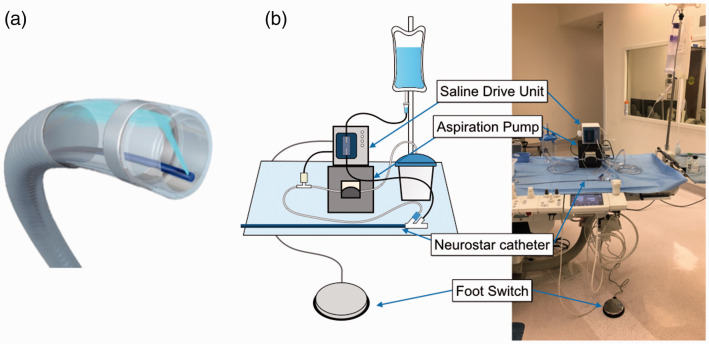
Methods: The Neurostar aspiration catheter has a novel hydro-separator technology that macerates clots by a stream of saline inside the catheter. The Neurostar catheter and two commercially available devices, the SOFIA aspiration catheter and Solitaire stent retriever, were tested in this study. We evaluated the efficacy of each device on clots with various stiffness in a simple in vitro model. We also assessed single-pass recanalization performance in challenging situations with large erythrocyte-rich clots and fibrin-rich clots in a realistic vascular model.
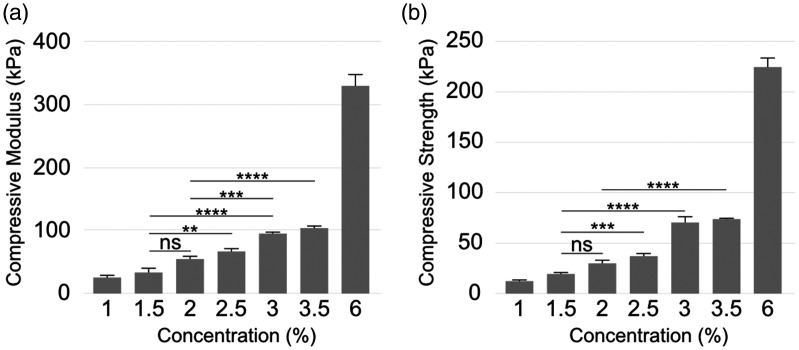
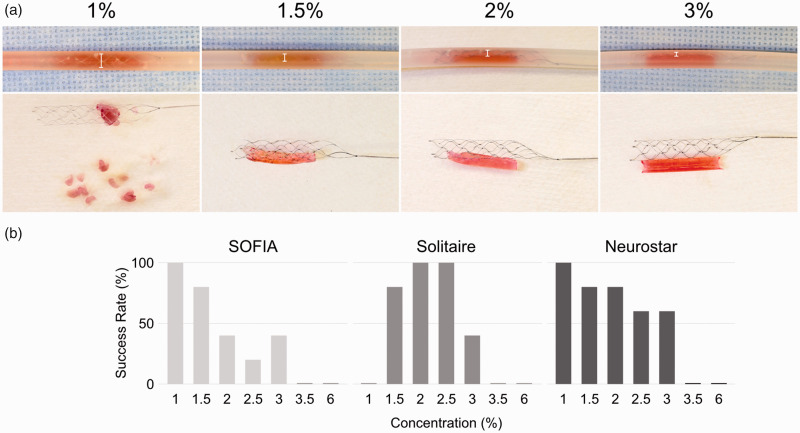
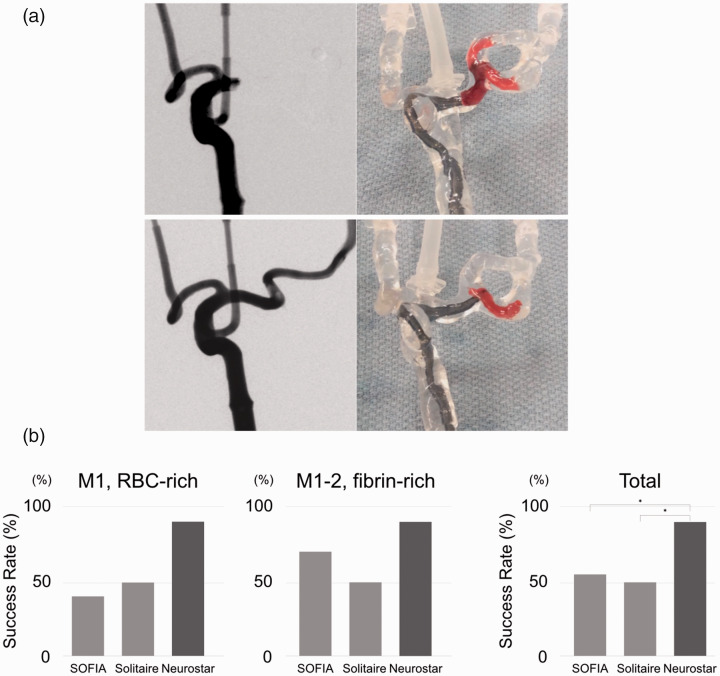
Results: We observed an inverse association between the clot stiffness and recanalization rates. The aspiration catheter, SOFIA ingested soft clots but not moderately stiff clots. When removing soft clots with the stent retriever, fragmentation was observed, although relatively stiff clots were well-integrated and removed. The Neurostar ingested soft clots similar to the aspiration catheter, and also aspirated stiff clots by continuous suction with hydro-separator. In the experiments with challenging clots, the Neurostar led to significantly higher recanalization rates than the stent retriever and aspiration catheter.
Conclusions: The stiffness of the clots affected the efficacy of endovascular thrombectomy based on the type of device. The Neurostar catheter with hydro-separator resulted in better success rates than a commercially available aspiration catheter and stent retriever in this experimental model.
Keywords: Acute ischemic stroke; aspiration; clot stiffness; endovascular thrombectomy; in vitro model.
Conflict of interest statement
Figures
References
-
- Goyal M, Menon BK, van Zwam WH, et al. Endovascular thrombectomy after large-vessel ischaemic stroke: a meta-analysis of individual patient data from five randomised trials. Lancet 2016; 387: 1723–1731. - PubMed
-
- Turk AS, Siddiqui A, Fifi JT, et al. Aspiration thrombectomy versus stent retriever thrombectomy as first-line approach for large vessel occlusion (COMPASS): a multicentre, randomised, open label, blinded outcome, non-inferiority trial. Lancet 2019; 393: 998–1008. - PubMed
-
- Nikoubashman O, Dekeyzer S, Riabikin A, et al. True first-pass effect. Stroke 2019; 50: 2140–2146. - PubMed
-
- Zaidat OO, Castonguay AC, Linfante I, et al. First pass effect: a new measure for stroke thrombectomy devices. Stroke 2018; 49: 660–666. - PubMed
MeSH terms
LinkOut - more resources
Full Text Sources
Other Literature Sources
Medical
