Review
. 2021 Jul;21(7):446-460.
doi: 10.1038/s41568-021-00353-1. Epub 2021 May 5.

Long noncoding RNAs in cancer metastasis

Affiliations
Review

Long noncoding RNAs in cancer metastasis

S John Liu et al. Nat Rev Cancer. 2021 Jul.

Abstract

Metastasis is a major contributor to cancer-associated deaths. It is characterized by a multistep process that occurs through the acquisition of molecular and phenotypic changes enabling cancer cells from a primary tumour to disseminate and colonize at distant organ sites. Over the past decade, the discovery and characterization of long noncoding RNAs (lncRNAs) have revealed the diversity of their regulatory roles, including key contributions throughout the metastatic cascade. Here, we review how lncRNAs promote metastasis by functioning in discrete pro-metastatic steps including the epithelial-mesenchymal transition, invasion and migration and organotrophic colonization, and by influencing the metastatic tumour microenvironment, often by interacting within ribonucleoprotein complexes or directly with other nucleic acid entities. We discuss well-characterized lncRNAs with in vivo phenotypes and highlight mechanistic commonalities such as convergence with the TGFβ-ZEB1/ZEB2 axis or the nuclear factor-κB pathway, in addition to lncRNAs with controversial mechanisms and the influence of methodologies on mechanistic interpretation. Furthermore, some lncRNAs can help identify tumours with increased metastatic risk and spur novel therapeutic strategies, with several lncRNAs having shown potential as novel targets for antisense oligonucleotide therapy in animal models. In addition to well-characterized examples of lncRNAs functioning in metastasis, we discuss controversies and ongoing challenges in lncRNA biology. Finally, we present areas for future study for this rapidly evolving field.


Figures
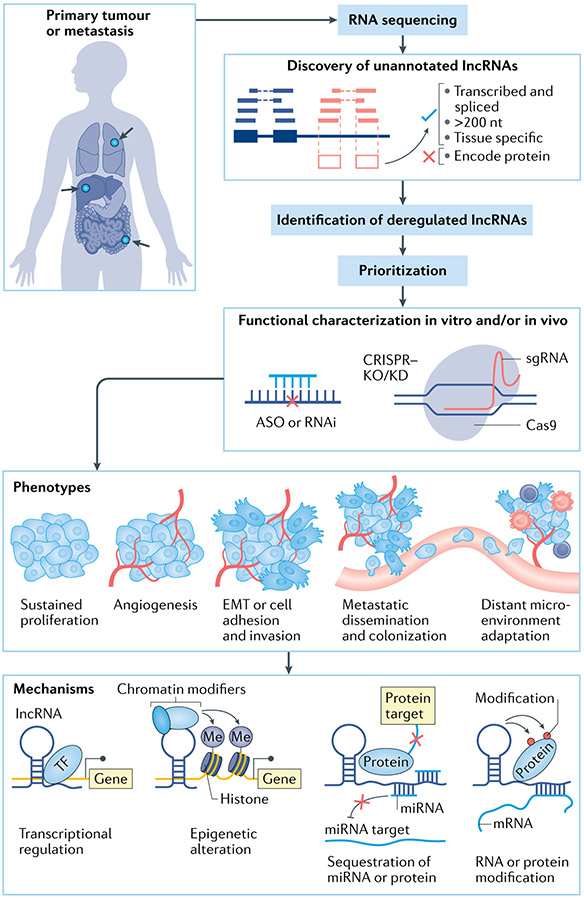
Fig. 1 ∣
Fig. 1 ∣. Long noncoding RNAs in cancer.
Starting from discovery to characterization of their functions and mechanisms. First, tumour specimens and normal tissues sampled from patients with cancer are subject to RNA sequencing. Sequencing reads are then aligned to the reference genome, which allows quantification of RNA abundance and discovery of unannotated long noncoding RNAs (lncRNAs). Comparisons of transcript abundance between tumour and normal and/or between metastasis and primary tumour allow identification of deregulated lncRNAs. Subsequent omics data integration, computational analysis and high-throughput functional screening using techniques such as CRISPRi allow prioritization of lncRNA candidates for further in-depth functional and mechanistic characterization. Perturbation and manipulation of the lncRNAs can be performed via antisense oligonucleotide (ASO), small interfering RNA (siRNA), CRISPR-based methods in vitro and in vivo to generate phenotypic changes that can be observed and evaluated. LncRNAs are known to have both oncogene and tumour suppressor roles and contribute to tumour progression and metastasis. Mechanistically, lncRNAs can regulate the expression of other genes by interacting with other molecules resulting in transcriptional regulation, epigenetic alteration, sequestration of RNA or protein and enhancer regulation. EMT, epithelial–mesenchymal transition; KO/KD, knockout/knock-down; Me, methyl; miRNA, microRNA; RNAi, RNA interference; sgRNA, single guide RNA; TF, transcription factor.
Fig. 2 ∣
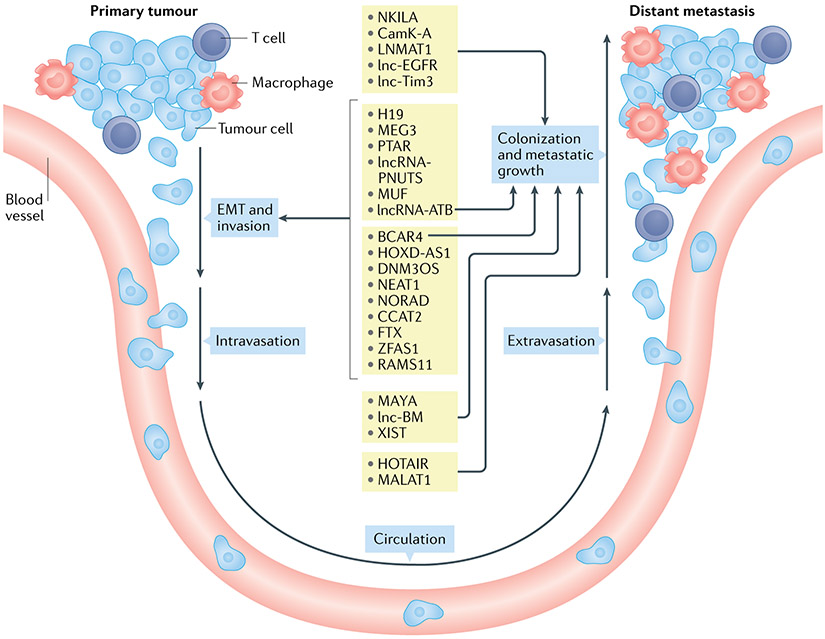
Fig. 2 ∣. Long noncoding RNAs involved in the multiple processes of the invasion–metastasis cascade.
Metastasis is a result of a series of orchestrated cellular processes (invasion–metastasis cascade). First, changes in morphology and cellular adhesion are facilitated through epithelial–mesenchymal transition (EMT). Cancer cells then invade the surrounding normal tissue (local invasion) and make way into (intravasation) and out of (extravasation) the systemic circulation to land at a distant site. There, the metastatic cells proliferate and colonize an often-foreign tissue environment. Numerous long noncoding RNAs (lncRNAs) have been reported to regulate one or more of these processes (shown in the centre of the figure with arrows indicating the involvement in the corresponding processes).
Fig. 3 ∣
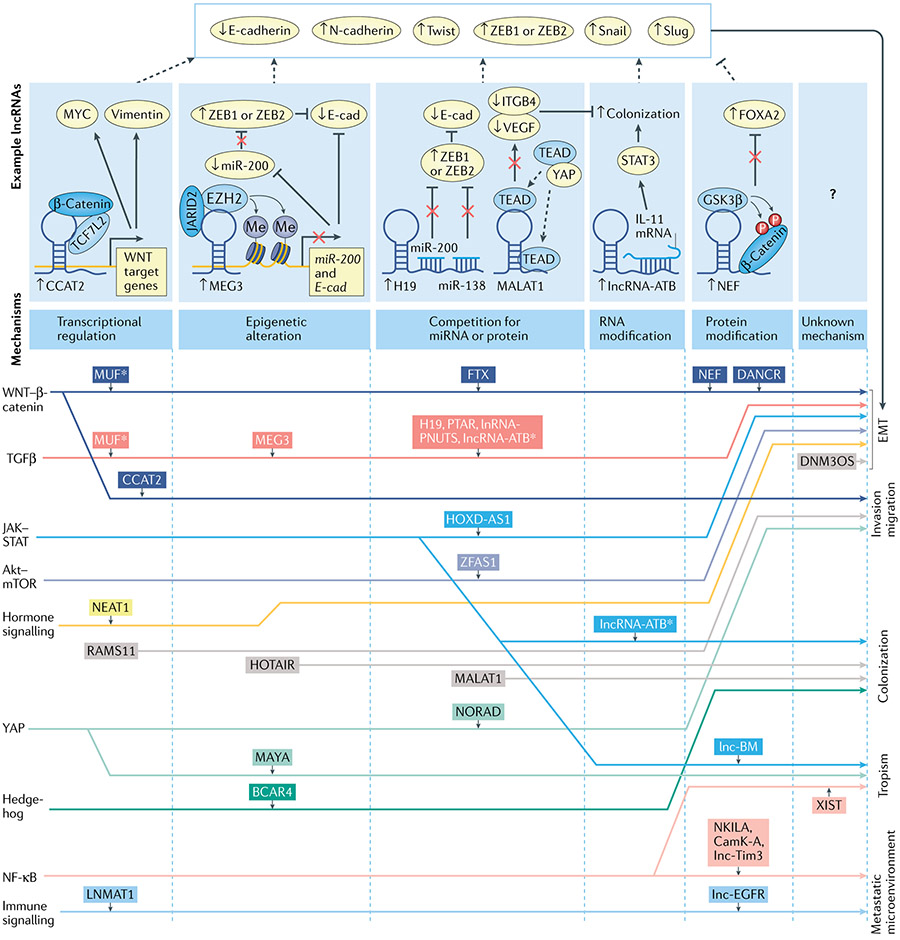
Fig. 3 ∣. Long noncoding RNAs regulate metastasis via various pathways using diverse mechanisms.
Shown are long noncoding RNAs (lncRNAs) with their associated pathways (left) and the biological processes in metastasis that they regulate (right) linked by lines to show lncRNAs interacting with specific pathways to regulate certain biological processes. LncRNAs are grouped from left to right by their downstream mechanism shown on the top panel. For each downstream mechanism, an example detailed mechanism of a lncRNA is presented. LncRNAs in grey boxes are those for which consensus pathway involvement has not been characterized. An asterisk (*) indicates lncRNAs that are involved in multiple pathways or that regulate multiple biological processes in metastasis. In the top panel downstream mechanisms are shown by which representative lncRNAs regulate epithelial–mesenchymal transition (EMT). NF-κB, nuclear factor-κB.
Fig. 4 ∣
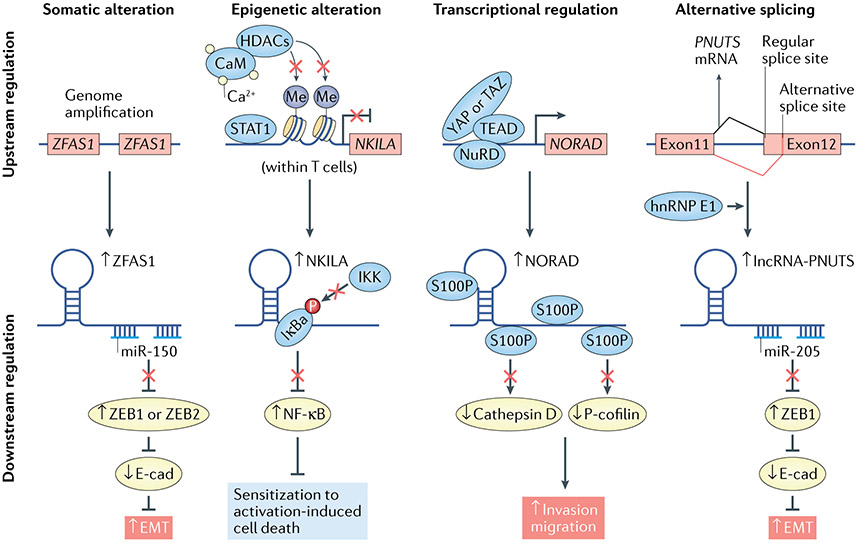
Fig. 4 ∣. Metastasis-associated long noncoding RNAs are regulated by various upstream mechanisms.
Shown are examples of metastatic long noncoding RNAs (lncRNAs) activated by representative mechanisms (from left to right). For each mechanism, the mechanistic model of an example lncRNA is presented (top: upstream regulation of the lncRNA; bottom: regulation of the downstream target and metastatic phenotype). EMT, epithelial–mesenchymal transition; hnRNP, heterogeneous nuclear ribonucleoprotein; NF-κB, nuclear factor-κB; miR, microRNA.
Fig. 5 ∣
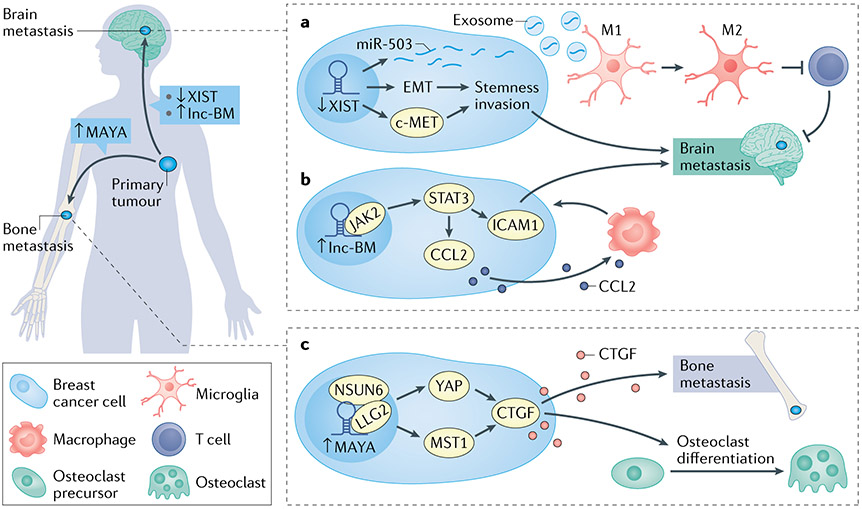
Fig. 5 ∣. Long noncoding RNAs in metastasis site-specific tropism.
a ∣ Downregulation of XIST expression levels activates epithelial–mesenchymal transition (EMT) and MET, leading to stemness, invasion, increased production and release of miR-503, which subsequently induces M2 microglia polarization and T cell responses in breast cancer brain metastases. b ∣ lnc-BM interacts with JAK2 to activate STAT1/STAT3 leading to activation of ICAM1, thereby permitting malignant cell co-option of brain endothelial cells. This also activates CCL2 and induces CCL2-dependent macrophage recruitment to brain metastases. c ∣ MAYA promotes bone metastases via activation of YAP1 and methylation of the Hippo pathway gene MST1, leading to increased connective tissue growth factor (CTGF) and osteoblast differentiation.
Fig. 6 ∣
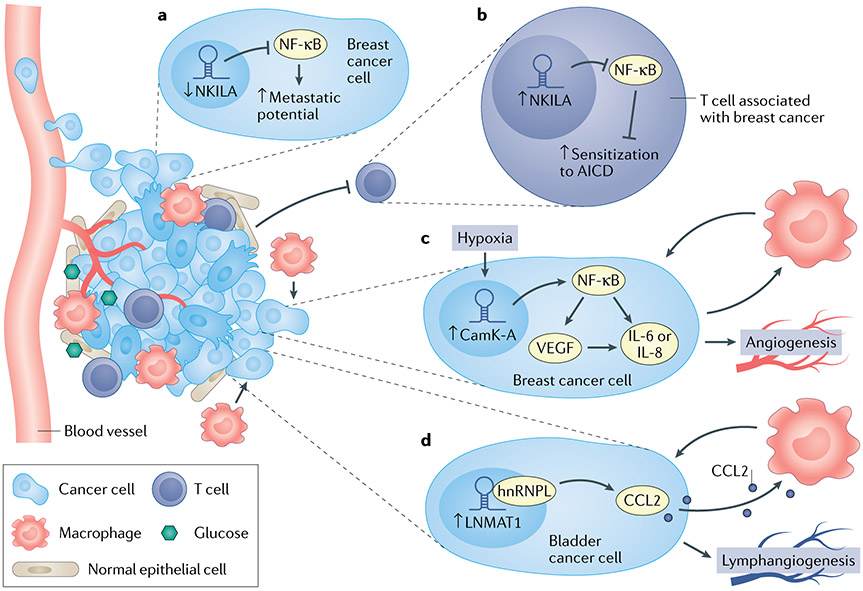
Fig. 6 ∣. Long noncoding RNAs and tumour microenvironment.
a ∣ NKILA inactivates the nuclear factor-κB (NF-κB) pathway in breast cancer cells, and NKILA downregulation leads to decreased metastatic potential. In tumour-infiltrating T lymphocytes, NKILA leads to sensitization to activation-induced ceLL death. b ∣ CamK-A activates NF-κB in response to microenvironmental hypoxia, leading to activation of IL-6/IL-8 and VEGF, which increase macrophage recruitment and angiogenesis. c ∣ LNMAT1 activates CCL2 and CCL2-dependent macrophage recruitment in bladder cancer metastasis. hnRNPL, heterogeneous nuclear ribonucleoprotein L.

References

    1. Amin MB AJCC Cancer Staging Manual. 8th Edn. (Springer, 2017).
    1. Lambert AW, Pattabiraman DR & Weinberg RA Emerging biological principles of metastasis. Cell 168, 670–691 (2017). - PMC - PubMed
    1. Valastyan S & Weinberg RA Tumor metastasis: molecular insights and evolving paradigms. Cell 147, 275–292 (2011).

      Seminal primer on invasion–metastasis cascade and pathogenesis of tumour metastasis.

    1. Gupta GP & Massagué J Cancer metastasis: building a framework. Cell 127, 679–695 (2006). - PubMed
    1. Ulitsky I & Bartel DP lincRNAs: genomics, evolution, and mechanisms. Cell 154, 26–46 (2013).

      Comprehensive review of lncRNA concepts.

Substances