


Salivary Protein Profile and Food Intake: A Dietary Pattern Analysis
- PMID: 33953975
- PMCID: PMC8064783
- DOI: 10.1155/2021/6629951
Salivary Protein Profile and Food Intake: A Dietary Pattern Analysis
Abstract
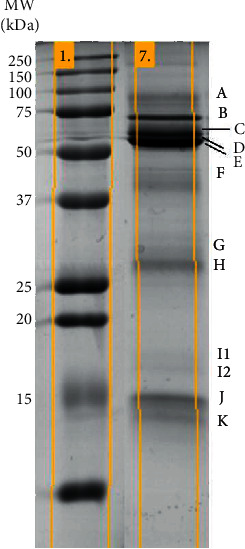
Saliva research has gained interest due to its potential as a source of biomarkers. One of the factors inducing changes in saliva, in the short term, is food intake, and evidence exist about changes in salivary proteome induced by some food components. Since this topic of research is in its early stages, it was hypothesized that saliva protein composition could be associated with different levels of adherence to dietary patterns that contain higher amounts of plant products. The aim of the present study was to test this hypothesis, in adults, by comparing salivary protein electrophoretic profiles of individuals with different diet characteristics, particularly dietary patterns (DP) that exhibit different proportions of animal and plant-based products. Dietary habits were assessed in 122 adults (61 from each sex, with ages ranging from 20 to 59 years) using Food Frequency Questionnaires. To identify the dietary patterns, a principal component analysis was used. Individual's non-stimulated saliva was evaluated for flow rate, pH, protein concentration, α-amylase activity, and electrophoretic protein profiles. Seven dietary patterns (DP) were identified. Salivary amylase enzymatic activity was positively associated with animal-based and starchy foods DP, and with plant-based fatty foods without wine DP. At the same time, protein bands containing amylase and type S cystatins were positively associated with the cheese/yoghurt and wine DP. Our results support the association of salivary proteomics and different dietary patterns and highlight the need of considering food consumption habits in studies using saliva, since this is a factor associated with variations in the composition of this fluid.
Copyright © 2021 Teresa Louro et al.
Conflict of interest statement
The authors have no conflicts of interest.
Figures
References
-
- Johnson R. K., Soultanakis R. P., Matthews D. E. Literacy and body fatness are associated with underreporting of energy intake in US low-income women using the multiple-pass 24-hour recall: a doubly labeled water study. Journal of the American Dietetic Association. 1998;98(10):1136–1140. doi: 10.1016/S0002-8223(98)00263-6. - DOI - PubMed
LinkOut - more resources
Full Text Sources
Other Literature Sources
