


Resting-state brain metabolic fingerprinting clusters (biomarkers) and predictive models for major depression in multiple myeloma patients
- PMID: 33956824
- PMCID: PMC8101966
- DOI: 10.1371/journal.pone.0251026
Resting-state brain metabolic fingerprinting clusters (biomarkers) and predictive models for major depression in multiple myeloma patients
Abstract
Background: Major depression is a common comorbidity in cancer patients. Oncology clinics lack practical, objective tools for simultaneous evaluation of cancer and major depression. Fludeoxyglucose F-18 positron emission tomography-computed tomography (FDG PET/CT) is universally applied in modern medicine.
Methods: We used a retrospective analysis of whole-body FDG PET/CT images to identify brain regional metabolic patterns of major depression in multiple myeloma patients. The study included 134 multiple myeloma (MM) patients, 38 with major depression (group 1) and 96 without major depression (group 2).
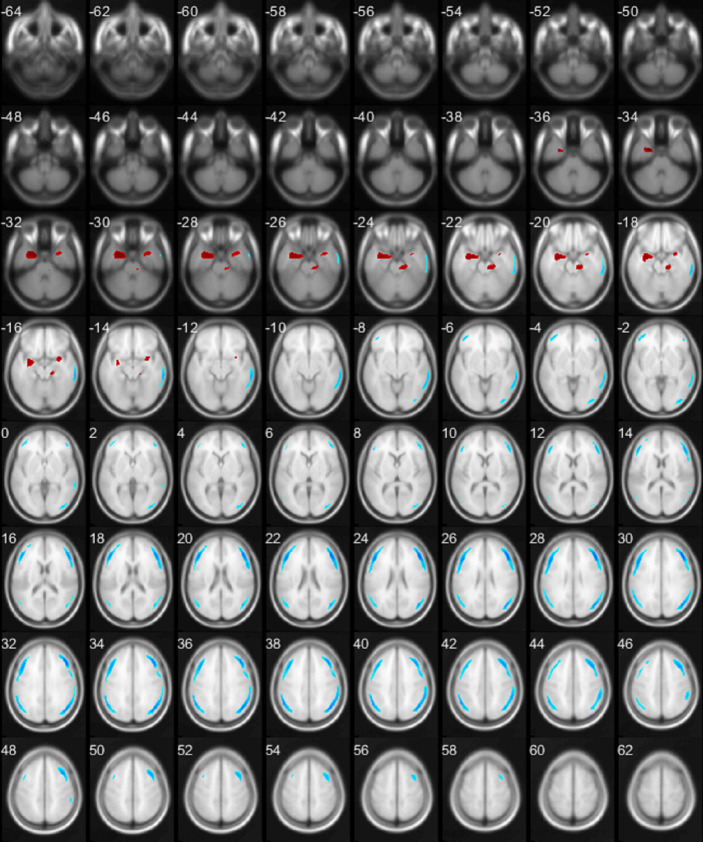
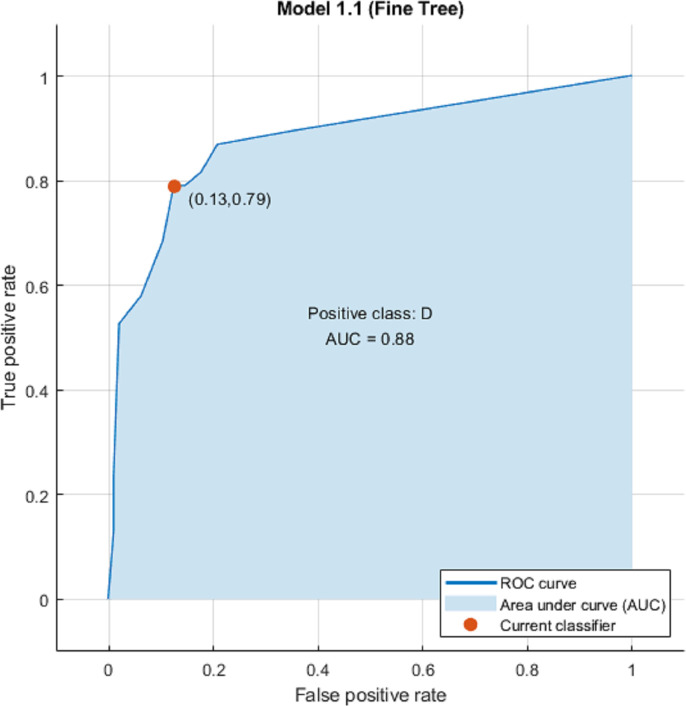
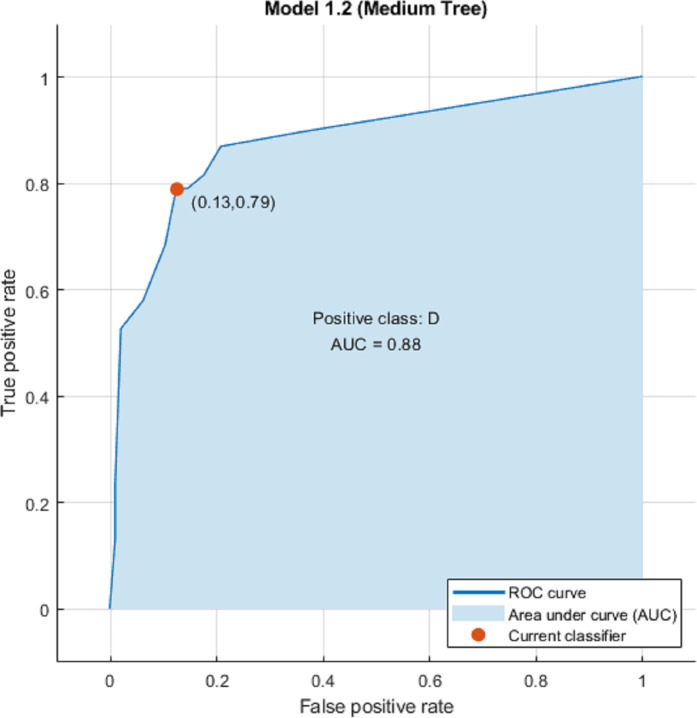
Results: In the current study, Statistic Parameter Mapping (SPM) demonstrated that the major depression patient group (n = 38) had significant regional metabolic differences (clusters of continuous voxels) as compared to the non-major depression group (n = 96) with the criteria of height threshold T = 4.38 and extent threshold > 100 voxels. The five significant hypo- and three hyper-metabolic clusters from the computed T contrast maps were localized on the glass-brain view, consistent with published brain metabolic changes in major depression patients. Subsequently, using these clusters as features for classification learner, the fine tree and medium tree algorithms from 25 classification algorithms best fitted our data (accuracy 0.85%; AUC 0.88; sensitivity 79%; and specificity 88%).
Conclusion: This study demonstrated that whole-body FDG PET/CT scans could provide added value for screening for major depression in cancer patients in addition to staging and evaluating response to chemoradiation therapies.
Conflict of interest statement
The authors have declared that no competing interests exist.
Figures
References
-
- Disease GBD, Injury I, Prevalence C. Global, regional, and national incidence, prevalence, and years lived with disability for 354 diseases and injuries for 195 countries and territories, 1990–2017: a systematic analysis for the Global Burden of Disease Study 2017. Lancet. 2018;392(10159):1789–858. 10.1016/S0140-6736(18)32279-7 - DOI - PMC - PubMed
-
- Lynch ME. The assessment and prevalence of affective disorders in advanced cancer. J Palliat Care. 1995;11(1):10–8. - PubMed
-
- Institute NC. Depression (PDQ®)–Health Professional Version n.d. [Available from: <https://www.cancer.gov/about-cancer/coping/feelings/depression-hp-pdq>.
MeSH terms
Substances
LinkOut - more resources
Full Text Sources
Other Literature Sources
Medical
