


Circadian disruption by short light exposure and a high energy diet impairs glucose tolerance and increases cardiac fibrosis in Psammomys obesus
- PMID: 33958671
- PMCID: PMC8102519
- DOI: 10.1038/s41598-021-89191-7
Circadian disruption by short light exposure and a high energy diet impairs glucose tolerance and increases cardiac fibrosis in Psammomys obesus
Abstract
Type 2 diabetes mellitus (T2DM) increases cardiac inflammation which promotes the development of cardiac fibrosis. We sought to determine the impact of circadian disruption on the induction of hyperglycaemia, inflammation and cardiac fibrosis.
Methods: Psammomys obesus (P. obesus) were exposed to neutral (12 h light:12 h dark) or short (5 h light:19 h dark) photoperiods and fed a low energy (LE) or high energy (HE) diet for 8 or 20 weeks. To determine daily rhythmicity, P. obesus were euthanised at 2, 8, 14, and 20 h after 'lights on'.
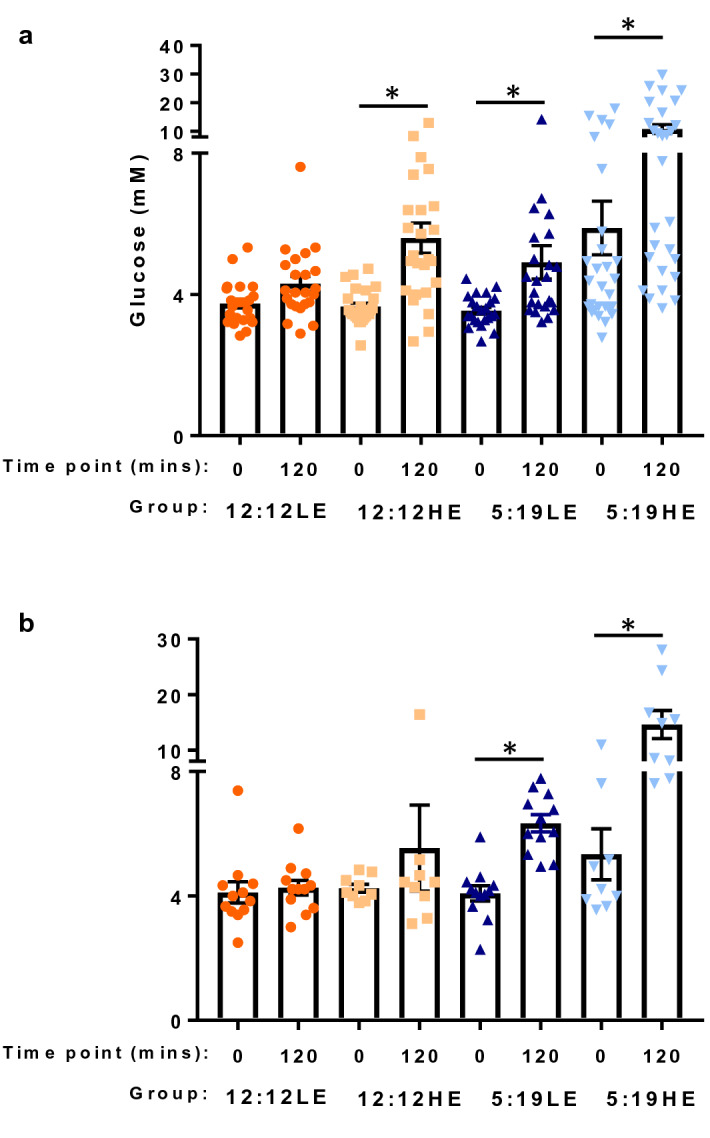
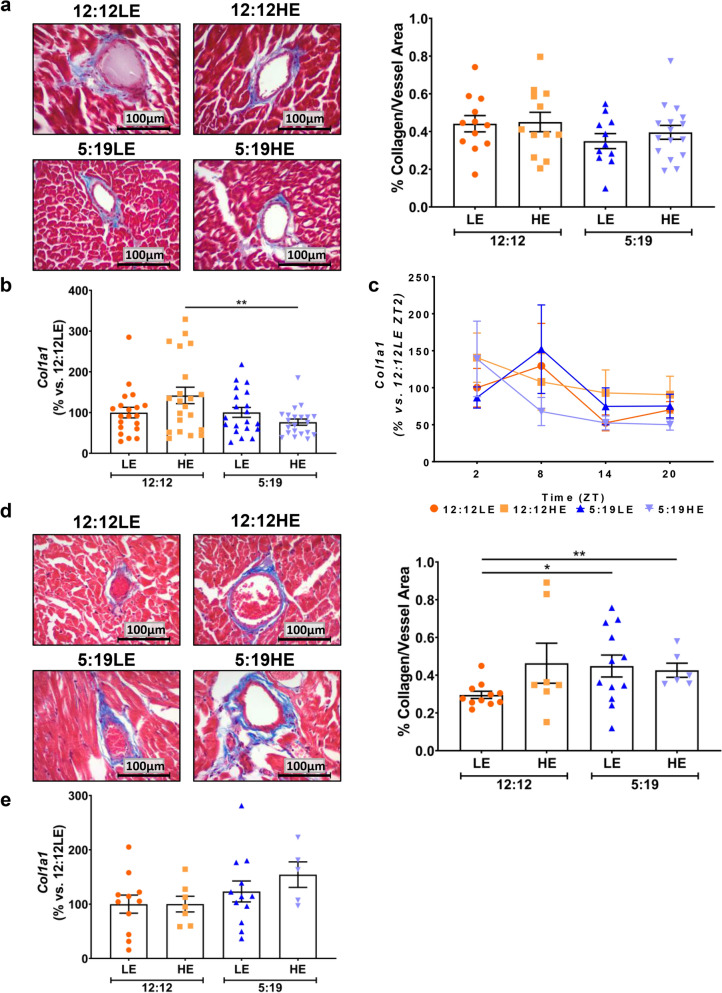
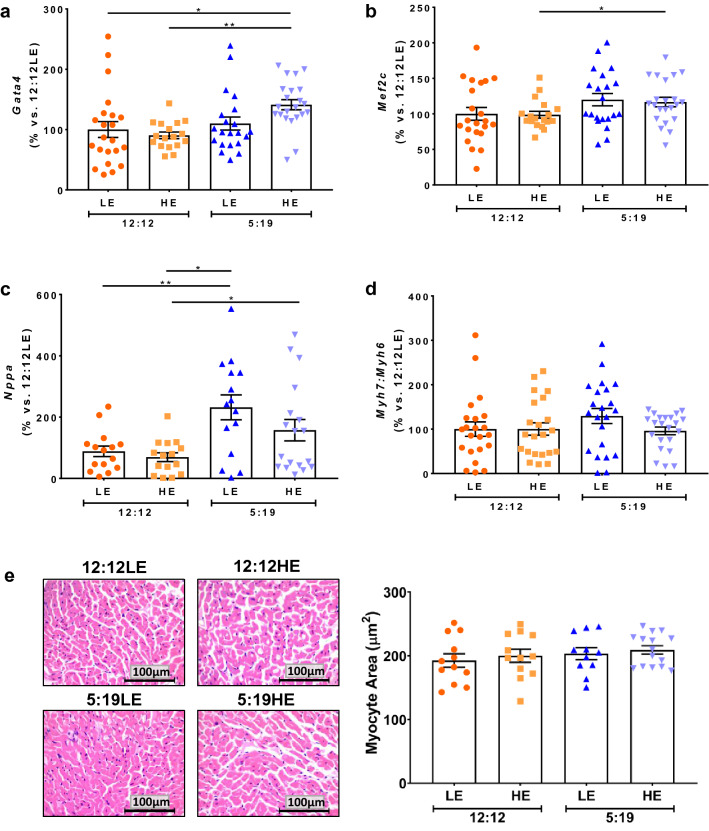
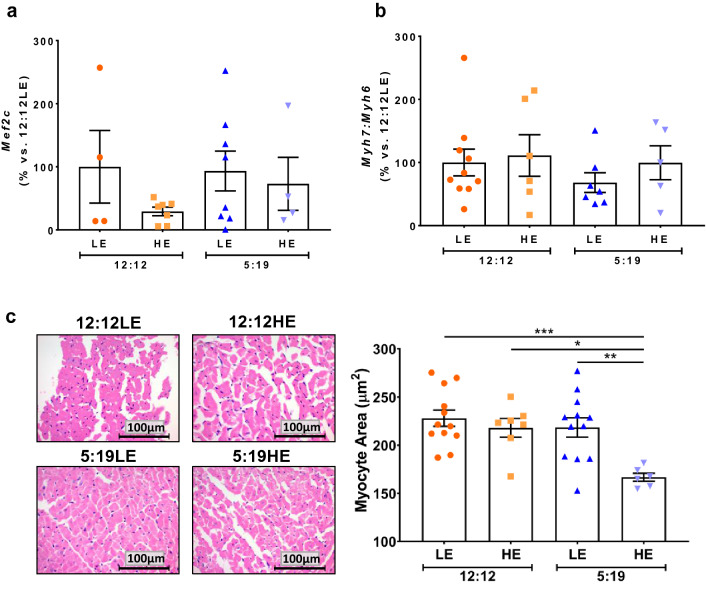
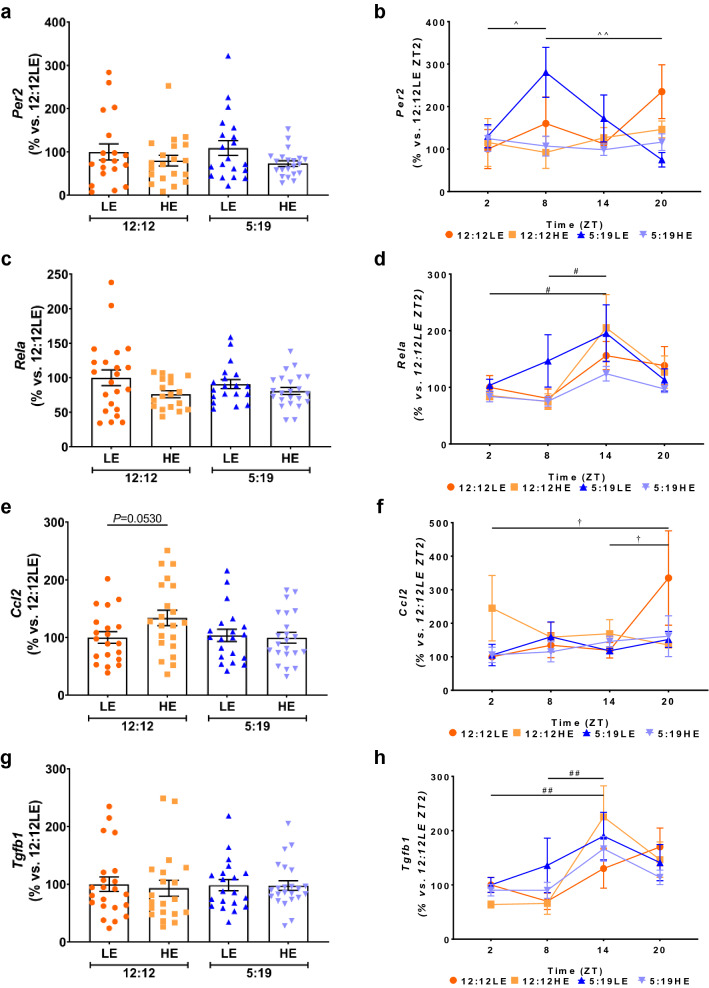
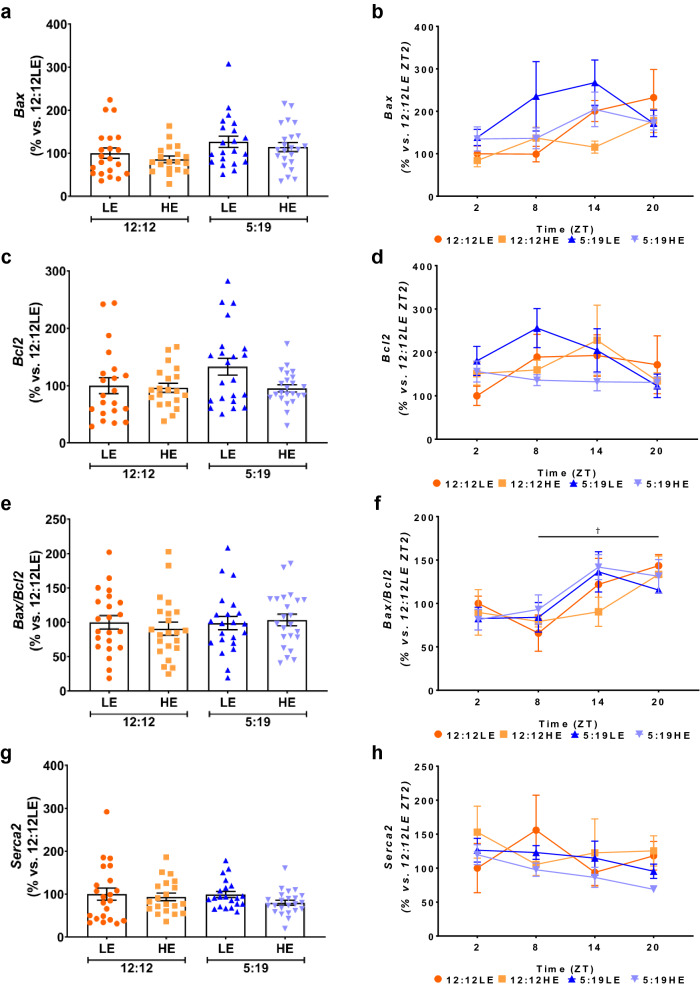
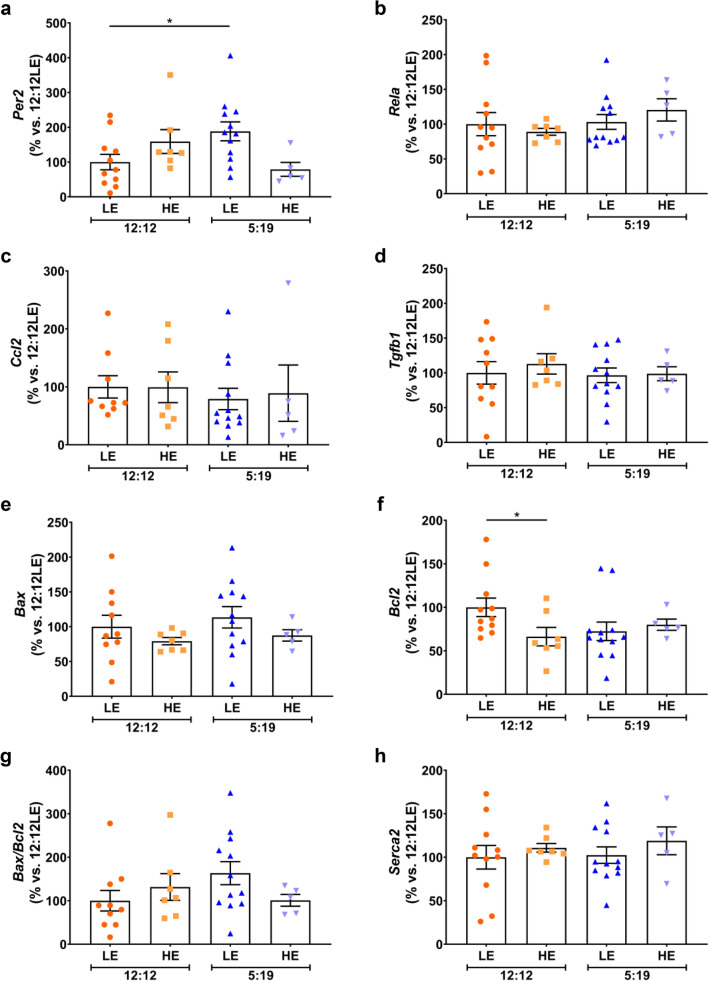
Results: P. obesus exposed to a short photoperiod for 8 and 20 weeks had impaired glucose tolerance following oral glucose tolerance testing, compared to a neutral photoperiod exposure. This occurred with both LE and HE diets but was more pronounced with the HE diet. Short photoperiod exposure also increased myocardial perivascular fibrosis after 20 weeks on LE (51%, P < 0.05) and HE (44%, P < 0.05) diets, when compared to groups with neutral photoperiod exposure. Short photoperiod exposure caused elevations in mRNA levels of hypertrophy gene Nppa (atrial natriuretic peptide) and hypertrophy transcription factors Gata4 and Mef2c in myocardial tissue after 8 weeks.
Conclusion: Exposure to a short photoperiod causes impaired glucose tolerance in P. obesus that is exacerbated with HE diet and is accompanied by an induction in myocardial perivascular fibrosis.
Conflict of interest statement
The authors declare no competing interests.
Figures
References
-
- Dunlay SM, et al. Type 2 diabetes mellitus and heart failure: A scientific statement from the American Heart Association and the Heart Failure Society of America: This statement does not represent an update of the 2017 ACC/AHA/HFSA heart failure guideline update. Circulation. 2019;140(7):e294–e324. doi: 10.1161/CIR.0000000000000691. - DOI - PubMed
Publication types
MeSH terms
Substances
LinkOut - more resources
Full Text Sources
Other Literature Sources
Medical
