


Epstein-Barr virus DNA loads in the peripheral blood cells predict the survival of locoregionally-advanced nasopharyngeal carcinoma patients
- PMID: 33960178
- PMCID: PMC8330545
- DOI: 10.20892/j.issn.2095-3941.2020.0464
Epstein-Barr virus DNA loads in the peripheral blood cells predict the survival of locoregionally-advanced nasopharyngeal carcinoma patients
Abstract
Objective: Circulating cell-free Epstein-Barr virus (EBV) DNA has been shown to be a valuable biomarker for population screening and prognostic surveillance for nasopharyngeal carcinoma (NPC). Despite important insights into the biology of persistence, few studies have addressed the clinical significance of cell-based EBV-DNA loads in peripheral blood cells (PBCs).
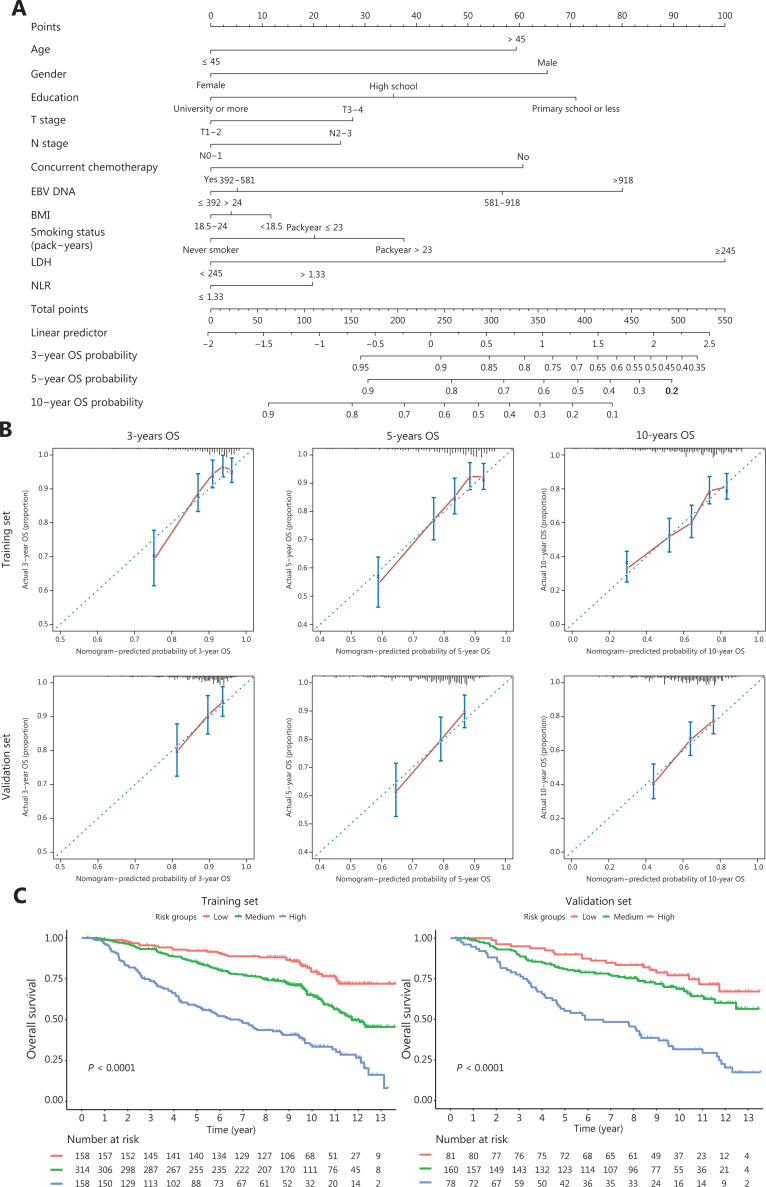
Methods: A prospective observational cohort study was conducted involving 1,063 newly diagnosed, locoregionally-advanced NPC patients at Sun Yat-sen University Cancer Center from 2005 to 2007. Cox regression analysis was conducted to identify the association of PBC EBV DNA loads to overall survival (OS) and other prognostic outcomes. Prognostic nomograms were developed based on PBC EBV DNA loads to predict survival outcomes for NPC patients.
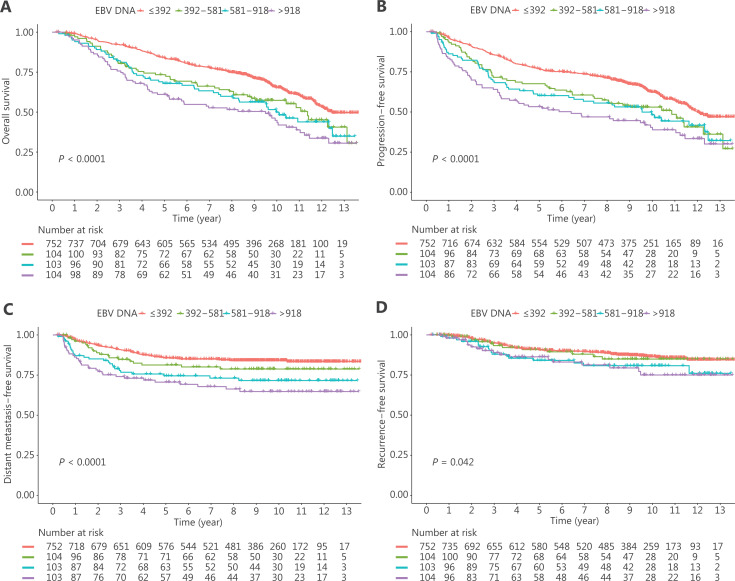
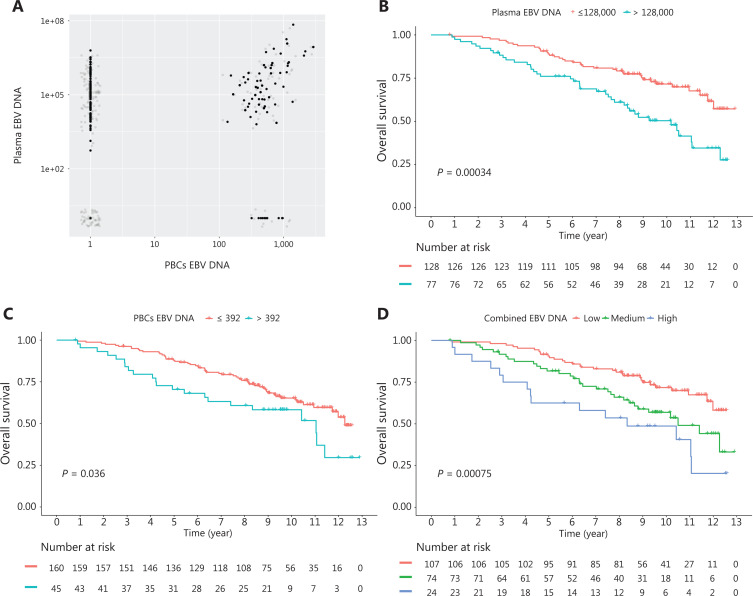
Results: After a median follow-up of 108 months, patients with higher PBC EBV-DNA loads had significantly worse OS [hazard ratio (HR) of medium, medium-high, and high vs. low were 1.50, 1.52, and 1.85 respectively; Ptrend < 0.001]. Similar results were found for progression-free survival and distant metastasis-free survival. The concordance index of the prognostic nomogram for predicting OS in the training set and validation set were 0.70 and 0.66, respectively. Our data showed that the PBC EBV DNA load was an independent and robust survival biomarker, which remained significant even after adjusting for plasma EBV DNA loads in a subset of 205 patients of the cohort (HR: 1.88; P = 0.025). Importantly, a combination of PBC EBV DNA load and plasma EBV DNA load improved the predicted OS.
Conclusions: The EBV-DNA load in PBCs may be an independent prognosis marker for NPC patients.
Keywords: Epstein-Barr virus DNA; Nasopharyngeal carcinoma; nomogram; peripheral blood cells; prognosis.
Copyright © 2021 Cancer Biology & Medicine.
Conflict of interest statement
No potential conflicts of interest are disclosed.
Figures
References
-
- Plummer M, de Martel C, Vignat J, Ferlay J, Bray F, Franceschi S. Global burden of cancers attributable to infections in 2012: a synthetic analysis. Lancet Glob Health. 2016;4:e609–16. - PubMed
-
- Klein G. Nasopharyngeal carcinoma (NPC) is an enigmatic tumor. Semin Cancer Biol. 2002;12:415–8. - PubMed
-
- Tao Q, Chan AT. Nasopharyngeal carcinoma: molecular pathogenesis and therapeutic developments. Expert Rev Mol Med. 2007;9:1–24. - PubMed
-
- Lee AW, Fee WE, Jr, Ng WT, Chan LK. Nasopharyngeal carcinoma: salvage of local recurrence. Oral Oncol. 2012;48:768–74. - PubMed
Grants and funding
- 2016YFC0902001/National Key Research and Development Program of China
- 81861138006/Sino-Sweden Joint Research Program
- 201804020094/Science and Technology Planning Project of Guangzhou, China
- 81973131/National Natural Science Foundation of China
- 81903395/National Natural Science Foundation of China
- 81803319/National Natural Science Foundation of China
- 81502056/National Natural Science Foundation of China
- 81325018/National Science Fund for Distinguished Young Scholars of China
- 81220108022/Key Project for International Cooperation and Exchange of the National Natural Science Foundation of China
- 2017A030312003/Natural Science Foundation of Guangdong Province
LinkOut - more resources
Full Text Sources
Other Literature Sources