


Intratumour microbiome associated with the infiltration of cytotoxic CD8+ T cells and patient survival in cutaneous melanoma
- PMID: 33962358
- PMCID: PMC8184628
- DOI: 10.1016/j.ejca.2021.03.053
Intratumour microbiome associated with the infiltration of cytotoxic CD8+ T cells and patient survival in cutaneous melanoma
Abstract
Objective: The gut microbiome plays an important role in systemic inflammation and immune response. Microbes can translocate and reside in tumour niches. However, it is unclear how the intratumour microbiome affects immunity in human cancer. The purpose of this study was to investigate the association between intratumour bacteria, infiltrating CD8+ T cells and patient survival in cutaneous melanoma.
Methods: Using The Cancer Genome Altas's cutaneous melanoma RNA sequencing data, levels of intratumour bacteria and infiltrating CD8+ T cells were determined. Correlation between intratumour bacteria and infiltrating CD8+ T cells or chemokine gene expression and survival analysis of infiltrating CD8+ T cells and Lachnoclostridium in cutaneous melanoma were performed.
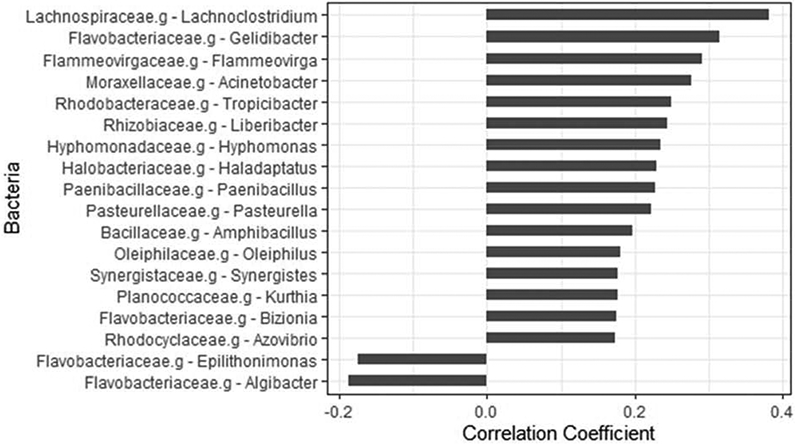
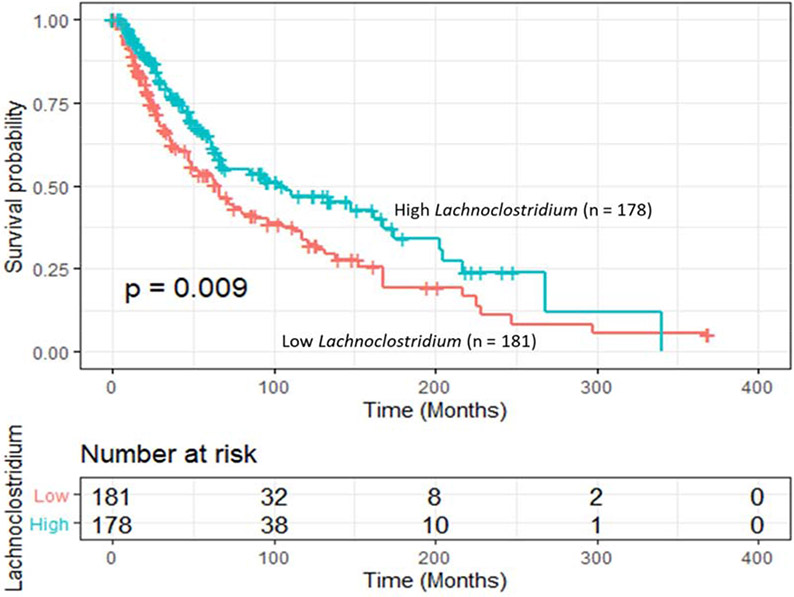
Results: Patients with low levels of CD8+ T cells have significantly shorter survival than those with high levels. The adjusted hazard ratio was 1.57 (low vs high) (95% confidence interval: 1.17-2.10, p = 0.002). Intratumour bacteria of the Lachnoclostridium genus ranked top in a positive association with infiltrating CD8+ T cells (correlation coefficient = 0.38, p = 9.4 × 10⁻¹⁴), followed by Gelidibacter (0.31, p = 1.13 × 10⁻⁹), Flammeovirga (0.29, p = 1.96 × 10⁻⁸) and Acinetobacter (0.28, p = 8.94 × 10⁻⁸). These intratumour genera positively correlated with chemokine CXCL9, CXCL10 and CCL5 expression. The high Lachnoclostridium load significantly reduced the mortality risk (p = 0.0003). However, no statistically significant correlation was observed between intratumour Lachnoclostridium abundance and the levels of either NK, B or CD4+ T cells.
Conclusion: Intratumour-residing gut microbiota could modulate chemokine levels and affect CD8+ T-cell infiltration, consequently influencing patient survival in cutaneous melanoma. Manipulating the intratumour gut microbiome may benefit patient outcomes for those undergoing immunotherapy.
Keywords: CD8+ T cells; Gut microbiome; Intratumour bacteria; Melanoma; Prognosis.
Copyright © 2021 Elsevier Ltd. All rights reserved.
Conflict of interest statement
Conflict of interest statement H.K. has received research funding (institutional funding) from Merck, Bristol Myers Squibb and Apexigen and personal fees from Corvus, Nektar, Pfizer, Iovance, Immunocore, Celldex, Array BioPharma, Merck, Bristol Myers Squibb, Instil Bio, ElevateBio, Clinigen and Shionogi. The other authors have no conflict of interest to declare.
Figures
References
-
- Sahin U, Derhovanessian E, Miller M, Kloke BP, Simon P, Lower M, et al. Personalized RNA mutanome vaccines mobilize poly-specific therapeutic immunity against cancer. Nature 2017;547(7662):222–226. - PubMed
-
- Weber JS, D'Angelo SP, Minor D, Hodi FS, Gutzmer R, Neyns B, et al. Nivolumab versus chemotherapy in patients with advanced melanoma who progressed after anti-CTLA-4 treatment (CheckMate 037): a randomised, controlled, open-label, phase 3 trial. Lancet Oncol 2015;16(4):375–84. - PubMed
Publication types
MeSH terms
Substances
Grants and funding
LinkOut - more resources
Full Text Sources
Other Literature Sources
Medical
Research Materials
