


RT-PCR/MALDI-TOF mass spectrometry-based detection of SARS-CoV-2 in saliva specimens
- PMID: 33963565
- PMCID: PMC8242556
- DOI: 10.1002/jmv.27069
RT-PCR/MALDI-TOF mass spectrometry-based detection of SARS-CoV-2 in saliva specimens
Abstract
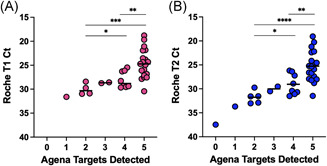
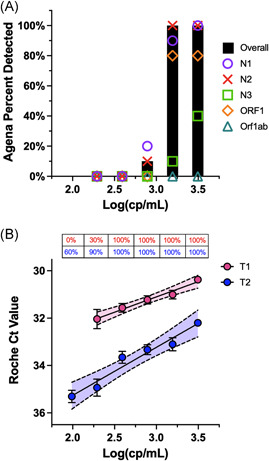
As severe acute respiratory syndrome coronavirus-2 (SARS-CoV-2) infections continue, there is a substantial need for cost-effective and large-scale testing that utilizes specimens that can be readily collected from both symptomatic and asymptomatic individuals in various community settings. Although multiple diagnostic methods utilize nasopharyngeal specimens, saliva specimens represent an attractive alternative as they can rapidly and safely be collected from different populations. While saliva has been described as an acceptable clinical matrix for the detection of SARS-CoV-2, evaluations of analytic performance across platforms for this specimen type are limited. Here, we used a novel sensitive RT-PCR/MALDI-TOF mass spectrometry-based assay (Agena MassARRAY®) to detect SARS-CoV-2 in saliva specimens. The platform demonstrated high diagnostic sensitivity and specificity when compared to matched patient upper respiratory specimens. We also evaluated the analytical sensitivity of the platform and determined the limit of detection of the assay to be 1562.5 copies/ml. Furthermore, across the five individual target components of this assay, there was a range in analytic sensitivities for each target with the N2 target being the most sensitive. Overall, this system also demonstrated comparable performance when compared to the detection of SARS-CoV-2 RNA in saliva by the cobas® 6800/8800 SARS-CoV-2 real-time RT-PCR Test (Roche). Together, we demonstrate that saliva represents an appropriate matrix for SARS-CoV-2 detection on the novel Agena system as well as on a conventional real-time RT-PCR assay. We conclude that the MassARRAY® system is a sensitive and reliable platform for SARS-CoV-2 detection in saliva, offering scalable throughput in a large variety of clinical laboratory settings.
Keywords: MALDI-TOF; SARS-CoV-2; real-time RT-PCR; saliva.
© 2021 Wiley Periodicals LLC.
Conflict of interest statement
The authors declare that there are no conflict of interests.
Figures
References
-
- In Vitro Diagnostics EUAs. U.S. Food and Drug Administration. Published Febraury 17, 2021. Accessed February 21, 2021. https://www.fda.gov/medical-devices/coronavirus-disease-2019-covid-19-em...
-
- Butler‐Laporte G, Lawandi A, Schiller I, et al. Comparison of saliva and nasopharyngeal swab nucleic acid amplification testing for detection of SARS‐CoV‐2: a systematic review and meta‐analysis. JAMA Intern Med. Published online. 2021;181:353‐360. 10.1001/jamainternmed.2020.8876 - DOI - PMC - PubMed
MeSH terms
Substances
LinkOut - more resources
Full Text Sources
Other Literature Sources
Medical
Research Materials
Miscellaneous
