Explaining the Differences in Opioid Overdose Deaths between Scotland and England/Wales: Implications for European Opioid Policies
- PMID: 33965949
- PMCID: PMC8686715
- DOI: 10.1159/000516165
Explaining the Differences in Opioid Overdose Deaths between Scotland and England/Wales: Implications for European Opioid Policies
Abstract
Backgrounds: Between 2009 and 2018, the number of opioid-related deaths (ORDs) in Scotland showed a dramatic increase, whereas in England and Wales, a much lower increase in ORD was seen. This regional difference is remarkable, and the situation in Scotland is worrisome. Therefore, it is important to identify the drivers of ORD in Scotland.
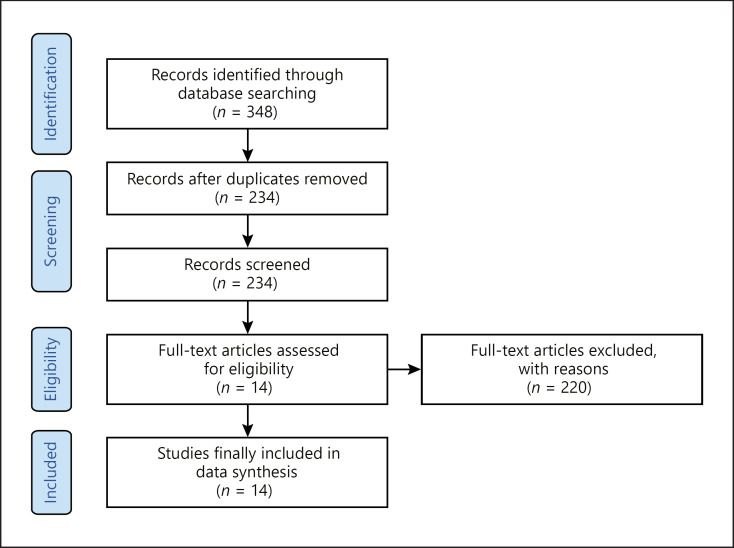
Methods: A systematic literature review according to PRISMA guidelines was conducted to identify peer-reviewed studies about key drivers for the observed differences in ORDs between Scotland and England/Wales. In addition, non-peer-reviewed reports on nationwide statistical data were retrieved via Google and Google Scholar and analysed to quantify differences in ORD drivers between Scotland and England/Wales.
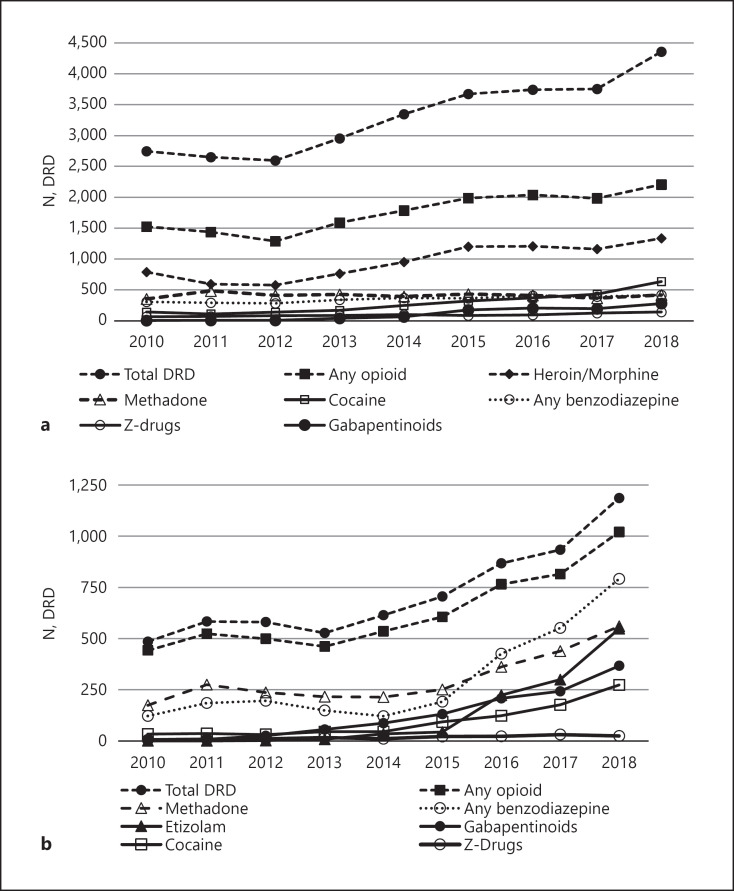
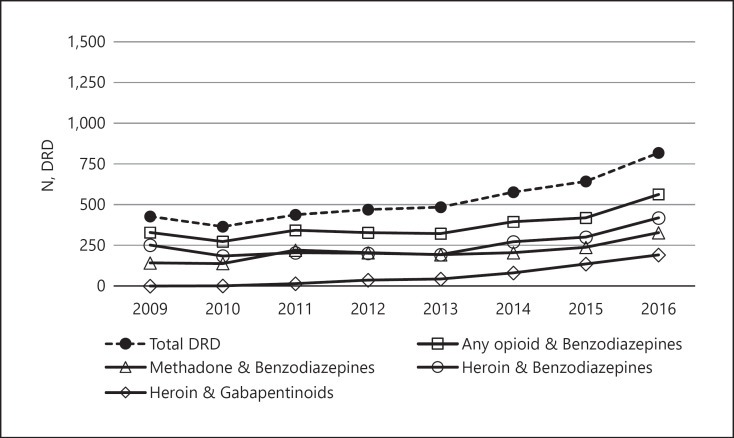
Results: The systematic review identified some important drivers of ORD, but none of these studies provided direct or indirect comparisons of ORD drivers in Scotland and England/Wales. However, the reports with nationwide statistical data showed important differences in ORD drivers between Scotland and England/Wales, including a higher prevalence of people using opioids in a problematic way (PUOP), more polydrug use in people using drugs in a problematic way (PUDP), a higher age of PUDP, and lower treatment coverage and efficacy of PUDP in Scotland compared to England/Wales, but no regional differences in injecting drug use, incarceration/prison release without treatment, and social deprivation in PUDP.
Conclusion: It is concluded that the opioid crisis in Scotland is best explained by a combination of drivers, consisting of a higher population involvement in (problematic) opioid use (notably methadone), relatively more polydrug use (notably benzodiazepines and gabapentinoids), a steeper ageing of the PUOP population in the past 2 decades, and lower treatment coverage and efficacy in Scotland compared to England/Wales. The findings have important consequences for strategies to handle the opioid crisis in Scotland.
Keywords: Drug dependence; Drug-related death; Incarceration; Injecting drug use; Opioids; Polydrug use; Problem drug use.
© 2021 The Author(s) Published by S. Karger AG, Basel.
Conflict of interest statement
Prof. Wim van den Brink is the editor-in-chief of EAR and reports personal fees from Lundbeck, Novartis, D&A Pharma, Takeda, Mundipharma, Angelini, Opiant, and Idivior for services outside the submitted work. Dr. Jan van Amsterdam and Dr. Mimi Pierce report no conflict of interest.
Figures
References
-
- van Amsterdam J, Pierce M, van den Brink W. Is Europe facing an emerging opioid crisis comparable to the US? Ther Drug Monit. 2021;43((1)):42–51. - PubMed
-
- Kimber J, Hickman M, Strang J, Thomas K, Hutchinson S. Rising opioid-related deaths in England and Scotland must be recognised as a public health crisis. Lancet Psychiatry. 2019;6((8)):639–40. - PubMed
-
- Nicholls J, Cramer S, Ryder S, Gold D, Priyadarshi S, Millar S, et al. The UK government must help end Scotland's drug-related death crisis. Lancet Psychiatry. 2019;6((10)):804. - PubMed
-
- SDF. The shame of a national scandal. Lack of access to treatment and prescribing practice contribute to drug death figures. 2019. Available from: https://drns.ac.uk/files/2019/07/Drug-related-deaths-in-Scotland-2018-SD....
-
- McAuley A. Scotland's overdose crisis. A public health emergency. Presentation at the Annual meeting of the EMCDDA expert network on drug-related deaths; 2019. Available from: https://www.emcdda.europa.eu/system/files/attachments/12054/1.1.%20Andre....
Publication types
MeSH terms
Substances
LinkOut - more resources
Full Text Sources
Other Literature Sources
Medical
Miscellaneous