Noninvasive Home Mechanical Ventilation in Adult Myotonic Dystrophy Type 1: A Systematic Review
- PMID: 33965950
- PMCID: PMC8491482
- DOI: 10.1159/000515453
Noninvasive Home Mechanical Ventilation in Adult Myotonic Dystrophy Type 1: A Systematic Review
Abstract
Introduction: Chronic hypercapnic respiratory failure induces considerable morbidity and mortality in patients with myotonic dystrophy type 1 (DM1). This study systematically reviews the effects of noninvasive home mechanical ventilation (HMV) on gas exchange, quality of life, survival, and compliance in DM1 patients.
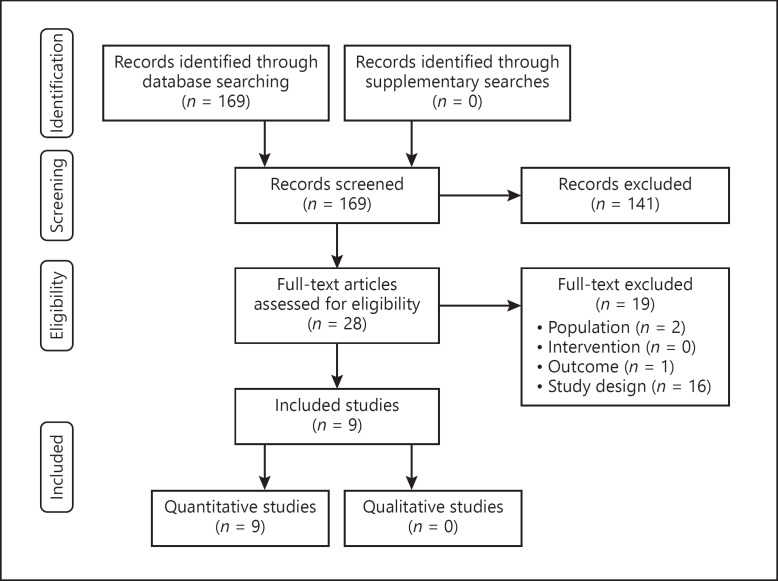
Methods: A systematic Medline and Embase search was performed (January 1995 to January 2020). Records were screened for eligibility criteria, data were extracted from included studies, and risk of bias was assessed. We present findings mainly using a narrative synthesis.
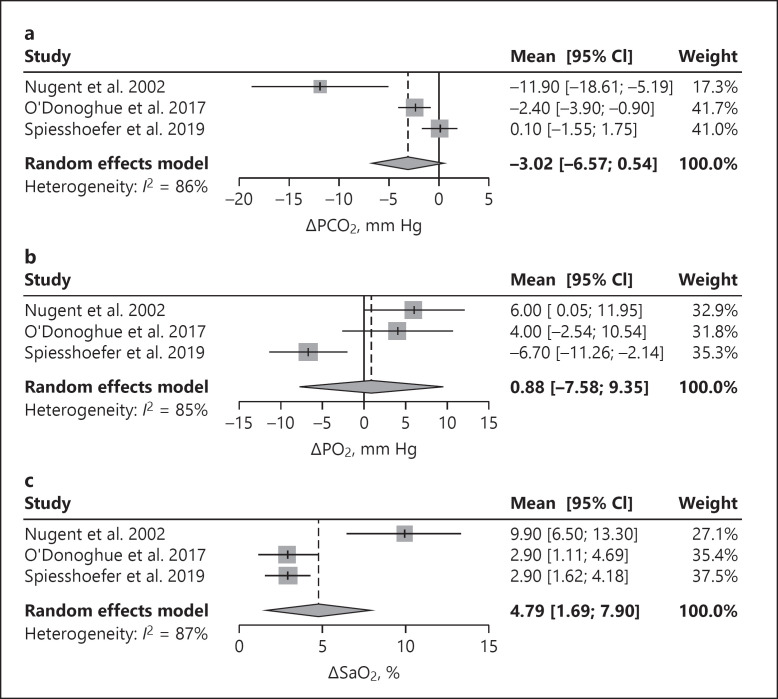
Results: Twenty-eight relevant full-text articles were screened for eligibility criteria. Nine studies were included. Randomized controlled trials were not found. Studies had either an observational (n = 8) or interventional (n = 1) design. In the pooled data analysis, HMV showed to improve mean oxygen saturation with 4.8% and decreased mean carbon dioxide values with 3 mm Hg. Compliance varied widely between studies, from no use to more than 12 h per day. Quality of life was not studied extensively, but some studies reported positive effects of HMV on symptoms of chronic respiratory failure. HMV may improve survival in DM1 patients with chronic hypercapnic respiratory failure.
Conclusion: This review shows that HMV can improve gas exchange and relieve symptoms with a possible survival benefit in DM1 patients with chronic hypercapnic respiratory failure. Future studies should focus on developing strategies to optimize the timing of HMV initiation and to promote compliance.
Keywords: Artificial; Mechanical; Myotonic dystrophy; Noninvasive ventilation; Respiration; Respiratory insufficiency; Ventilators.
© 2021 The Author(s). Published by S. Karger AG, Basel.
Conflict of interest statement
The authors have no conflicts of interest to declare.
Figures
References
-
- Theadom A, Rodrigues M, Roxburgh R, Balalla S, Higgins C, Bhattacharjee R, et al. Prevalence of muscular dystrophies: a systematic literature review. Neuroepidemiology. 2014;43((3–4)):259–68. - PubMed
-
- Johnson NE. Myotonic muscular dystrophies. Continuum. 2019;25((6)):1682–95. - PubMed
-
- Groh WJ, Groh MR, Shen C, Monckton DG, Bodkin CL, Pascuzzi RM. Survival and CTG repeat expansion in adults with myotonic dystrophy type 1. Muscle Nerve. 2011;43((5)):648–51. - PubMed
-
- de Die-Smulders CE, Höweler CJ, Thijs C, Mirandolle JF, Anten HB, Smeets HJ, et al. Age and causes of death in adult-onset myotonic dystrophy. Brain. 1998;121((Pt 8)):1557–63. - PubMed
-
- Groh WJ, Groh MR, Saha C, Kincaid JC, Simmons Z, Ciafaloni E, et al. Electrocardiographic abnormalities and sudden death in myotonic dystrophy type 1. N Engl J Med. 2008;358((25)):2688–97. - PubMed
Publication types
MeSH terms
LinkOut - more resources
Full Text Sources
Other Literature Sources
Medical