


Single-Cell Transcriptomics: Current Methods and Challenges in Data Acquisition and Analysis
- PMID: 33967674
- PMCID: PMC8100238
- DOI: 10.3389/fnins.2021.591122
Single-Cell Transcriptomics: Current Methods and Challenges in Data Acquisition and Analysis
Abstract
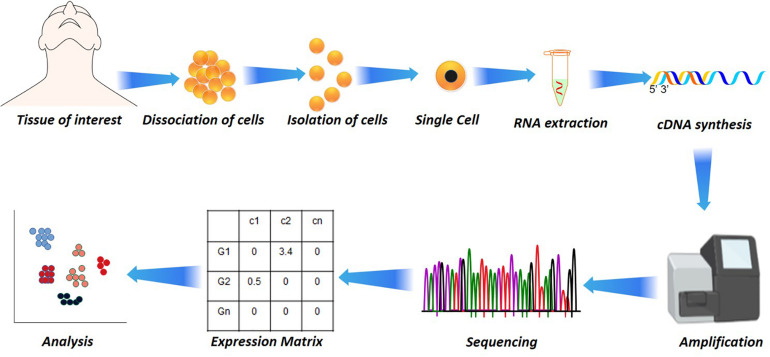
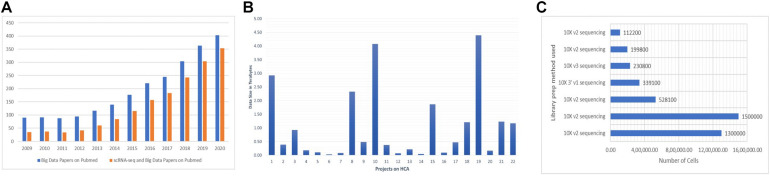
Rapid cost drops and advancements in next-generation sequencing have made profiling of cells at individual level a conventional practice in scientific laboratories worldwide. Single-cell transcriptomics [single-cell RNA sequencing (SC-RNA-seq)] has an immense potential of uncovering the novel basis of human life. The well-known heterogeneity of cells at the individual level can be better studied by single-cell transcriptomics. Proper downstream analysis of this data will provide new insights into the scientific communities. However, due to low starting materials, the SC-RNA-seq data face various computational challenges: normalization, differential gene expression analysis, dimensionality reduction, etc. Additionally, new methods like 10× Chromium can profile millions of cells in parallel, which creates a considerable amount of data. Thus, single-cell data handling is another big challenge. This paper reviews the single-cell sequencing methods, library preparation, and data generation. We highlight some of the main computational challenges that require to be addressed by introducing new bioinformatics algorithms and tools for analysis. We also show single-cell transcriptomics data as a big data problem.
Keywords: Sc-RNA-seq; big data; downstream analysis; normalization; single-cell analysis; single-cell big data; single-cell transcriptomics.
Copyright © 2021 Adil, Kumar, Jan and Asger.
Conflict of interest statement
The authors declare that the research was conducted in the absence of any commercial or financial relationships that could be construed as a potential conflict of interest.
Figures
References
-
- Adil A., Kar H. A., Jangir R., Sofi S. A. (2016). “Analysis of multi-diseases using big data for improvement in healthcare,” in Proceedings of the 2015 IEEE UP Section Conference on Electrical Computer and Electronics, UPCON 2015, Allahabad. 10.1109/UPCON.2015.7456696 - DOI
-
- Angerer P., Simon L., Tritschler S., Wolf F. A., Fischer D., Theis F. J. (2017). Single cells make big data: new challenges and opportunities in transcriptomics. Curr. Opin. Syst. Biol. 4 85–91. 10.1016/j.coisb.2017.07.004 - DOI
Publication types
LinkOut - more resources
Full Text Sources
Other Literature Sources
