


Investigation of Extracellular Vesicles From SARS-CoV-2 Infected Specimens: A Safety Perspective
- PMID: 33968019
- PMCID: PMC8100059
- DOI: 10.3389/fimmu.2021.617042
Investigation of Extracellular Vesicles From SARS-CoV-2 Infected Specimens: A Safety Perspective
Abstract
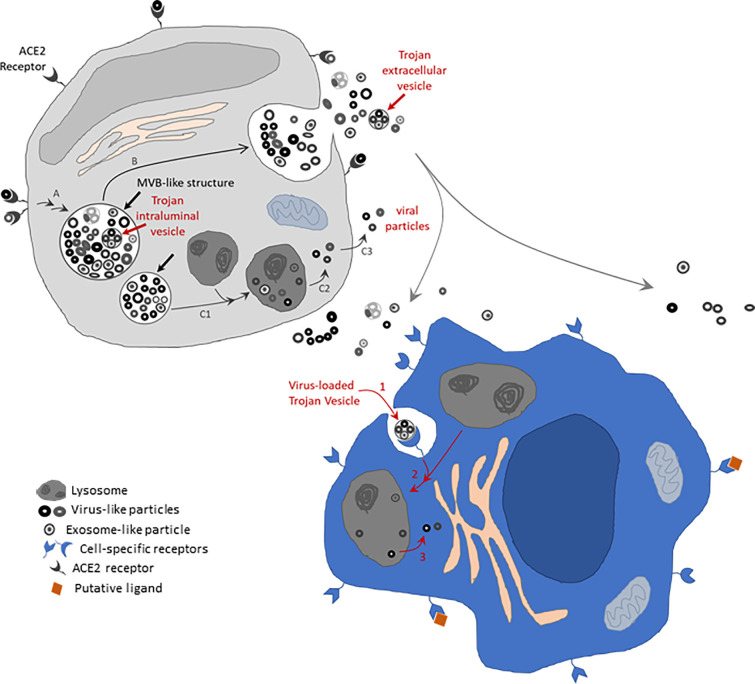
The coronavirus disease 2019 (COVID-19) pandemic, caused by the SARS-CoV-2 virus, is wreaking havoc around the world. Considering that extracellular vesicles (EVs) released from SARS-CoV-2 infected cells might play a role in a viremic phase contributing to disease progression and that standard methods for EV isolation have been reported to co-isolate viral particles, we would like to recommend the use of heightened laboratory safety measures during the isolation of EVs derived from SARS-CoV-2 infected tissue and blood from COVID-19 patients. Research needs to be conducted to better understand the role of EVs in SARS-CoV-2 infectivity, disease progression, and transmission. EV isolation procedures should include approaches for protection from SARS-CoV-2 contamination. We recommend the EV and virology scientific communities develop collaborative projects where relationships between endogenous EVs and potentially lethal enveloped viruses are addressed to better understand the risks and pathobiology involved.
Keywords: COVID-19; SARS-CoV-2; Trojan EV; Trojan exosome; extracellular vesicle; laboratory safety.
Copyright © 2021 Nunez Lopez, Casu and Pratley.
Conflict of interest statement
The authors declare that the research was conducted in the absence of any commercial or financial relationships that could be construed as a potential conflict of interest.
Figures
References
MeSH terms
Substances
LinkOut - more resources
Full Text Sources
Other Literature Sources
Medical
Miscellaneous
