


30-Day Mortality Following Palliative Radiotherapy
- PMID: 33968775
- PMCID: PMC8103895
- DOI: 10.3389/fonc.2021.668481
30-Day Mortality Following Palliative Radiotherapy
Abstract
Purpose: 30-day mortality (30-DM) is a parameter with widespread use as an indicator of avoidance of harm used in medicine. Our objective is to determine the 30-DM followed by palliative radiation therapy (RT) in our department and to identify potential prognosis factors.
Material/methods: We conducted a retrospective cohort study including patients treated with palliative RT in our center during 2018 and 2019. Data related to clinical and treatment characteristics were collected.
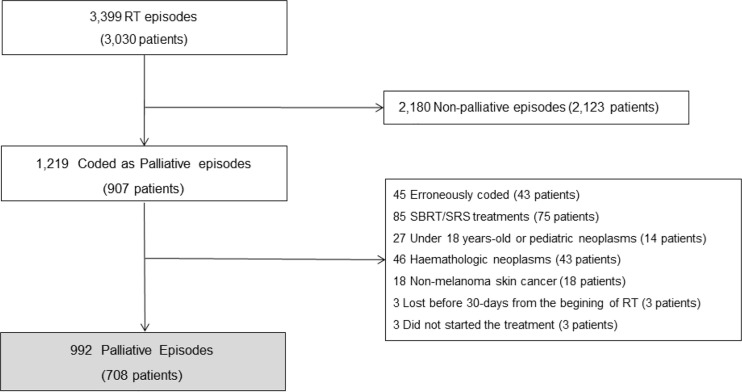
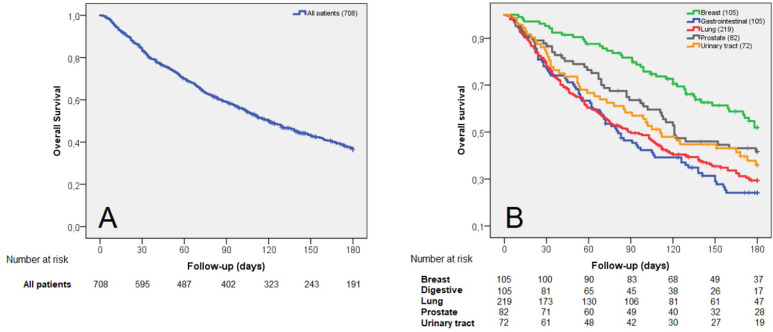
Results: We treated 708 patients to whom 992 palliative irradiations were delivered. The most frequent primary tumor sites were lung (31%), breast (14.8%), and gastrointestinal (14.8%). Bone was the predominant location of the treatment (56%), and the use of single doses was the preferred treatment schedule (34.4%). The 30-DM was 17.5%. For those who died in the first month the median survival was 17 days. Factors with a significant impact on 30-DM were: male gender (p < 0.0001); Eastern Cooperative Oncology Group (ECOG) Performance Status (PS) of 2-3 (p = 0.0001); visceral metastases (p = 0.0353); lung, gastrointestinal or urinary tract primary tumors (p = 0.016); and single dose RT (p = <0.0001). In the multivariate analysis, male gender, ECOG PS 2-3, gastrointestinal and lung cancer were found to be independent factors related to 30-DM.
Conclusion: Our 30-DM is similar to previous studies. We have found four clinical factors related to 30-DM of which ECOG was the most strongly associated. This data may help to identify terminally ill patients with poor prognosis in order to avoid unnecessary treatments.
Keywords: 30-day mortality; clinical indicator; end-of-life; palliative radiation; prognosis.
Copyright © 2021 Vázquez, Altabas, Moreno, Geng, Pérez-Hoyos and Giralt.
Conflict of interest statement
The authors declare that the research was conducted in the absence of any commercial or financial relationships that could be construed as a potential conflict of interest.
Figures
References
-
- Earle CC, Neville BA, Landrum MB, Ayanian JZ, Block SD, Weeks JC. Trends in the aggressiveness of cancer care near the end of life. J Clin Oncol (2004) 22(2):315–21. - PubMed
-
- Gripp S, Mjartan S, Boelke E, Willers R. Palliative radiotherapy tailored to life expectancy in end-stage cancer patients: Reality or myth? Cancer (2010) 116(13):3251–6. - PubMed
-
- Murphy JD, Nelson LM, Chang DT, Mell LK, Quynh-Thu L. Patterns of care in palliative radiotherapy: A populationbased study. J Oncol Pract (2013) 9(5). - PubMed
-
- Hartsell WF, Desilvio M, Bruner DW, Scarantino C, Ivker R, Roach M, 3rd, et al. . Can physicians accurately predict survival time in patients with metastatic cancer? Analysis of RTOG 97-14. J Palliat Med (2008) 11(5):723–8. - PubMed
LinkOut - more resources
Full Text Sources
