


Spastic paraplegia preceding PSEN1-related familial Alzheimer's disease
- PMID: 33969176
- PMCID: PMC8088589
- DOI: 10.1002/dad2.12186
Spastic paraplegia preceding PSEN1-related familial Alzheimer's disease
Abstract
Introduction: We investigated the frequency, neuropathology, and phenotypic characteristics of spastic paraplegia (SP) that precedes dementia in presenilin 1 (PSEN1) related familial Alzheimer's disease (AD).
Methods: We performed whole exome sequencing (WES) in 60 probands with hereditary spastic paraplegia (HSP) phenotype that was negative for variants in known HSP-related genes. Where PSEN1 mutation was identified, brain biopsy was performed. We investigated the link between HSP and AD with PSEN1 in silico pathway analysis and measured in vivo the stability of PSEN1 mutant γ-secretase.
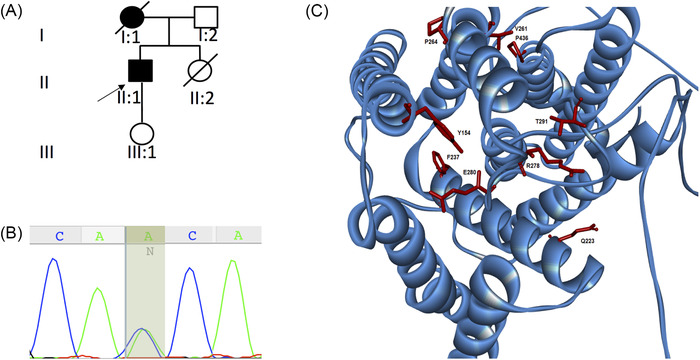
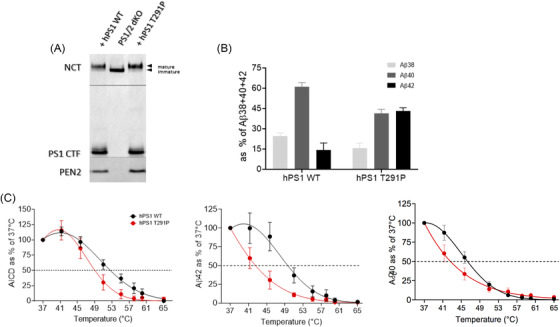
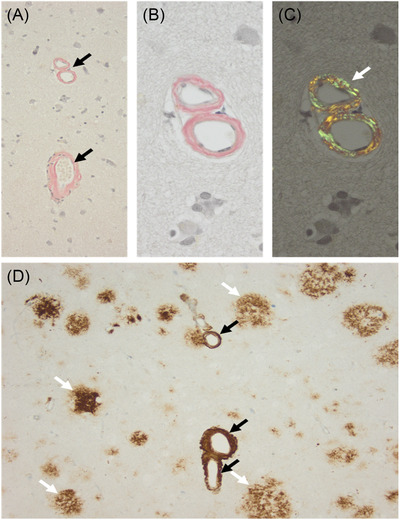
Results: We identified a PSEN1 variant (p.Thr291Pro) in an individual presenting with pure SP at 30 years of age. Three years later, SP was associated with severe, fast cognitive decline and amyloid deposition with diffuse cortical plaques on brain biopsy. Biochemical analysis of p.Thr291Pro PSEN1 revealed that although the mutation does not alter active γ-secretase reconstitution, it destabilizes γ-secretase-amyloid precursor protein (APP)/amyloid beta (Aβn) interactions during proteolysis, enhancing the production of longer Aβ peptides. We then extended our analysis to all 226 PSEN1 pathogenic variants reported and show that 7.5% were associated with pure SP onset followed by cognitive decline later in the disease. We found that PSEN1 cases manifesting initially as SP have a later age of onset, are associated with mutations located beyond codon 200, and showed larger diffuse, cored plaques, amyloid-ring arteries, and severe CAA.
Discussion: We show that pure SP can precede dementia onset in PSEN1-related familial AD. We recommend PSEN1 genetic testing in patients presenting with SP with no variants in known HSP-related genes, particularly when associated with a family history of cognitive decline.
Keywords: Alzheimer's disease; HSP; PSEN1; dementia; hereditary spastic paraplegia; presenilin; spastic gait; spastic paraparesis; spastic paraplegia.
© 2021 The Authors. Alzheimer's & Dementia: Diagnosis, Assessment & Disease Monitoring published by Wiley Periodicals, LLC on behalf of Alzheimer's Association.
Conflict of interest statement
The authors declare no competing conflict of interest. M. Breza has received a research grant from European Academy of Neurology (EAN) and travel grants from Genesis Pharma, Teva‐ Specifar, Pfizer, Sanofi‐Genzyme. G. Koutsis has received research grants from Genesis Pharma and Teva; and consultation fees, advisory boards, and honoraria from Sanofi‐Genzyme, Genesis Pharma, Teva, Novartis, Roche, Merck, Pfizer, Specifar, and Integris Pharma. G. Karadima has received research grants from Pfizer and advisory board remuneration from Roche.
Figures
References
-
- Ryan NS, Nicholas JM, Weston PSJ, et al. Clinical phenotype and genetic associations in autosomal dominant familial Alzheimer's disease: a case series. Lancet Neurol. 2016;15(13):1326‐1335. - PubMed
-
- 2020 Alzheimer's disease facts and figures. Alzheimers Dement, 2020. - PubMed
-
- Olsson B, Lautner R, Andreasson U, et al. CSF and blood biomarkers for the diagnosis of Alzheimer's disease: a systematic review and meta‐analysis. Lancet Neurol. 2016;15(7):673‐684. - PubMed
-
- Finckh U, Kuschel C, Anagnostouli M, et al. Novel mutations and repeated findings of mutations in familial Alzheimer disease. Neurogenetics. 2005;6(2):85‐89. - PubMed
Grants and funding
LinkOut - more resources
Full Text Sources
Other Literature Sources