Review
. 2021;5(6):370-387.
doi: 10.1038/s41570-021-00275-4. Epub 2021 May 5.

Chemical targets to deactivate biological and chemical toxins using surfaces and fabrics

Affiliations
Review

Chemical targets to deactivate biological and chemical toxins using surfaces and fabrics

Christia R Jabbour et al. Nat Rev Chem. 2021.

Abstract

The most recent global health and economic crisis caused by the SARS-CoV-2 outbreak has shown us that it is vital to be prepared for the next global threat, be it caused by pollutants, chemical toxins or biohazards. Therefore, we need to develop environments in which infectious diseases and dangerous chemicals cannot be spread or misused so easily. Especially, those who put themselves in situations of most exposure - doctors, nurses and those protecting and caring for the safety of others - should be adequately protected. In this Review, we explore how the development of coatings for surfaces and functionalized fabrics can help to accelerate the inactivation of biological and chemical toxins. We start by looking at recent advancements in the use of metal and metal-oxide-based catalysts for the inactivation of pathogenic threats, with a focus on identifying specific chemical bonds that can be targeted. We then discuss the use of metal-organic frameworks on textiles for the capture and degradation of various chemical warfare agents and their simulants, their long-term efficacy and the challenges they face.

Keywords: Heterogeneous catalysis; Pollution remediation.


Conflict of interest statement

Competing interestsThe authors declare no competing interests.

Figures

Fig. 1
Fig. 1. Target bonds for antipathogenic activity.
a | The amino acid cysteine contains a thiol group that acts as the catalytic site of a number of respiratory enzymes. b | It also plays a key role in the structure of proteins by forming disulfide bonds. These disulfide bonds also occur in the viral envelope of viruses (panel c), where they are found on the glycoprotein knobs that facilitate binding with host cells. Fe–S clusters (panels d and e) and DNA (panel f), in particular, the guanine base, are targets for oxidation.
Fig. 2
Fig. 2. Antipathogenic properties of metal–organic frameworks.
a | Antipathogenic activity of metal–organic frameworks can originate from the leaching of metal ions, which neutralize pathogens through the breaking of proteins, inhibition of respiratory enzymes and disruption of genetic replication (panel b). c | Reactive oxygen species formed by photocatalysts can also neutralize pathogens by causing the rupturing of cell membranes or viral envelopes.
Fig. 3
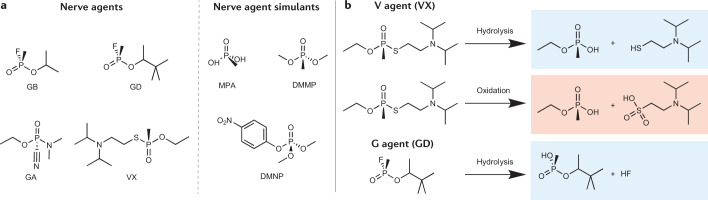
Fig. 3. Degradation pathways of nerve agent simulants.
a | Molecular structure of some nerve agents (left) and their simulants (right). b | An example of the hydrolysis and oxidation pathways of V agent venomous agent X (VX) and the hydrolysis products of G agent soman (GD). DMMP, dimethyl methylphosphonate; DMNP, dimethyl p-nitrophenylphosphate; GA, tabun; GB, sarin; MPA, methylphosphonic acid.
Fig. 4
Fig. 4. Mustard gas and its simulants.
The different catalytic degradation pathways of sulfur mustard (HD) and the molecular structure of some HD simulants. CEEE, 2-chloroethyl ethyl ether; CEES, 2-chloroethyl ethyl sulfide; CEPS, 2-chloroethylphenyl sulfide.
Fig. 5
Fig. 5. Dual transformation of chemical toxins.
The dual transformation of chemical warfare agent simulants (red) 2-chloroethyl ethyl sulfide (CEES) and dimethyl p-nitrophenylphosphate (DMNP) to non-toxic oxidative and hydrolytic products, respectively (green), through a MOF-catalyzed dual reaction. The degradation of CEES and DMNP occurs under visible irradiation (light source) through the simultaneous hydrolysis of DMNP and oxidation of CEES. MOF, metal–organic framework.
Fig. 6
Fig. 6. The four different types of personal protective equipment categories.
Classified by the US Environmental Protection Agency (EPA). a | Suit used to protect from unknown agents that offers maximal protection. b | Suit used for high respiratory protection that does not offer complete skin protection. c | A splash suit that features an air-purifying respirator. d | The common work uniform used by medical personnel.
Fig. 7
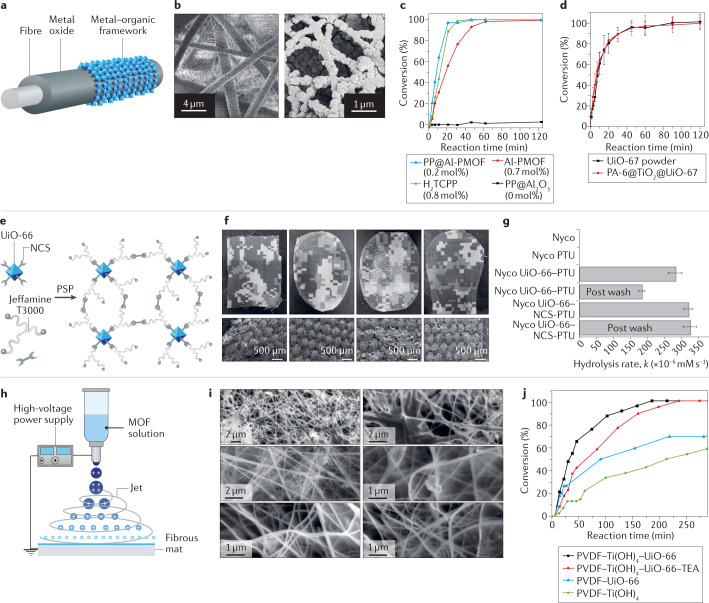
Fig. 7. Methods of incorporating metal–organic frameworks into fabric.
Three different techniques are used to functionalize fibres with metal–organic frameworks (MOFs): atomic layer deposition (ALD), post-synthetic polymerization (PSP) and electrospinning. a | ALD. b | Scanning electron microscope (SEM) images of Al-based polypropylene–MOF (left) and Ti-based MOF, polyamide (PA)-6@TiO2@UiO-67 (ref.) (right) obtained through ALD. c | Oxidation profiles of 2-chloroethyl ethyl sulfide (CEES) to 2-chloroethyl ethyl sulfoxide (CEESO) — conversion over time — using various photocatalysts. d | Conversion of dimethyl p-nitrophenylphosphate (DMNP) versus reaction time using MOF powder and MOF–fabric. e | PSP. f | Top: optical images of swatches of Nyco fibres (left to right): pure Nyco, polythiourea (PTU) on Nyco, UiO-66–PTU on Nyco and UiO-66–NCS-PTU on Nyco. Bottom: corresponding SEM images. g | DMNP hydrolysis rates before and after conducting the laundry wash simulation. h | Electrospinning. i | SEM images of polyvinylidene fluoride (PVDF)–Ti(OH)4–UiO-66–triethanolamine (TEA) (top left and right), PVDF–Ti(OH)4–UiO-66 (middle left and right) and PVDF–Ti(OH)4 (bottom left and right). j | Conversion of soman with PVDF composite samples. NCS, isothiocyanate; PMOF, porphyrin-based MOF. Parts b (left) and c adapted with permission from ref., Elsevier. Parts b (right) and d adapted with permission from ref., Wiley. Parts f and g adapted with permission from ref., Wiley. Parts i and j adapted with permission from ref., ACS.
Fig. 8
Fig. 8. Metal–organic framework–nylon composites.
a | Different metal–organic frameworks (MOFs) used for post-synthetic polymerization in nylon (PA-66) composites. b | Hydrolysis degradation rate of dimethyl p-nitrophenylphosphate by MOF powders and PA-66–MOF composites (measured by an ultraviolet–visible absorption at 407 nm). Adapted with permission from ref., Wiley.
Fig. 9
Fig. 9. Timeline.
This timeline summarizes some notable catastrophic events, the progress of protective equipment and presents a perspective on the future with fabrics and surfaces functionalized with chemical neutralizers that can self-detoxify biological and chemical toxins. WWI, World War I; WWII, World War II.

References

    1. Stevens, P. Diseases of Poverty and the 10/90 Gap (National Prevention Information NetworkBETA, 2004).
    1. Human Wrongs Watch. How air pollution is destroying our health. Human Wrongs Watchhttps://human-wrongs-watch.net/2019/06/04/how-air-pollution-is-destroyin... (2019).
    1. Organisation for the Prohibition of Chemical Weapons. Convention on the Prohibition of the Development, Production and Stockpiling of Chemical Weapons and on their Destruction (2005).
    1. Perper, R. Over 10,000 tear gas canisters have been fired in Hong Kong’s vicious protests, and it could have long-term consequences for the city’s health. Business Insider. https://www.businessinsider.com/experts-long-term-effects-tear-gas-expos... (2020).
    1. Dodd, V., Harding, L. & MacAskill, E. Sergei Skripal: former Russian spy poisoned with nerve agent, say police. The Guardian. https://www.theguardian.com/uk-news/2018/mar/07/russian-spy-police-appea... (2018).

LinkOut - more resources