


Potential prognostic factors in progression-free survival for patients with cervical cancer
- PMID: 33971846
- PMCID: PMC8112015
- DOI: 10.1186/s12885-021-08243-3
Potential prognostic factors in progression-free survival for patients with cervical cancer
Abstract
Background: Cervical cancer continues to be one of the leading causes of cancer deaths among females in low and middle-income countries. In this study, we aimed to assess the independent prognostic value of clinical and potential prognostic factors in progression-free survival (PFS) in cervical cancer.
Methods: We conducted a retrospective study on 92 cervical cancer patients treated from 2017 to 2019 at the Zhuhai Hospital of Traditional Chinese and Western Medicine. Tumor characteristics, treatment options, progression-free survival and follow-up information were collected. Kaplan-Meier method was used to assess the PFS.
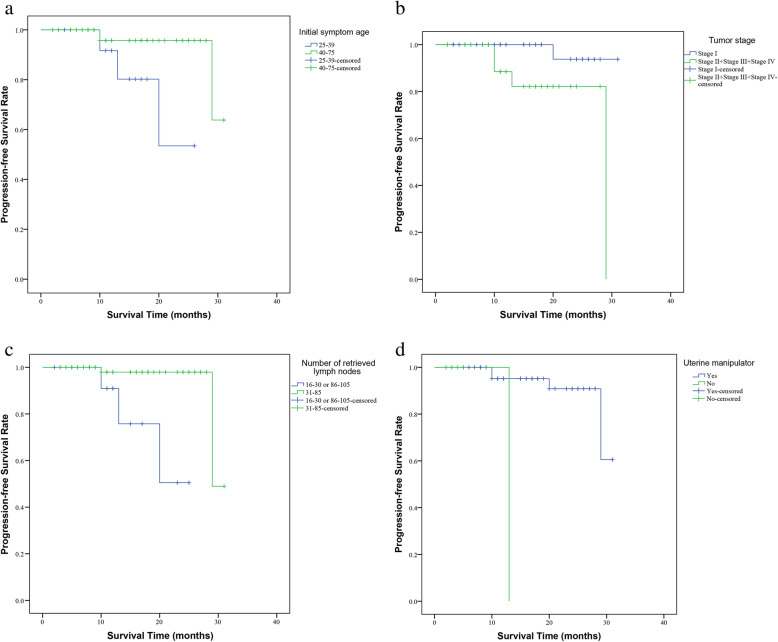
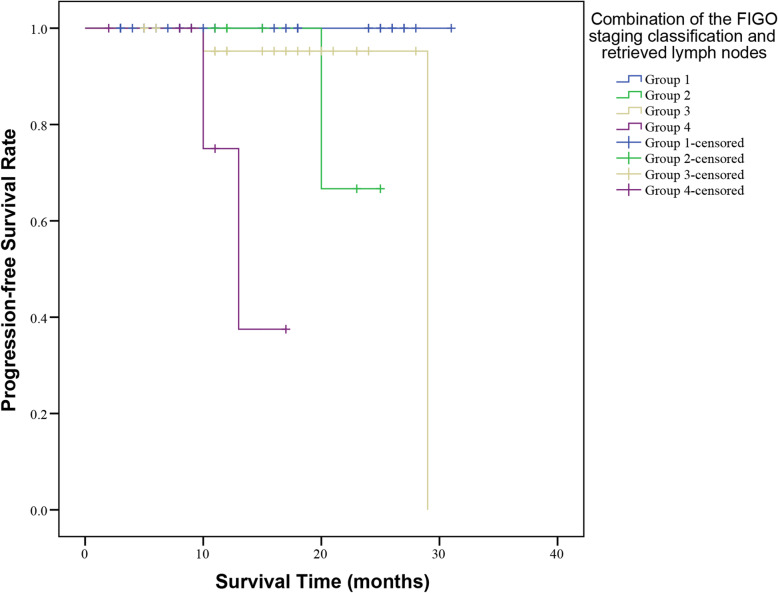
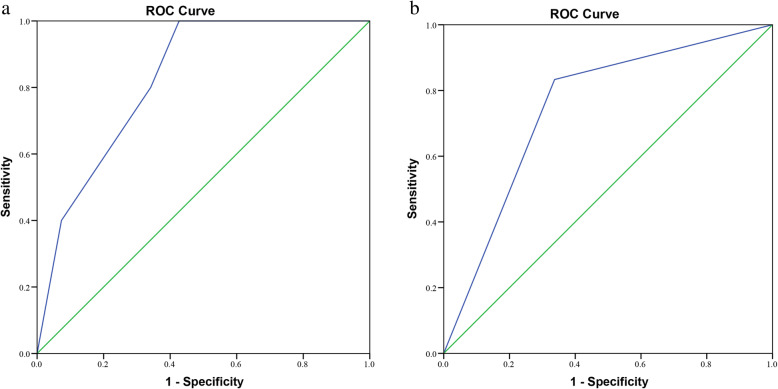
Results: Results showed that the number of retrieved lymph nodes had a statistically significant effect on PFS of cervical cancer patients (P = 0.002). Kaplan-Meier survival curve analysis showed that cervical cancer patients with initial symptoms age 25-39 had worse survival prognoses (P = 0.020). And the using of uterine manipulator in laparoscopic treatment showed a better prognosis (P < 0.001). A novel discovery of our study was to verify the prognostic values of retrieved lymph nodes count combining with FIGO staging system, which had never been investigated in cervical cancer before. According to the Kaplan-Meier survival curve analysis and receiver operating characteristic (ROC) curve analysis, significant improvements were found after the combination of retrieved lymph nodes count and FIGO stage in predicting PFS for cervical cancer patients (P < 0.001, AUC = 0.826, 95% CI: 0.689-0.962).
Conclusion: Number of retrieved lymph nodes, initial symptoms age, uterine manipulator, and retrieved lymph nodes count combining with FIGO staging system could be potential prognostic factors for cervical cancer patients.
Keywords: Cervical cancer; FIGO staging; Progression-free survival; Retrieved lymph nodes count.
Conflict of interest statement
The authors declare that they have no competing interests.
Figures
References
MeSH terms
Grants and funding
LinkOut - more resources
Full Text Sources
Other Literature Sources
Medical
