


Empowering health volunteer's through participatory action research in a comprehensive healthcare center
- PMID: 33971852
- PMCID: PMC8112012
- DOI: 10.1186/s12889-021-10878-7
Empowering health volunteer's through participatory action research in a comprehensive healthcare center
Abstract
Background: Health volunteers act as the link between the society and the healthcare system and are a symbol of people's participation in the health maintenance and promotion. Despite the important role of health volunteers in the health system, it seems that they experience several problems. The aim of this study was empowering health volunteers through an action research.
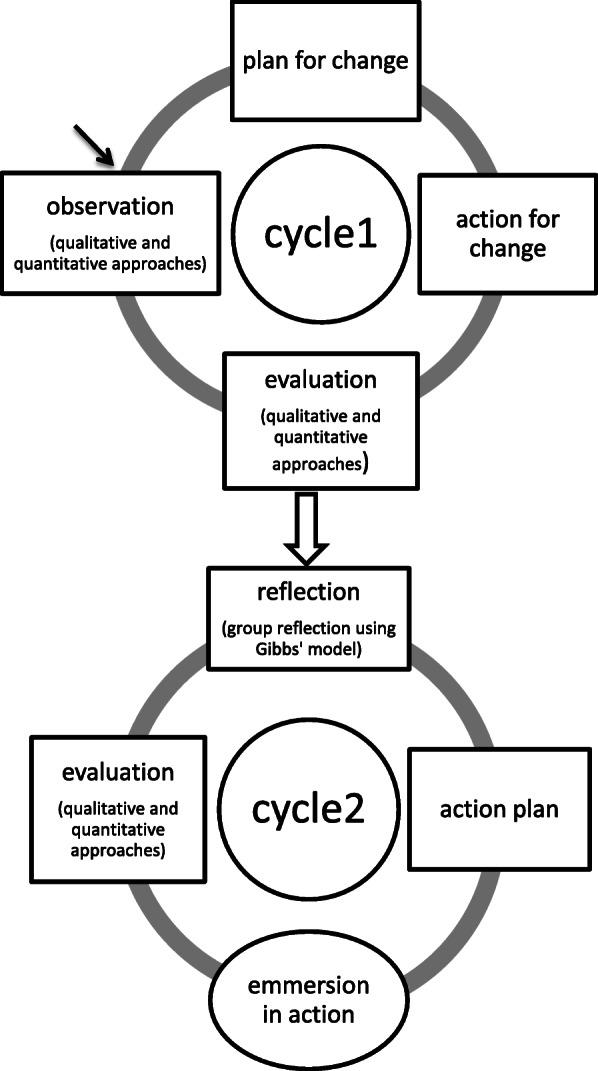
Methods: This participatory action research was conducted through two continuous cycles of reflection and acting for change over 20 months, in a comprehensive health center in Southern of Fars province in Iran. Participants included 25 health volunteers; two instructors and an academic researcher as facilitator. In the first cycle the participants discovered the challenges of health volunteers, prioritized them, designed an action plan, and implemented it. At the end of this cycle, evaluation was done with the participants' cooperation. The second cycle began with reflecting on the results of the first cycle and then after designing and implementing second action plan, final evaluation was done.
Results: Qualitative content analysis in the first phase led to the emergence of four categories, including role confusion, inadequate volunteer training, deficits in attracting and keeping volunteers, and being unfamiliar to the public. After the implementation of the action plan the participants learned through reflection and immersing in action. Finally, quantitative and qualitative data showed improvement of knowledge and performance, satisfaction, effectiveness of programs and improvement in volunteer's competence.
Conclusions: Clarification of volunteers' roles, supporting volunteers to improve their knowledge and skills with coherent planning based on their educational needs, are appropriate management plans to attract and retain volunteers. By presenting their services to the society, they will be empowered and motivated to continue.
Keywords: Empowerment; Health; Participatory action research; Volunteers.
Conflict of interest statement
All authors declared no potential conflicts of interest with respect to the research, authorship, and/or publication of this article.
References
-
- Jenner JR. Participation,leadership,and role of volunteerism among selected women volunteers. J Volunt Action Res. 1982;11(4):38–27. doi: 10.1177/089976408201100404. - DOI
-
- Brudney JL. Volunteers in State Government: Involvement, Management, and Benefits. Nonprofit Volunt Sect Q. 2000;29(1):111–130. doi: 10.1177/0899764000291007. - DOI
-
- Wing Keung J.L; Empowerment of non-academic personnel in higher education: exploring associations with perceived organizational support for innovation and organizational trust. 2010, University of Iowa. DOI : https://doi.org/10.17077/etd.nua1b3wl.
-
- Tulloch O, Taegtmeyer M, Ananworanich J, Chasombat S, Kosalaraksa P, Theobald S. What can volunteer co-providers contribute to health systems? The role of people living with HIV in the Thai paediatric HIV programme. Soc Sci Med. 2015;145:184e–1192. doi: 10.1016/j.socscimed.2014.09.017. - DOI - PubMed
Publication types
MeSH terms
Grants and funding
LinkOut - more resources
Full Text Sources
Other Literature Sources
