


Arthroscopy-controlled medial reefing and lateral release for recurrent patellar dislocation: clinical, radiologic outcomes and complications
- PMID: 33971864
- PMCID: PMC8111772
- DOI: 10.1186/s12891-021-04300-x
Arthroscopy-controlled medial reefing and lateral release for recurrent patellar dislocation: clinical, radiologic outcomes and complications
Abstract
Background: Few studies have reported the clinical outcomes of the medial reefing procedure and lateral release with arthroscopic control of medial retinacular tension in patients with recurrent patellar dislocation. The purpose of this study was to investigate the clinical, radiologic outcomes and complications of arthroscopy-controlled medial reefing and lateral release.
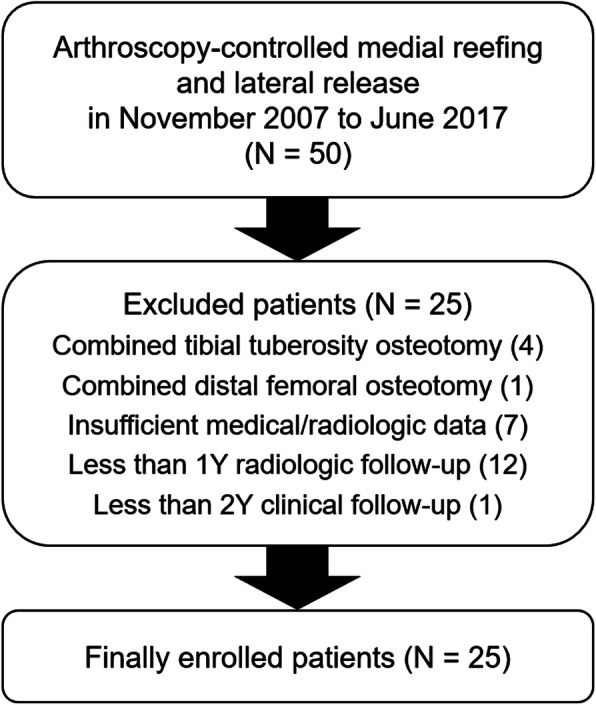
Methods: Patients who underwent arthroscopy-controlled medial reefing and lateral release for recurrent patellar dislocation between November 2007 and June 2017 were retrospectively evaluated. The clinical outcome (Kujala score), radiologic outcome (congruence and patellar tilt angles), and complications were evaluated at final follow-up. The results were also compared with literature-reported outcomes of other surgical procedures for patellar dislocation.
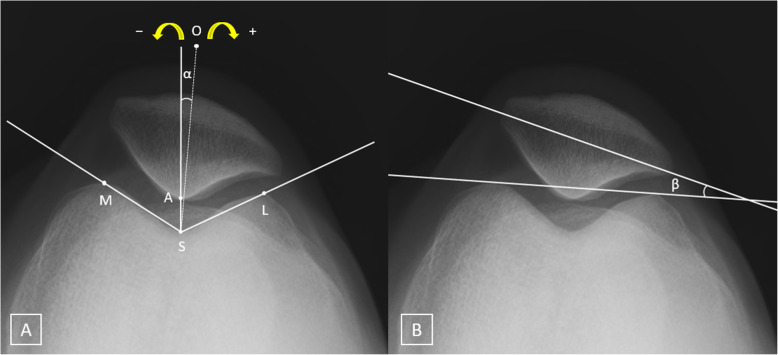
Results: Twenty-five patients (mean age, 18.3 ± 4.8 years) were included in the study. The mean clinical follow-up period was 7.0 ± 2.5 (range, 3.8-12.2) years. The mean Kujala score was significantly improved from 54.7 ± 14.0 (range, 37-86) preoperatively to 91.0 ± 7.6 (range, 63-99) at a mean follow-up period of 7 years (P < 0.001). The radiologic results also significantly improved from 17.8° ± 5.9° to 6.8° ± 2.4° (P < 0.001) in the congruence angle and from 17.5° ± 8.2° to 5.6° ± 3.1° (P < 0.001) in the patella tilt angle at a mean follow-up period of 3.6 years. One patient developed a redislocation after a traumatic event, and two patients showed patellofemoral osteoarthritis progression.
Conclusions: Arthroscopy-controlled medial reefing and lateral release significantly improved the clinical and radiologic outcomes of the patients with recurrent patellar dislocation at a mean follow-up period of 7 years. The results of this study are comparable with the literature-reported outcomes of other surgical procedures for patellar dislocation.
Level of evidence: Level IV, retrospective therapeutic case series.
Keywords: Arthroscopy‐controlled medial reefing; Complication; Congruence angle; Kujala score; Patellar dislocation; Patellar tilt angle.
Conflict of interest statement
The authors declare that they have no conflict of interest.
Figures
References
-
- Gravesen KS, Kallemose T, Blond L, Troelsen A, Barfod KW. High incidence of acute and recurrent patellar dislocations: a retrospective nationwide epidemiological study involving 24.154 primary dislocations. Knee Surg Sports Traumatol Arthrosc. 2018;26:1204–9. - PubMed
-
- Askenberger M, Janarv P-M, Finnbogason T, Arendt EA. Morphology and anatomic patellar instability risk factors in first-time traumatic lateral patellar dislocations: a prospective magnetic resonance imaging study in skeletally immature children. Am J Sports Med. 2017;45:50–8. doi: 10.1177/0363546516663498. - DOI - PubMed
MeSH terms
LinkOut - more resources
Full Text Sources
Other Literature Sources
Research Materials
