


Salivary caffeine in Parkinson's disease
- PMID: 33972579
- PMCID: PMC8110998
- DOI: 10.1038/s41598-021-89168-6
Salivary caffeine in Parkinson's disease
Abstract
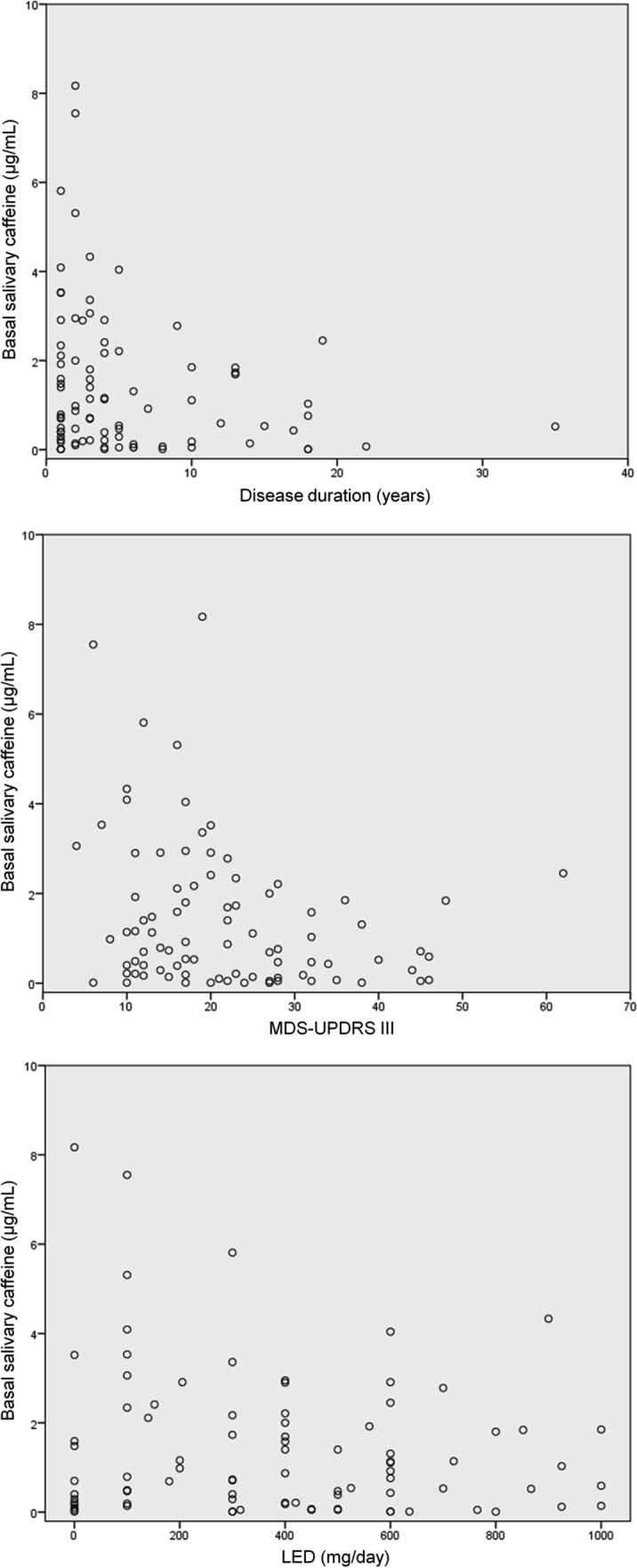
We aimed to investigate salivary caffeine content, caffeine absorption and metabolism in Parkinson's disease (PD) and verify whether salivary caffeine can be used as a biomarker of PD. We enrolled 98 PD patients and 92 healthy subjects. Caffeine and its major metabolite, paraxanthine, were measured in saliva samples collected before and 4 h after the oral intake of caffeine (100 mg). We measured caffeine absorption as the normalized increase in caffeine levels, and caffeine metabolism as the paraxanthine/caffeine ratio. The Movement Disorder Society Unified Parkinson's Disease Rating Scale part III, the Hoehn & Yahr, the presence of motor complications, and levodopa equivalent dose (LED) were assessed and correlated with caffeine levels, absorption, and metabolism. The effects of demographic and environmental features possibly influencing caffeine levels were also investigated. Caffeine levels were decreased in patients with moderate/advanced PD, while caffeine levels were normal in patients with early and de-novo PD, unrelated to caffeine intake. Caffeine absorption and metabolism were normal in PD. Decreased salivary caffeine levels in PD were associated with higher disease severity, longer duration, and the presence of motor complications, no significant association was found with LED. Salivary caffeine decrease correlates with PD progression.
Conflict of interest statement
The authors declare no competing interests.
Figures
References
Publication types
MeSH terms
Substances
LinkOut - more resources
Full Text Sources
Other Literature Sources
Medical
