. 2021 May 10;11(1):9914.
doi: 10.1038/s41598-021-89330-0.

Formulation and evaluation of injectable dextran sulfate sodium nanoparticles as a potent antibacterial agent

Affiliations

Formulation and evaluation of injectable dextran sulfate sodium nanoparticles as a potent antibacterial agent

Osama A Madkhali et al. Sci Rep. .

Abstract

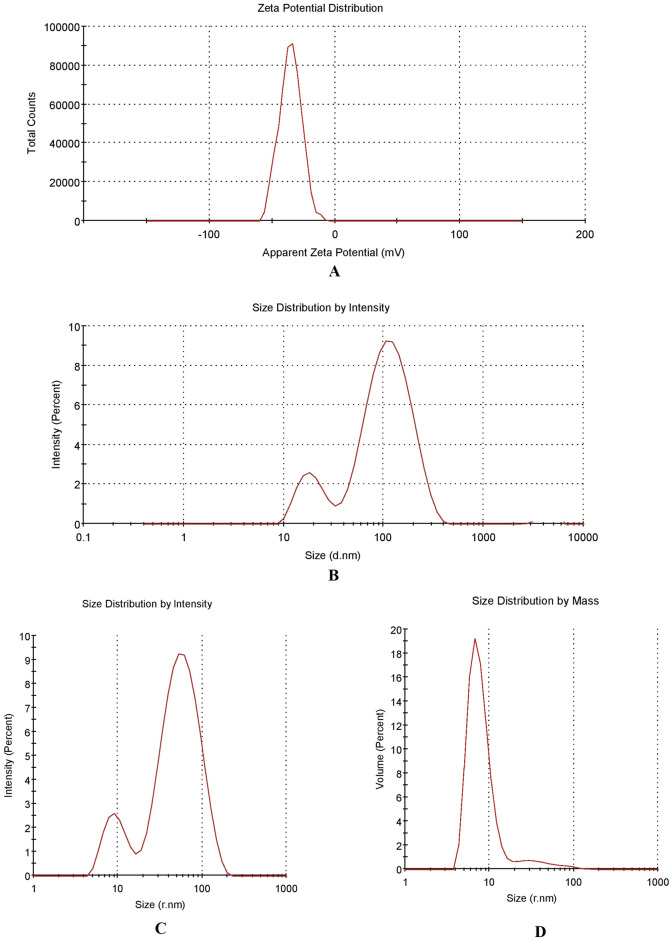
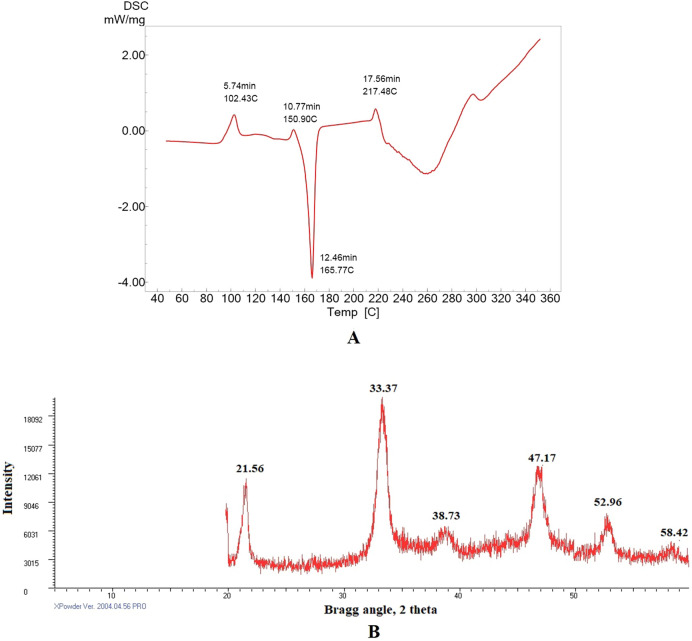
The purpose of this study was to develop a novel nano antibacterial formulation of dextran sulfate sodium polymer. The dextran sulfate sodium (DSS) nanoparticles were formulated with gelation technique. The nanoparticles exhibited significant physicochemical and effective antibacterial properties, with zeta potential of - 35.2 mV, particle size of 69.3 z d nm, polydispersity index of 0.6, and percentage polydispersity of 77.8. The DSS nanoparticles were stable up to 102 °C. Differential scanning calorimetry revealed an endothermic peak at 165.77 °C in 12.46 min, while XRD analysis at 2θ depicted various peaks at 21.56°, 33.37°, 38.73°, 47.17°, 52.96°, and 58.42°, indicating discrete nanoparticle formation. Antibacterial studies showed that the DSS nanoparticles were effective against Gram-positive and Gram-negative bacteria. The minimum inhibitory concentrations of DSS nanoparticles for Bacillus subtilis (B. subtilis), Staphylococcus aureus (S. aureus), Streptococcus pyogenes (S. pyogenes), Escherichia coli (E. coli), Pseudomonas aeruginosa (P. aeruginosa), Klebsiella pneumoniae (K. pneumoniae) and Proteus vulgaris (P. vulgaris) were 150, 200, 250, 150, 200, 250, 250 µg/mL, respectively. The antibacterial effects of DSS nanoparticles were in the order E. coli (26 ± 1.2 mm) at 150 µg/mL > S. pyogenes (24.6 ± 0.8 mm) at 250 µg/mL > B. subtilis (23.5 ± 2 mm) at 150 µg/mL > K. pneumoniae (22 ± 2 mm) at 250 µg/mL > P. aeruginosa (21.8 ± 1 mm) at 200 µg/mL > S. aureus (20.8 ± 1 mm) at 200 µg/mL > P. vulgaris (20.5 ± 0.9 mm) at 250 µg/mL. These results demonstrate the antibacterial potency of DSS injectable nanoparticles.


Conflict of interest statement

The authors declare no competing interests.

Figures
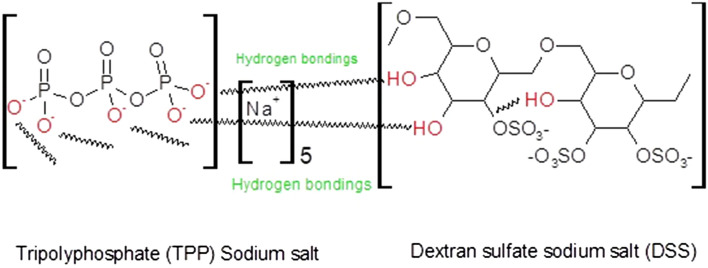
Figure 1
Figure 1
Possible chemical reaction between sodium salt of tripolyphosphate and dextran sulfate sodium salt.
Figure 2
Figure 2
Physical characterization of 1% w/v of dextran sulfate sodium (DSS) nanoparticles of batch 3. (A) Zetapotential graph of DSS nanoparticle. (B) Nano size (z d nm) distribution of DSS nanoparticles through particle intensity. (C) Size (r nm) distribution by intensity analysis of DSS nanoparticles. (D) Size (r nm) distribution analysis by mass.
Figure 3
Figure 3
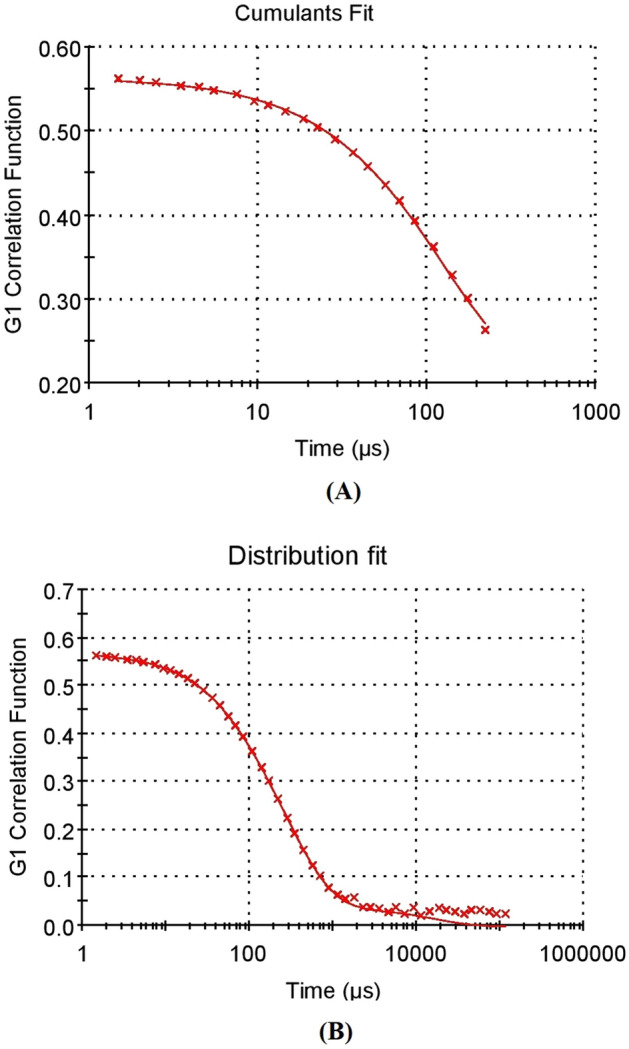
Physical characterization of 1% w/v of dextran sulfate sodium (DSS) nanoparticles of batch 3. (A) Cumulative fit analysis of DSS nanoparticle. (B) Size distribution fit analysis of DSS nanoparticles.
Figure 4
Figure 4
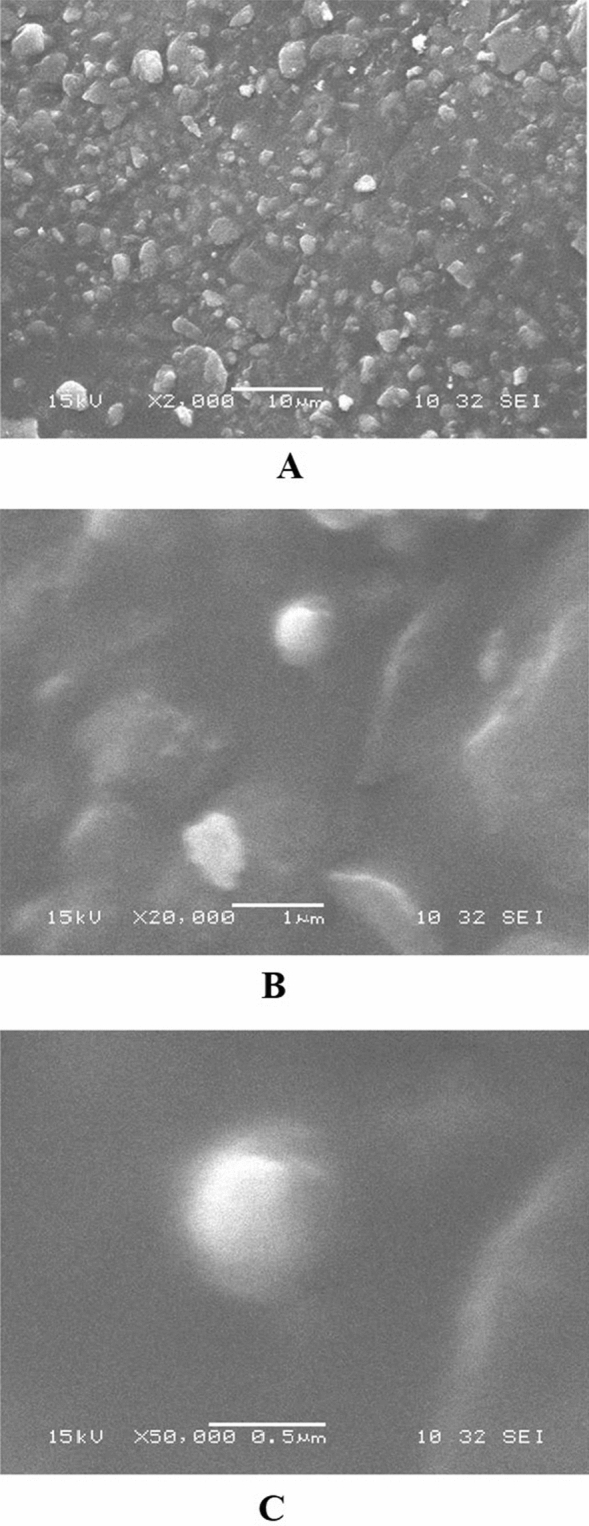
Scanning electron micrograph of dextran sulfate sodium (DSS) nanoparticles of batch 3. (A) DSS nanoparticle at × 2000 magnification. (B) DSS nanoparticles at × 10,000 magnification. (C) DSS nanoparticles at × 50,000 magnification.
Figure 5
Figure 5
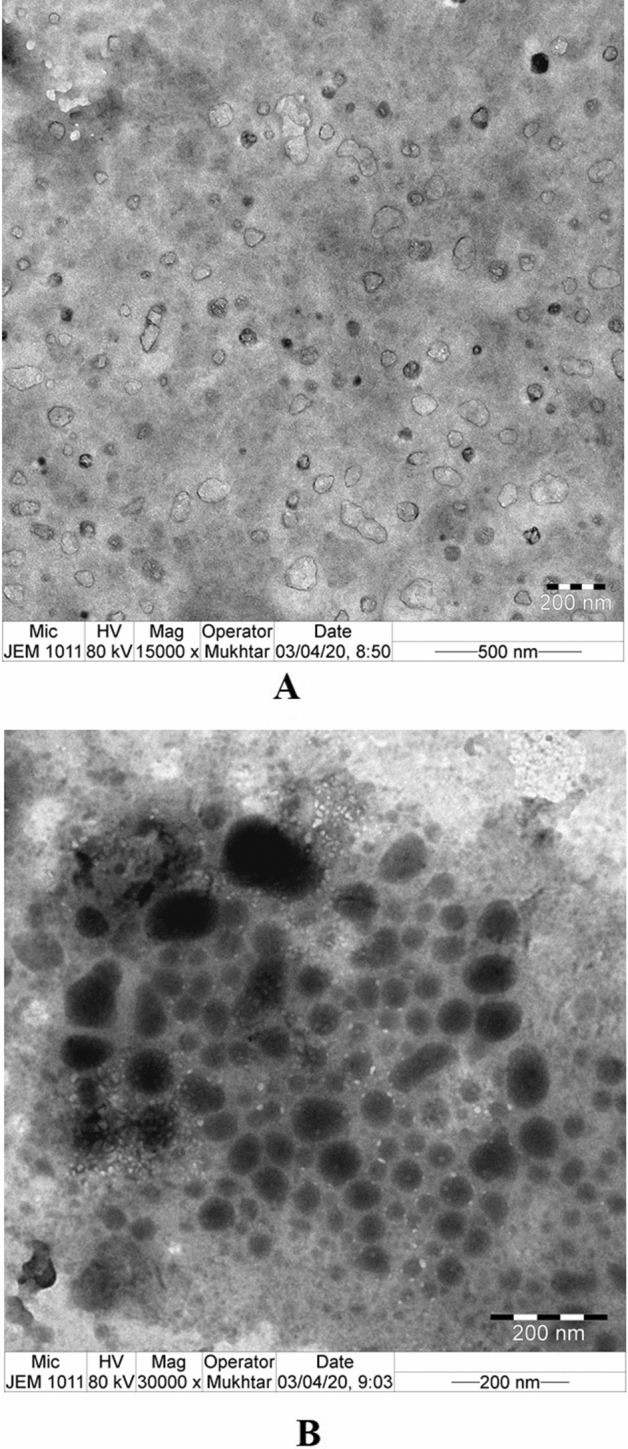
Transmission electron micrograph of dextran sulfate sodium (DSS) of batch 3 nanoparticles. (A) DSS nanoparticle at × 15,000 magnification. (B) DSS nanoparticles at × 30,000 magnification.
Figure 6
Figure 6
(A) First heating cycle of differential scanning calorimetry analysis of DSS nanoparticles, at a heating rate of 10 °C min−1, and atmospheric airflow was maintained at 10 mL min−1. (B) XRD analysis of DSS nanoparticles, the diffractogram was obtained at 2θ in the range 2°–50°.
Figure 7
Figure 7
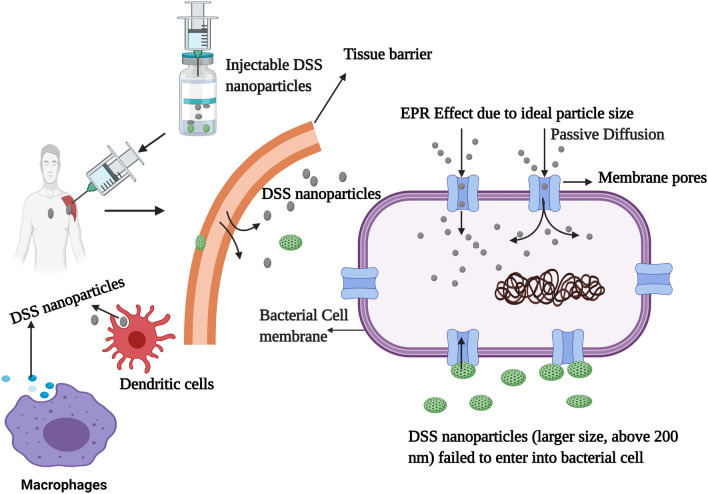
Diagrammatic representation of enhanced permeability and retention (EPR). During passive diffusion through the bacterial cell membrane, the DSS nanoparticle size impacts the bacterial cell diffusion. Passive diffusion can be feasible when the particle size is less than 200 nm. This figure was created with BioRender.com, Bio Render, Canada.

References

    1. Nan-Yao L, Wen-Chien KO, Po-Ren H. Nanoparticles in the treatment of infections caused by multidrug-resistant organisms. Front. Pharmacol. 2019;10:1153. doi: 10.3389/fphar.2019.01153. - DOI - PMC - PubMed
    1. Boucher HW, et al. Bad bugs, no drugs: no ESKAPE! An update from the Infectious Diseases Society of America. Clin. Infect. Dis. 2009;48:1–12. doi: 10.1086/595011. - DOI - PubMed
    1. Peleg AY, Hooper DC. Hospital-acquired infections due to gram-negative bacteria. N. Engl. J. Med. 2010;362:1804–1813. doi: 10.1056/NEJMra0904124. - DOI - PMC - PubMed
    1. Safhi MM, et al. Therapeutic potential of chitosan nanoparticles as antibiotic delivery system: challenges to treat multiple drug resistance. Asian J. Pharm. 2016;10(2):S61–S66. doi: 10.22377/ajp.v10i2.624. - DOI
    1. Ismail B, et al. Predictors of polymyxin B treatment failure in Gram-negative healthcare-associated infections among critically ill patients. J. Microbiol. Immunol. Infect. 2018;51:763–769. doi: 10.1016/j.jmii.2017.03.007. - DOI - PubMed

Publication types

MeSH terms