


A Smartphone App (TRIANGLE) to Change Cardiometabolic Risk Behaviors in Women Following Gestational Diabetes Mellitus: Intervention Mapping Approach
- PMID: 33973864
- PMCID: PMC8150415
- DOI: 10.2196/26163
A Smartphone App (TRIANGLE) to Change Cardiometabolic Risk Behaviors in Women Following Gestational Diabetes Mellitus: Intervention Mapping Approach
Abstract
Background: Gestational diabetes mellitus (GDM) is the most common complication during pregnancy and is associated with an increased risk for the development of cardiometabolic diseases. Behavioral interventions can reduce this risk, but current solutions insufficiently address the requirements for such a program. The systematic development of a scalable mobile health (mHealth) promotion program for mothers during the first years post-GDM may contribute to solving this problem.
Objective: The aim of this project was to systematically plan and develop a theory- and evidence-based mHealth intervention to change cardiometabolic risk behaviors in women during the first 5 years post-GDM that meets women's expected standards of commercial health apps.
Methods: The intervention mapping steps 1 to 4 structured the systematic planning and development of the mHealth program described in this paper. Steps 1 and 2 led to a theory- and evidence-based logic model of change for cardiometabolic health. Based on this model, the prevention program was designed (step 3) and produced (step 4) in cooperation with industrial partners to ensure a high technological standard of the resulting smartphone app for the iPhone (Apple Inc). Step 4 included a user study with women during the first 5 years post-GDM once a beta version of the app ("TRIANGLE") was available. The user study comprised 2 test rounds of 1 week (n=5) and 4 weeks (n=6), respectively. The tests included validated questionnaires on user acceptance, user logs, and think-alouds with semistructured interviews.
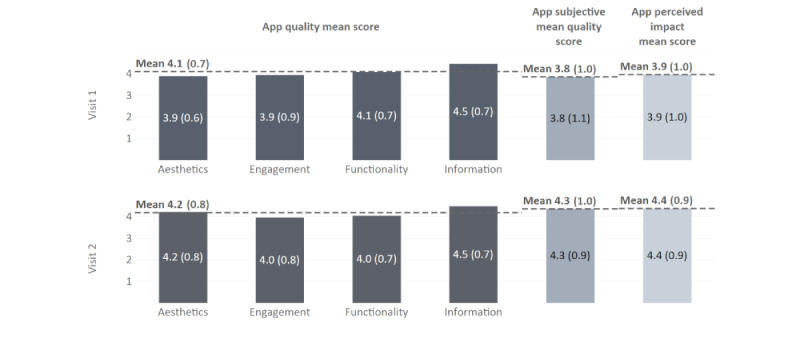
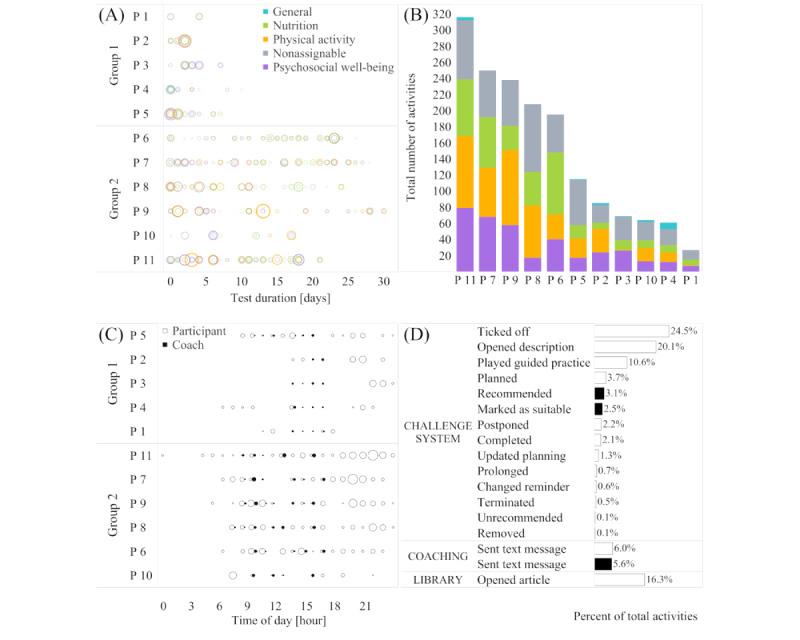
Results: The novel TRIANGLE app is among the first self-paced smartphone apps for individual habit change in the 3 lifestyle areas of physical activity, nutrition, and psychosocial well-being. The 3 core features-a challenge system, human coaching, and a library-address 11 behavioral determinants with 39 behavior change methods to support lifestyle changes. Participants in the user study showed a high acceptance, high perceived quality, and high perceived impact of the TRIANGLE app on their health behaviors. Participants tested the app regularly, used it intuitively, and suggested improvements. We then adapted the TRIANGLE app according to the insights from the user study before the full TRIANGLE program production.
Conclusions: The intervention mapping approach was feasible to plan and develop an innovative and scalable smartphone solution for women during the first 5 years post-GDM. The resulting TRIANGLE intervention has the potential to support behavior change for cardiometabolic disease prevention. However, the app needs further refinement and testing in clinical trials. Intervention mapping steps 5 (implementation plan) and 6 (evaluation plan) may support the integration of the TRIANGLE intervention into routine care.
Trial registration: German Clinical Trials Register DRKS00012736; https://www.drks.de/DRKS00012736.
Keywords: cardiometabolic disease; diabetes prevention; gestational diabetes mellitus; health behavior; intervention mapping; mHealth; smartphone app.
©Anne Lotte Potzel, Christina Gar, Jochen Seissler, Andreas Lechner. Originally published in JMIR mHealth and uHealth (https://mhealth.jmir.org), 11.05.2021.
Conflict of interest statement
Conflicts of Interest: None declared.
Figures
References
-
- Vounzoulaki E, Khunti K, Abner SC, Tan BK, Davies MJ, Gillies CL. Progression to type 2 diabetes in women with a known history of gestational diabetes: systematic review and meta-analysis. BMJ. 2020 May 13;369:m1361–11. doi: 10.1136/bmj.m1361. http://www.bmj.com/lookup/pmidlookup?view=long&pmid=32404325 - DOI - PMC - PubMed
-
- Kaul P, Savu A, Nerenberg KA, Donovan LE, Chik CL, Ryan EA, Johnson JA. Impact of gestational diabetes mellitus and high maternal weight on the development of diabetes, hypertension and cardiovascular disease: a population-level analysis. Diabet Med. 2015 Mar;32(2):164–73. doi: 10.1111/dme.12635. - DOI - PubMed
-
- Xu Y, Shen S, Sun L, Yang H, Jin B, Cao X. Metabolic syndrome risk after gestational diabetes: a systematic review and meta-analysis. PLoS One. 2014;9(1):e87863. doi: 10.1371/journal.pone.0087863. https://dx.plos.org/10.1371/journal.pone.0087863 - DOI - DOI - PMC - PubMed
-
- Ratner RE, Christophi CA, Metzger BE, Dabelea D, Bennett PH, Pi-Sunyer X, Fowler S, Kahn SE, Diabetes Prevention Program Research Group Prevention of diabetes in women with a history of gestational diabetes: effects of metformin and lifestyle interventions. J Clin Endocrinol Metab. 2008 Dec;93(12):4774–9. doi: 10.1210/jc.2008-0772. http://europepmc.org/abstract/MED/18826999 - DOI - PMC - PubMed
Publication types
MeSH terms
Associated data
LinkOut - more resources
Full Text Sources
Other Literature Sources
