


Inappropriate antibiotic use in the COVID-19 era: Factors associated with inappropriate prescribing and secondary complications. Analysis of the registry SEMI-COVID
- PMID: 33974637
- PMCID: PMC8112666
- DOI: 10.1371/journal.pone.0251340
Inappropriate antibiotic use in the COVID-19 era: Factors associated with inappropriate prescribing and secondary complications. Analysis of the registry SEMI-COVID
Abstract
Background: Most patients with COVID-19 receive antibiotics despite the fact that bacterial co-infections are rare. This can lead to increased complications, including antibacterial resistance. We aim to analyze risk factors for inappropriate antibiotic prescription in these patients and describe possible complications arising from their use.
Methods: The SEMI-COVID-19 Registry is a multicenter, retrospective patient cohort. Patients with antibiotic were divided into two groups according to appropriate or inappropriate prescription, depending on whether the patient fulfill any criteria for its use. Comparison was made by means of multilevel logistic regression analysis. Possible complications of antibiotic use were also identified.
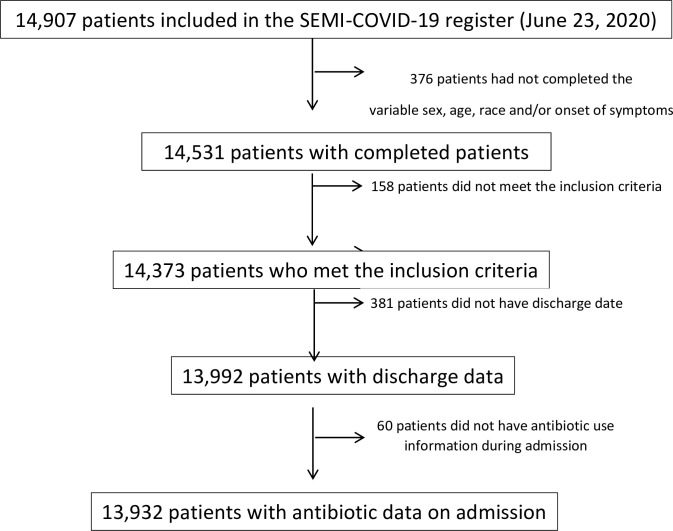
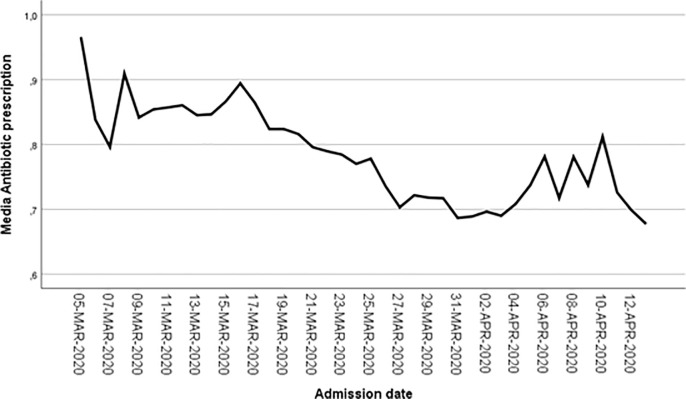
Results: Out of 13,932 patients, 3047 (21.6%) were prescribed no antibiotics, 6116 (43.9%) were appropriately prescribed antibiotics, and 4769 (34.2%) were inappropriately prescribed antibiotics. The following were independent factors of inappropriate prescription: February-March 2020 admission (OR 1.54, 95%CI 1.18-2.00), age (OR 0.98, 95%CI 0.97-0.99), absence of comorbidity (OR 1.43, 95%CI 1.05-1.94), dry cough (OR 2.51, 95%CI 1.94-3.26), fever (OR 1.33, 95%CI 1.13-1.56), dyspnea (OR 1.31, 95%CI 1.04-1.69), flu-like symptoms (OR 2.70, 95%CI 1.75-4.17), and elevated C-reactive protein levels (OR 1.01 for each mg/L increase, 95% CI 1.00-1.01). Adverse drug reactions were more frequent in patients who received ANTIBIOTIC (4.9% vs 2.7%, p < .001).
Conclusion: The inappropriate use of antibiotics was very frequent in COVID-19 patients and entailed an increased risk of adverse reactions. It is crucial to define criteria for their use in these patients. Knowledge of the factors associated with inappropriate prescribing can be helpful.
Conflict of interest statement
The authors have declared that no competing interests exist.
Figures
References
MeSH terms
Substances
LinkOut - more resources
Full Text Sources
Other Literature Sources
Medical
Research Materials
