


Vegetative traits can predict flowering quality in Phalaenopsis orchids despite large genotypic variation in response to light and temperature
- PMID: 33974639
- PMCID: PMC8112652
- DOI: 10.1371/journal.pone.0251405
Vegetative traits can predict flowering quality in Phalaenopsis orchids despite large genotypic variation in response to light and temperature
Abstract
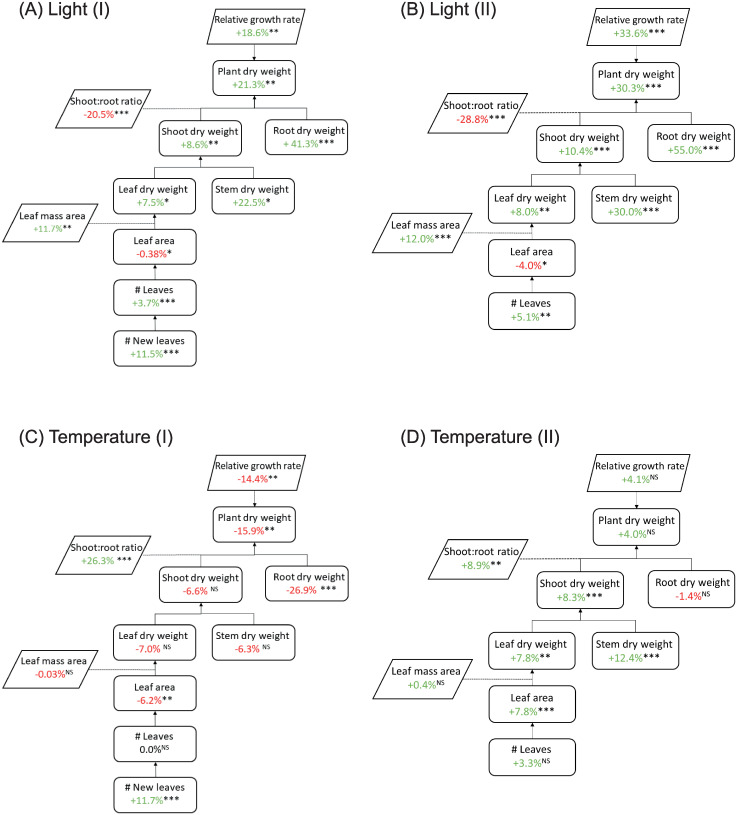
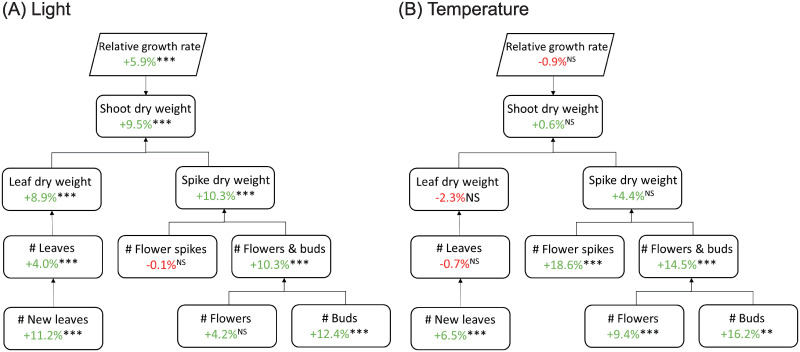
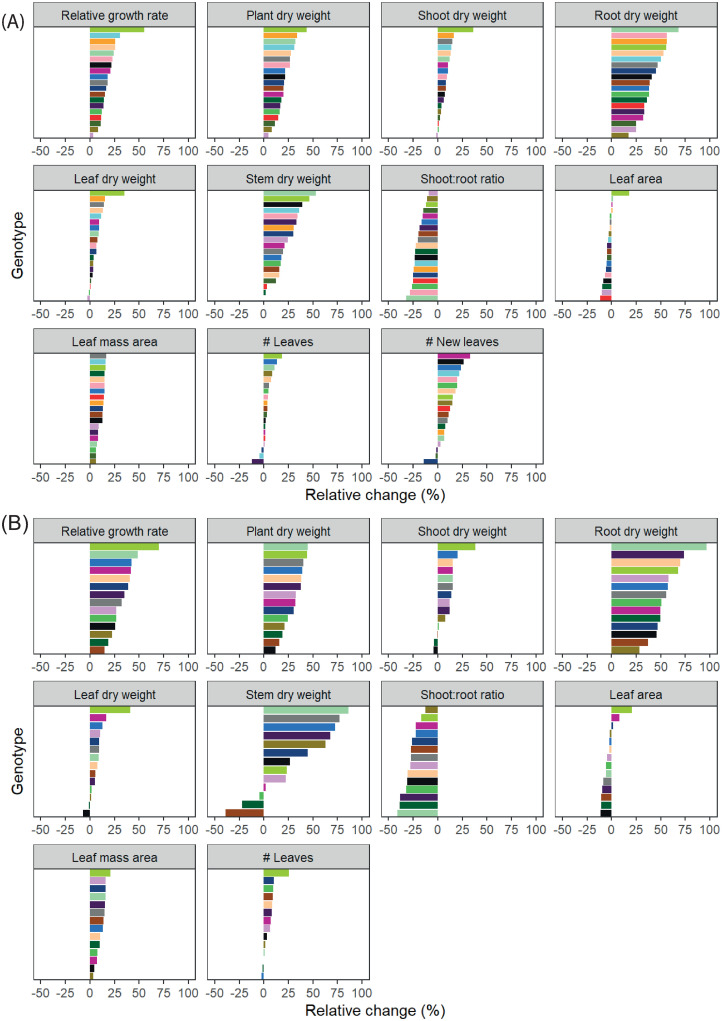
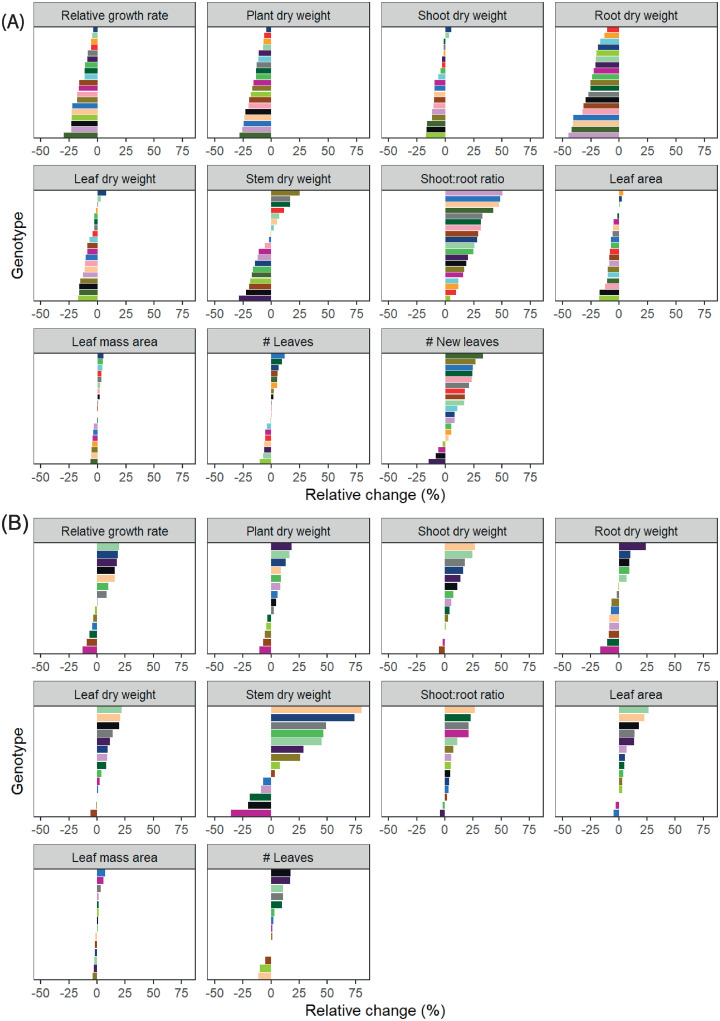
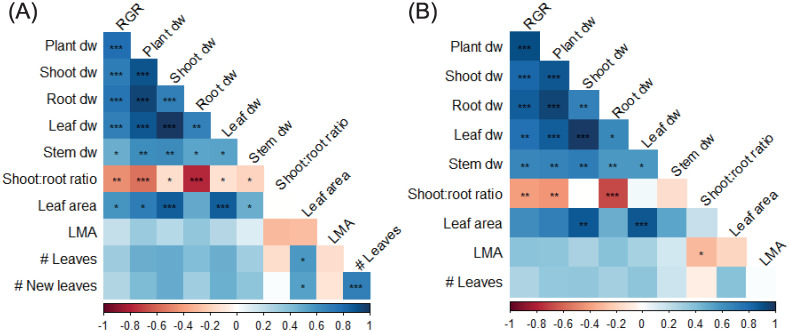
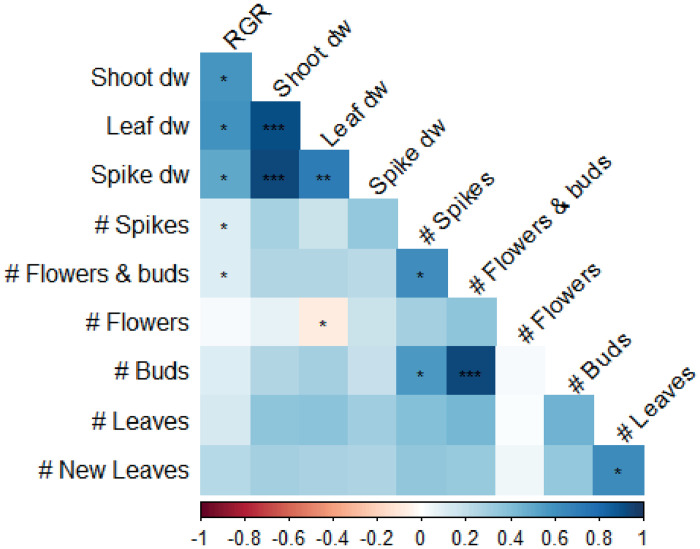
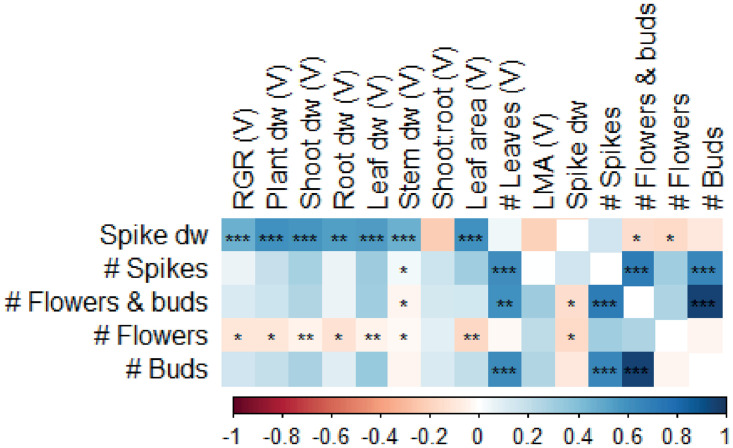
Phalaenopsis is an economically important horticultural ornamental, but its growth is slow and costly. The vegetative cultivation phase is long and required to ensure sufficient plant size. This is needed to develop high quality flowering plants. We studied the effects of temperature (27 or 31 °C) and light intensity (60 or 140 μmol m-2 s-1) on plant growth and development during the vegetative cultivation phase in two experiments, with respectively 19 and 14 genotypes. Furthermore, the after-effects of treatments applied during vegetative growth on flowering traits were determined. Increasing light intensity in the vegetative phase accelerated both vegetative plant growth and development. Increasing temperature accelerated vegetative leaf appearance rate, but strongly reduced plant and root biomass accumulation when temperatures were too high. Flowering was greatly affected by treatments applied during vegetative growth, and increased light and temperature increased number of flower spikes, and number of flowers and buds. Genotypic variation was large in Phalaenopsis, especially in traits related to flowering, thus care is needed when generalising results based on a limited number of cultivars. Plant biomass and number of leaves during vegetative growth were positively correlated with flowering quality. These traits can be used as an early predictor for flowering capacity and quality of the final product. Additionally, this knowledge can be used to improve selection of new cultivars.
Conflict of interest statement
This research is supported by the Netherlands Organization for Scientific Research (NWO), Anthura, Signify, Imac and B-Mex under contract number 14525. Anthura has provided plant material. Experiment II was conducted in climate chambers (vegetative) and greenhouse (flowering) of Anthura. Data in experiment II was collected by Anthura staff and EvT. Imac has provided consultancy oncultivation of the plants during the experiment. Signify has provided LED lamps used in both experiments. All funding partners have provided their input prior and during the project, but they had no role in data analysis or preparation of the manuscript. Project partners were never involved in final decision making about interpretation of results. There are no patents, products in development or marketed products to declare. This does not alter our adherence to PLOS ONE policies on sharing data and materials.
Figures

References
-
- Christenson EA. Phalaenopsis—A monograph. Portland, Oregon: Timber Press; 2001.
-
- Blanchard M, Lopez R, Runkle ES, Wang Y-T. Growing the Best Phalaenopsis. Orchids. 2007;4:266–71. Available from: https://www.aos.org/AOS/media/Content-Images/PDFs/GrowingtheBestPhalaeno....
-
- van der Knaap N. Cultivation Guide Phalaenopsis: Knowledge for Professionals. Anthura; 2005.
-
- Atkinson D, Porter JR. Temperature, plant development and crop yields. Trends Plant Sci. 1996;1(4):119–24.
Publication types
MeSH terms
LinkOut - more resources
Full Text Sources
Other Literature Sources
