


Distinctive roles of fibrillar collagen I and collagen III in mediating fibroblast-matrix interaction: A nanoscopic study
- PMID: 33975247
- PMCID: PMC8165026
- DOI: 10.1016/j.bbrc.2021.04.088
Distinctive roles of fibrillar collagen I and collagen III in mediating fibroblast-matrix interaction: A nanoscopic study
Abstract
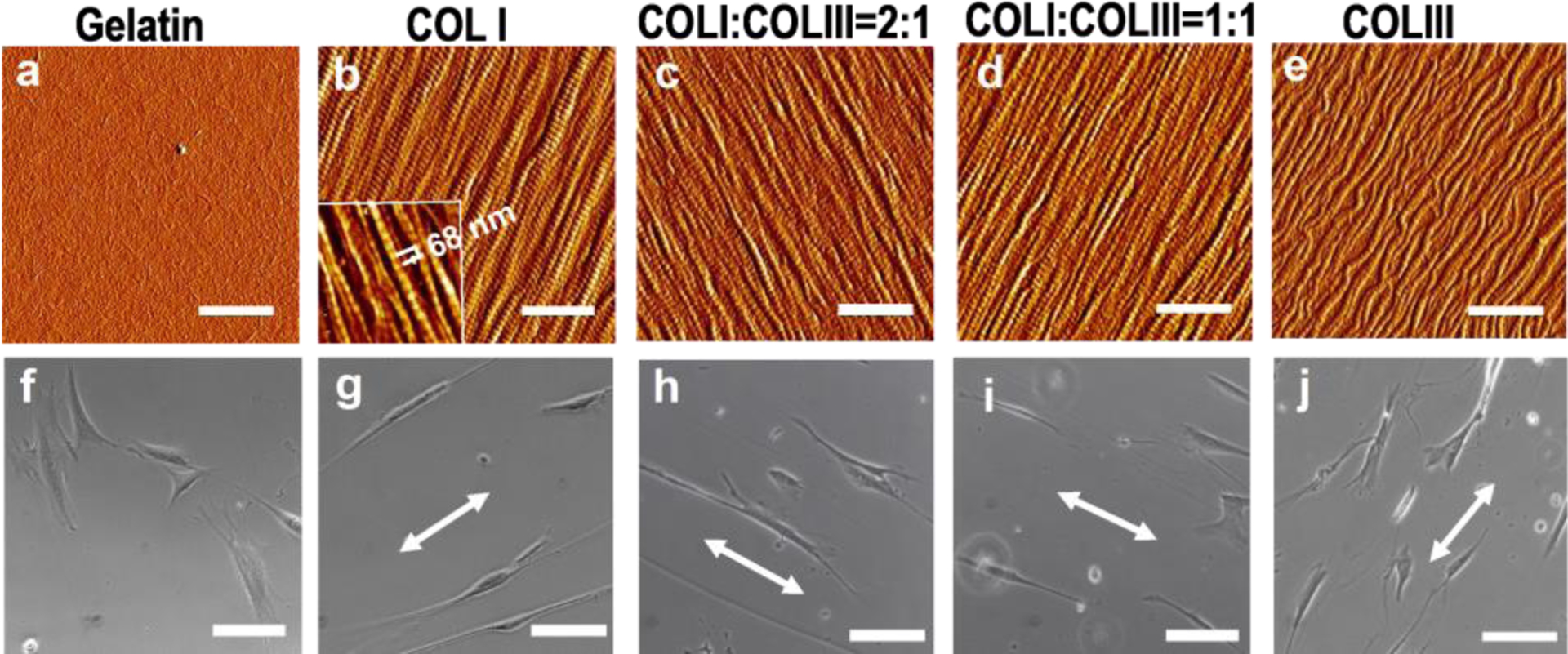
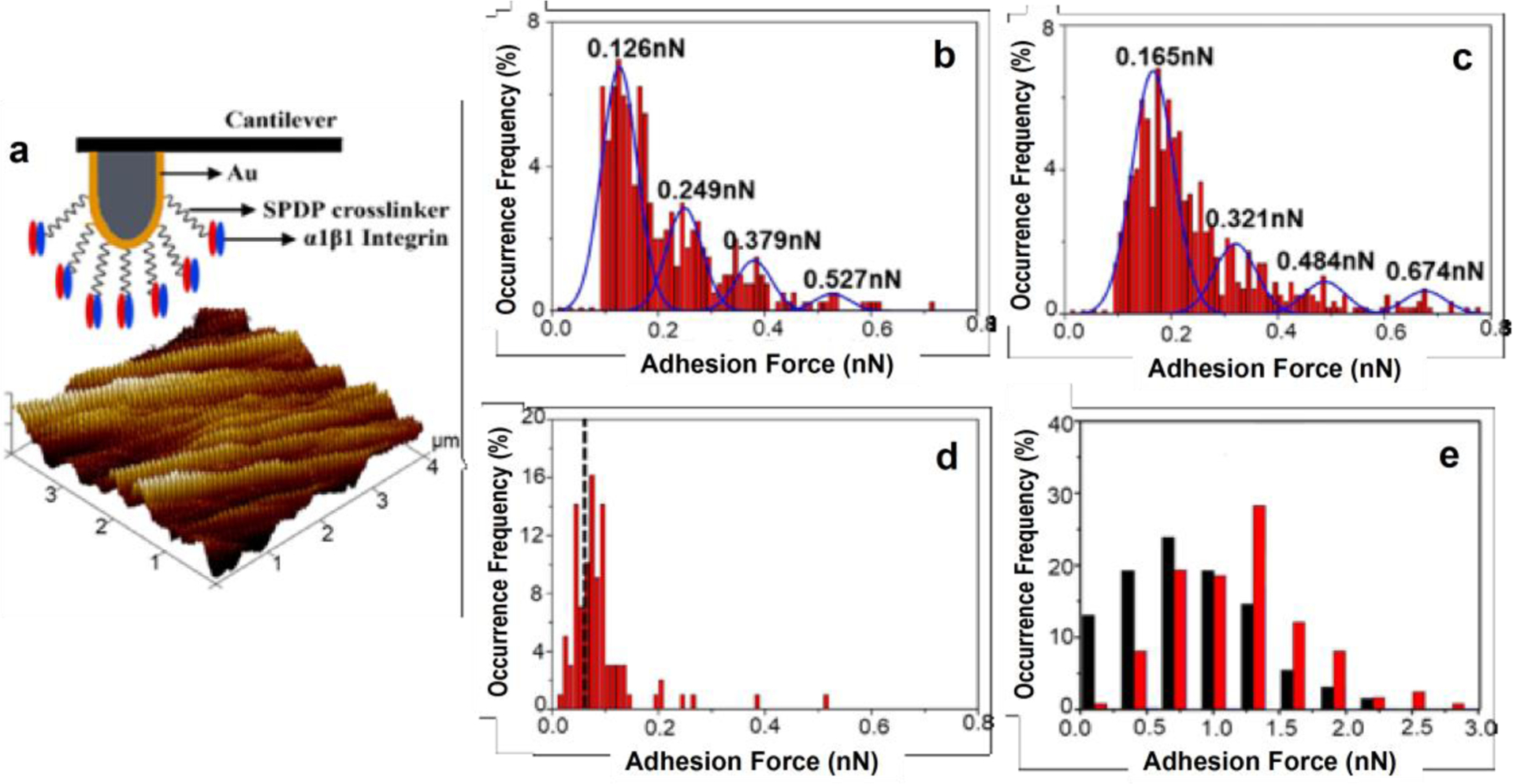
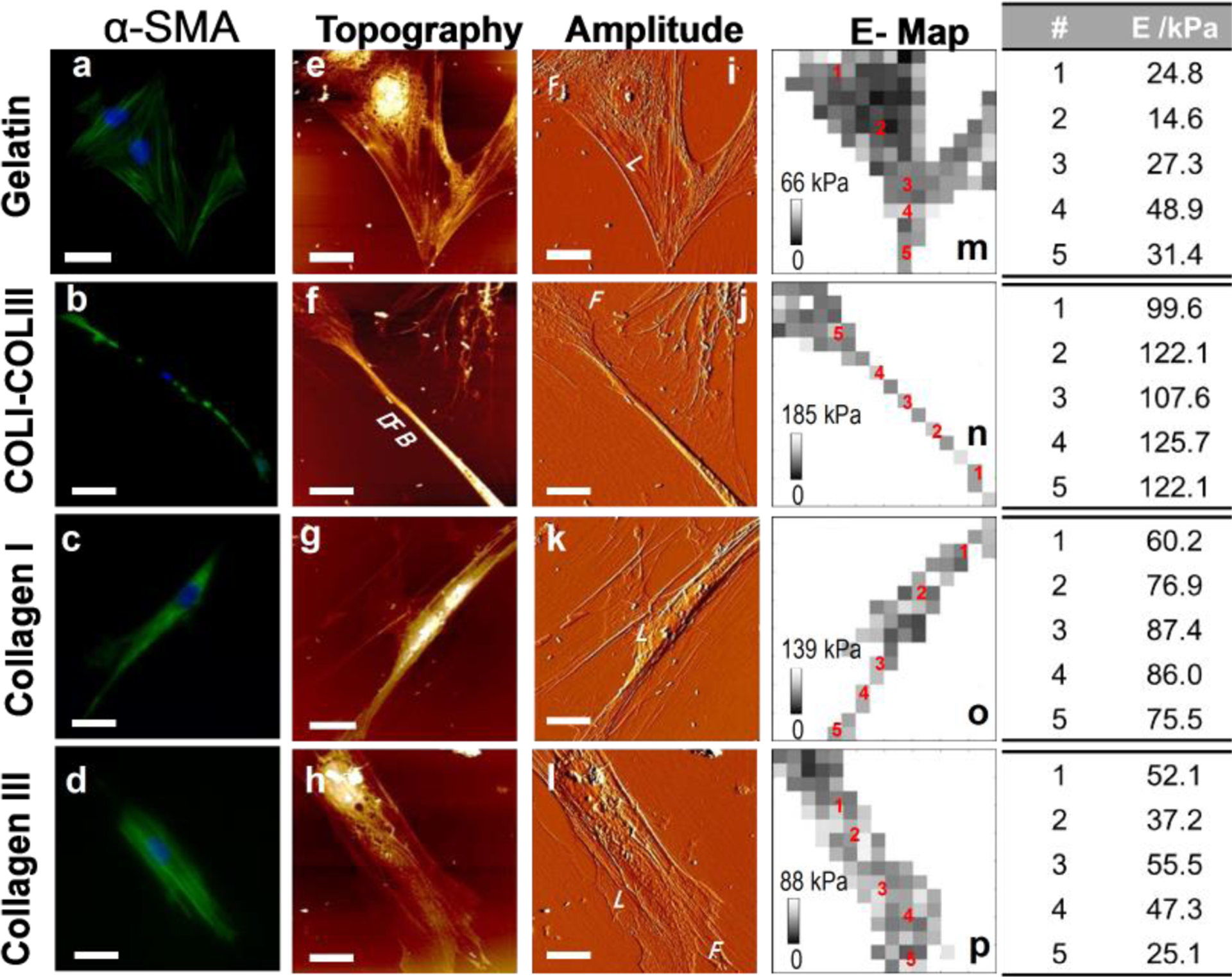
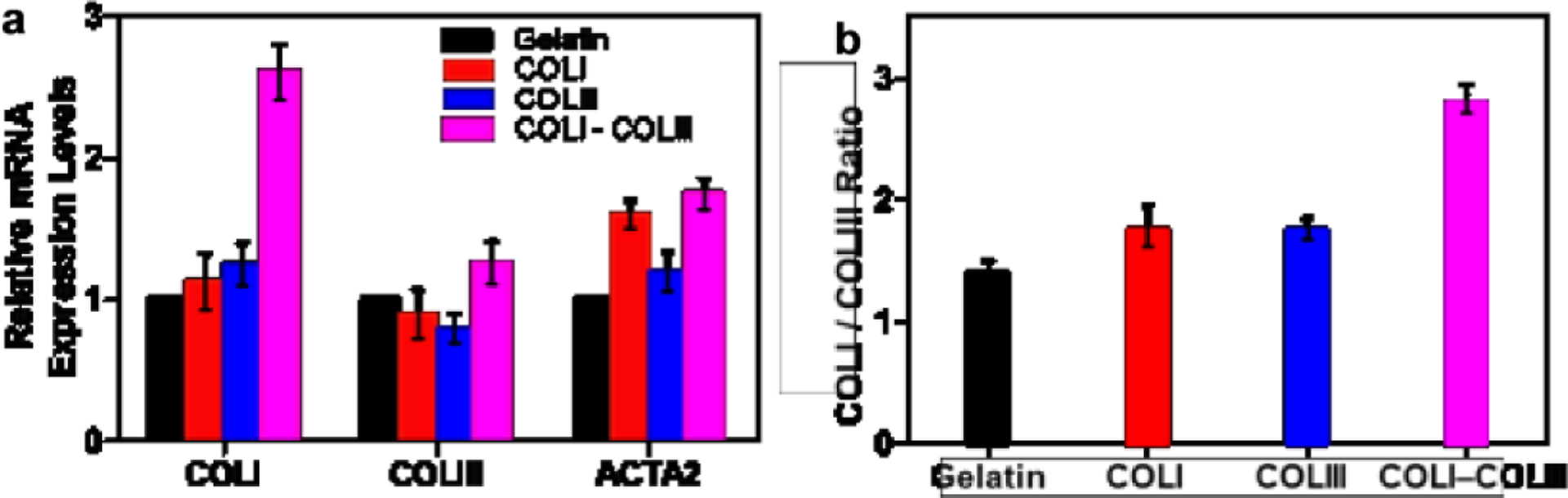
One major goal in tissue engineering is to create functional materials, mimicking scaffolds in native tissues, to modulate cell function for tissue repair. Collagen is the most abundant structural protein in human body. Though collagen I (COLI) and collagen III (COLIII) are the predominant collagen types in connective tissues and they form stable hybrid fibrils at varied ratios, cell responses to the hybrid matrices are underinvestigated. In this work, we aim to explicate the distinctive roles of COLI and COLIII in fibroblast activation. Unidirectionally aligned COLI, COLIII and COLI-COLIII hybrid nanofibrils were generated via epitaxial growth of collagen on mica. AFM analyses revealed that, with the increase of COLI/COLIII ratio, the fibril width and stiffness increased and the binding affinity of cells to the matrix decreased. A hybrid matrix was found to activate fibroblasts the most effectively, characterized by extensive cell polarization with rigid stress fiber bundles and high α-SMA expression, and by the highest-level of collagen synthesis. It is ascribed to the fine balance between biochemical and biophysical cues achieved on the hybrid matrix. Thus, matrices of aligned COLI-COLIII hybrid fibrils and their derived multifunctional composites can be good candidates of implantation scaffolds for tissue regeneration.
Keywords: Cell-matrix interaction; Collagen I; Collagen III; Collagen synthesis; Fibroblast activation; Nanofibrils.
Copyright © 2021 Elsevier Inc. All rights reserved.
Conflict of interest statement
Declaration of competing interest The authors declare that they have no known competing financial interests or personal relationships that could have appeared to influence the work reported in this paper.
Figures
References
-
- Gelse K, Pöschl E, Aigner T, Collagens--structure, function, and biosynthesis, Advanced drug delivery reviews, 55 (2003) 1531–1546. - PubMed
-
- Kim T, Sridharan I, Ma Y, Zhu B, Chi N, Kobak W, Rotmensch J, Schieber JD, Wang R, Identifying distinct nanoscopic features of native collagen fibrils towards early diagnosis of pelvic organ prolapse, Nanomedicine : nanotechnology, biology, and medicine, 12 (2016) 667–675. - PubMed
-
- Hance AJ, Crystal RG, Rigid control of synthesis of collagen types I and III by cells in culture, Nature, 268 (1977) 152–154. - PubMed
-
- Cheng W, Yan-hua R, Fang-gang N, Guo-an Z, The content and ratio of type I and III collagen in skin differ with age and injury, African Journal of Biotechnology, 10 (2013) 2524–2529.
-
- Widgerow AD, Bioengineered matrices—part 2: focal adhesion, integrins, and the fibroblast effect, Annals of plastic surgery, 68 (2012) 574–578. - PubMed
Publication types
MeSH terms
Substances
Grants and funding
LinkOut - more resources
Full Text Sources
Other Literature Sources
Miscellaneous
