


Oral administration of Moringa oleifera leaf powder relieves oxidative stress, modulates mucosal immune response and cecal microbiota after exposure to heat stress in New Zealand White rabbits
- PMID: 33975652
- PMCID: PMC8114525
- DOI: 10.1186/s40104-021-00586-y
Oral administration of Moringa oleifera leaf powder relieves oxidative stress, modulates mucosal immune response and cecal microbiota after exposure to heat stress in New Zealand White rabbits
Abstract
Background: Heat stress (HS) disrupts the gut barrier allowing the uptake of lipopolysaccharide (LPS) and leads to an inflammatory response and changes in gut microbiota composition. Moringa oleifera leaf powder (MOLP) has been proposed to combat HS, yet its alleviate role is currently under investigation. The current study investigated the effects of chronic HS and MOLP supplementation on changes in redox status and immune response of cecal mucosa along with alteration in cecal microbiota.
Methods: A total of 21 young New Zealand White (NZW) rabbits (male) about 32 weeks old (mean body weight of 3318 ± 171 g) reared on a commercial pelleted diet were employed; divided into three groups (n = 7): control (CON, 25 °C), heat stress (HS, 35 °C for 7 h daily), and HS supplemented orally with MOLP (HSM, 35 °C) at 200 mg/kg body weight per day for 4 weeks.
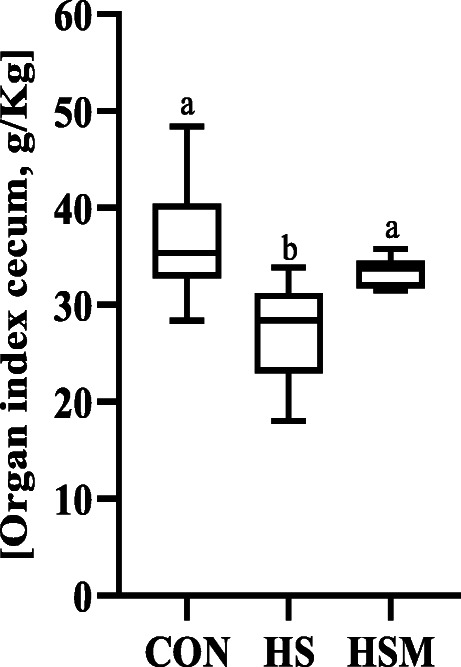
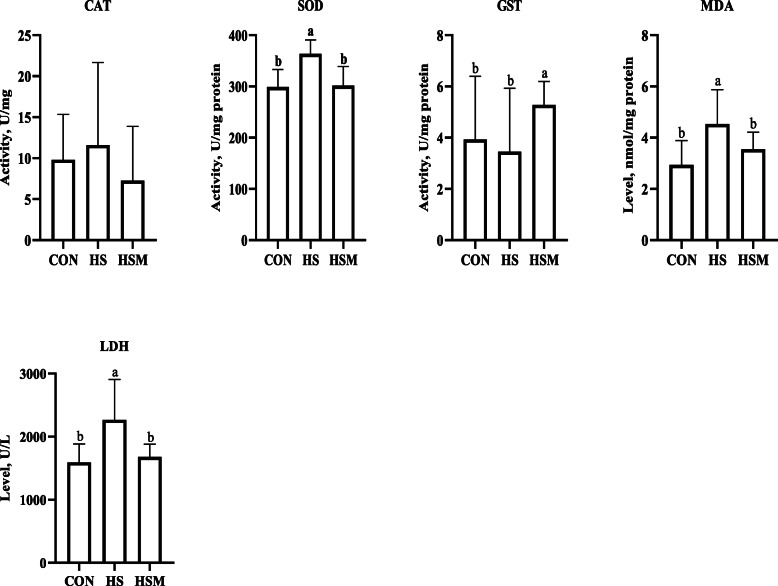
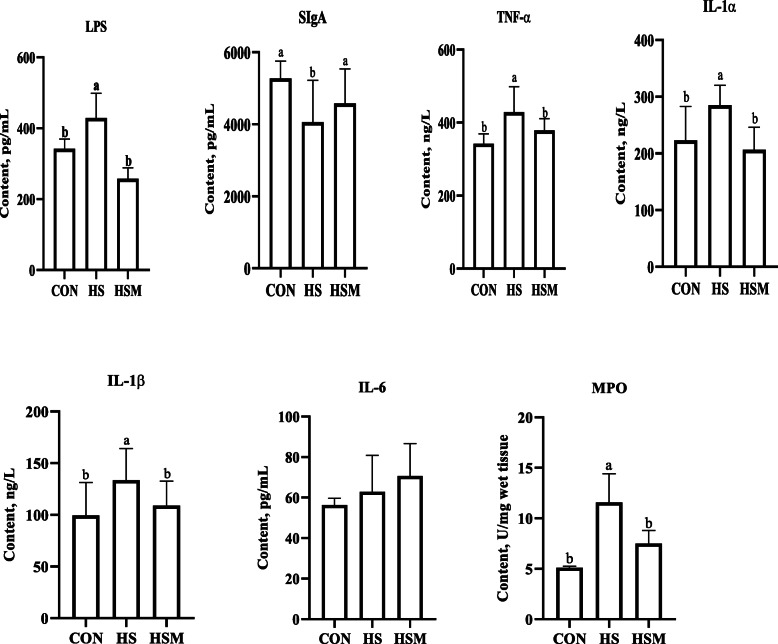
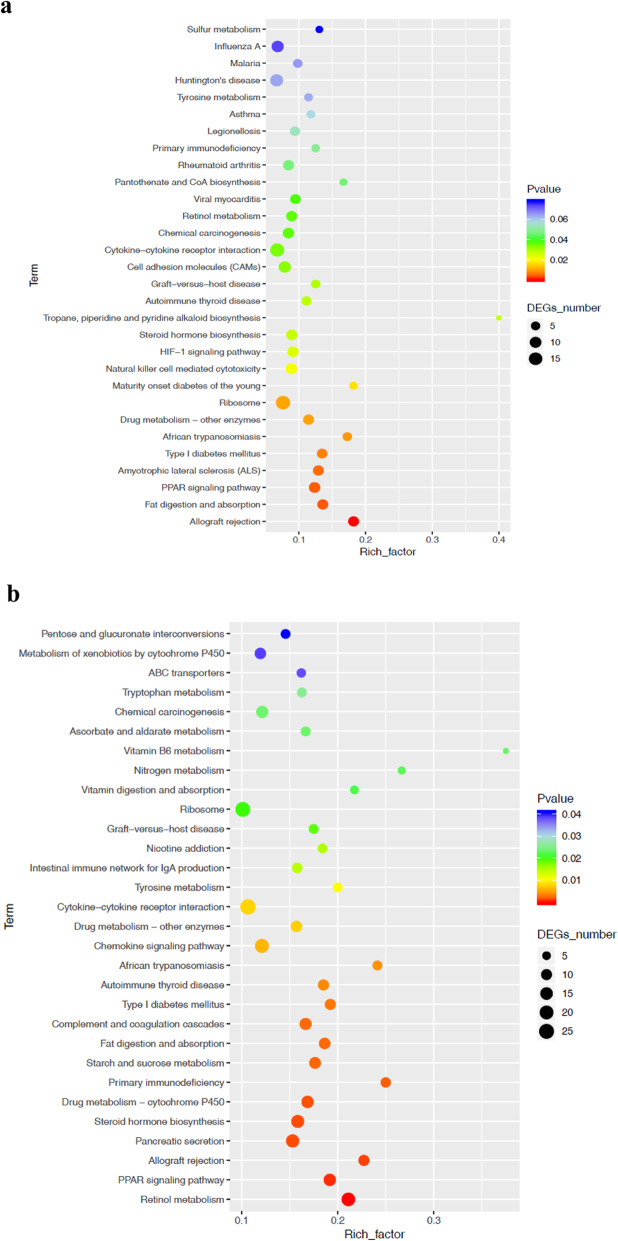
Results: The results demonstrated that MOLP supplementation increased organ index of cecal tissue compared with the HS group (P > 0.05). Levels of malonaldehyde (MDA) and activity of superoxide dismutase (SOD) as well as lactate dehydrogenase (LDH) were reduced in the cecal mucosa of the HSM group compared with the HS group. MOLP downregulated the contents of cecal mucosa LPS, several inflammatory markers (TNF-α/IL-1α/IL-1β), and myeloperoxidase (MPO) in the HSM group (P < 0.05). Secretory immunoglobulin A (SIgA) was increased in the HSM group compared with the HS group (P < 0.05). The transcriptome of cecal mucosa showed that MOLP reduced gene expression relative to several immune factors, including IL-10, IFNG, and RLA, whereas both HS and MOLP increased the gene expression of fat digestion and absorption pathway, including APOA1, FABP1, FABP2, MTTP, and LOC100344166, compared to the CON group (P < 0.001). At the phylum level, the relative abundance of Proteobacteria was increased by HS, while Actinobacteria was significantly increased by HSM compared to other groups (P < 0.05). At genus level, Papillibacter was higher in abundance in HSM groups compared to CON and HS groups (P < 0.05). Higher butyrate concentrations were observed in the HSM group than HS and CON groups (P < 0.05).
Conclusion: In conclusion, HS in growing rabbits resulted in alteration of cecal microbiota at phyla level as well as increased oxidative stress and expression of mucosal inflammatory genes. Whereas, oral MOLP supplementation elevated the relative weight of cecum, affected their immunological and cecal micro-ecosystem function by improving antioxidant status and down-regulating mucosal tissue inflammatory response.
Keywords: Cecal microbiota; Heat stress; Moringa oleifera leaf powder; Rabbits; Short chain fatty acids.
Conflict of interest statement
The authors declare that they have no competing interests.
Figures

References
-
- Sohn J, Couto MA. Anatomy, Physiology, and Behavior. In The Laboratory Rabbit, Guinea Pig, Hamster, and Other Rodents. Elsevier Inc.; 2012. p. 195–215. 10.1016/B978-0-12-380920-9.00008-0.
-
- Sakaguchi E. Digestive strategies of small hindgut fermenters. Anim Sci J. 2003;74(5):327–337. doi: 10.1046/j.1344-3941.2003.00124.x. - DOI
Grants and funding
LinkOut - more resources
Full Text Sources
Other Literature Sources
Research Materials
Miscellaneous
