


Applied Rapid Qualitative Analysis to Develop a Contextually Appropriate Intervention and Increase the Likelihood of Uptake
- PMID: 33976073
- PMCID: PMC8132894
- DOI: 10.1097/MLR.0000000000001553
Applied Rapid Qualitative Analysis to Develop a Contextually Appropriate Intervention and Increase the Likelihood of Uptake
Abstract
Background: Rapid approaches to collecting and analyzing qualitative interview data can accelerate discovery timelines and intervention development while maintaining scientific rigor. We describe the application of these methods to a program designed to improve care coordination between the Veterans Health Administration (VHA) and community providers.
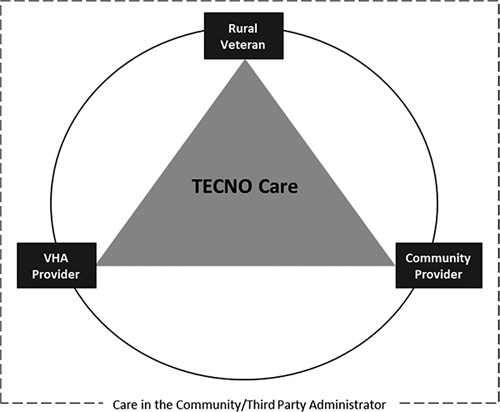
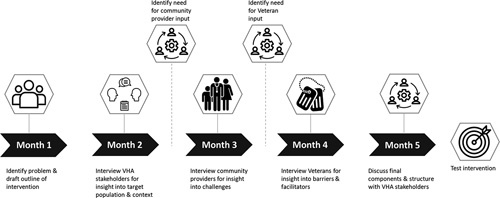
Methods: Care coordination between VHA and community providers can be challenging in rural areas. The Telehealth-based Coordination of Non-VHA Care (TECNO Care) intervention was designed to improve care coordination among VHA and community providers. To ensure contextually appropriate implementation of TECNO Care, we conducted preimplementation interviews with veterans, VHA administrators, and VHA and community providers involved in community care. Using both a rapid approach and qualitative analysis, an interviewer and 1-2 note-taker(s) conducted interviews.
Results: Over 5 months, 18 stakeholders were interviewed and we analyzed these data to identify how best to deliver TECNO Care. Responses relevant to improving care coordination include health system characteristics; target population; metrics and outcomes; challenges with the current system; and core components. Veterans who frequently visit VHA or community providers and are referred for additional services are at risk for poor outcomes and may benefit from additional care coordination. Using these data, we designed TECNO Care to include information on VHA services and processes, assist in the timely completion of referrals, and facilitate record sharing.
Conclusion: Rapid qualitative analysis can inform near real-time intervention development and ensure relevant content creation while setting the stage for stakeholder buy-in. Rigorous and timely analyses support the delivery of contextually appropriate, efficient, high-value patient care.
Copyright © 2021 The Author(s). Published by Wolters Kluwer Health, Inc.
Conflict of interest statement
H.B.B. reports receiving research funds from Sanofi, Otsuka, Johnson and Johnson, Improved Patient Outcomes, Novo Nordisk, PhRMA Foundation as well as consulting funds from Sanofi, Otsuka, Abbott, and Novartis. L.L.Z. reports receiving funding from the PhRMA Foundation and Proteus Digital Health as well as consulting funds from Novartis. A.A.L. reports receiving funding from Otsuka and the PhRMA Foundation. The remaining authors declare no conflicts of interest.
Figures
References
-
- Chalmers I, Glasziou P. Avoidable waste in the production and reporting of research evidence. Lancet. 2009;374:86–89. - PubMed
-
- Balas EA, Boren SA. Managing clinical knowledge for health care improvement. Yearb Med Inform. 2000;1:65–70. - PubMed
-
- Bauer MS, Kirchner J. Implementation science: what is it and why should I care? Psychiatry Res. 2019;283:112376. - PubMed
Publication types
MeSH terms
Grants and funding
LinkOut - more resources
Full Text Sources
Other Literature Sources
Medical
