. 2021 May 11;12(1):2671.
doi: 10.1038/s41467-021-22962-y.

Taxonomic signatures of cause-specific mortality risk in human gut microbiome

Affiliations

Taxonomic signatures of cause-specific mortality risk in human gut microbiome

Aaro Salosensaari et al. Nat Commun. .

Abstract

The collection of fecal material and developments in sequencing technologies have enabled standardised and non-invasive gut microbiome profiling. Microbiome composition from several large cohorts have been cross-sectionally linked to various lifestyle factors and diseases. In spite of these advances, prospective associations between microbiome composition and health have remained uncharacterised due to the lack of sufficiently large and representative population cohorts with comprehensive follow-up data. Here, we analyse the long-term association between gut microbiome variation and mortality in a well-phenotyped and representative population cohort from Finland (n = 7211). We report robust taxonomic and functional microbiome signatures related to the Enterobacteriaceae family that are associated with mortality risk during a 15-year follow-up. Our results extend previous cross-sectional studies, and help to establish the basis for examining long-term associations between human gut microbiome composition, incident outcomes, and general health status.


Conflict of interest statement

The authors declare the following competing interests: V.S. has consulted for Novo Nordisk and Sanofi and received honoraria from these companies. He also has ongoing research collaboration with Bayer AG, all unrelated to this study. The other authors declare no competing interests.

Figures
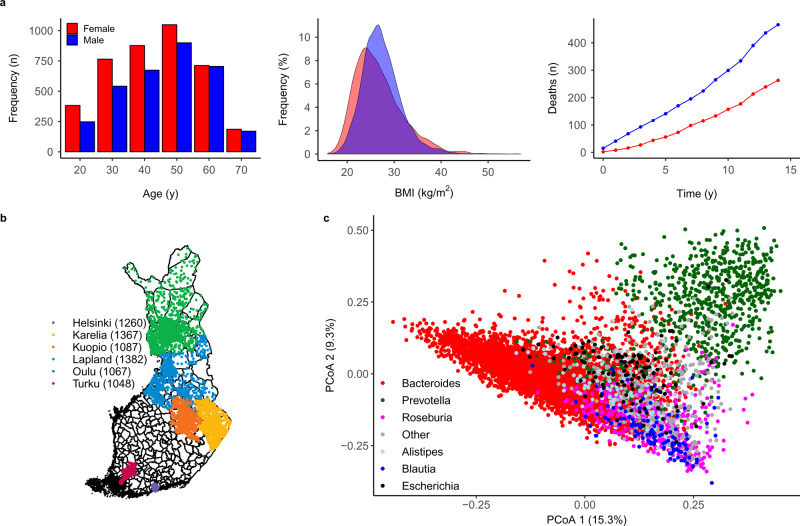
Fig. 1
Fig. 1. Study sample and gut microbiome characteristics.
a At baseline, the study sample (n = 7211) had a balanced sex ratio (55% women in red:men in blue), a mean age of 49 years (range 24–74; left panel) and a mean body mass index (BMI) of 27 kg/m2 (range 16–57; middle panel). During a median follow-up time of 14.8 years, 721 of 7055 (10.2%) participants with complete data who were included in the prospective analysis died (right panel). b A total of 7211 out of 13,500 randomly sampled individuals (53.4% participation rate) from six catchment areas in Finland underwent stool sampling, a physical examination and filled in a questionnaire on health behaviour, history of diseases and current health. c Principal coordinate analysis (PCoA) indicates sample similarity based on species-level taxonomic composition. The colour indicates the dominant (most abundant) genus in each sample. Altogether, 96% of the samples are dominated by one of the six genera that are indicated in the figure.
Fig. 2
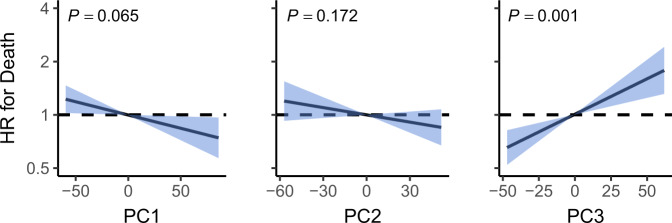
Fig. 2. Principal components and mortality risk.
Association between mortality risk and the first three principal components of beta diversity (PC). Black line indicates the estimated hazard ratio compared to median PC value and blue area the 95% confidence interval (CI). Unit variance increase in the PCs were related to hazard ratios of 0.92 (95% CI, 0.85–0.99; FDR-adjusted P = 0.065; two-tailed Wald test), 0.95 (95% CI, 0.87–1.02; FDR-adjusted P = 0.17; two-tailed Wald test) and 1.14 (95% CI, 1.07–1.23; FDR-adjusted P = 0.001; two-tailed Wald test) for PC1–PC3, respectively. Analyses are adjusted for age, body mass index, sex, smoking, diabetes, use of antineoplastic and immunomodulating agents, systolic blood pressure and self-reported antihypertensive medication. The dashed line represents a hazard ratio of 1 set at median PC value. HR hazard ratio.
Fig. 3
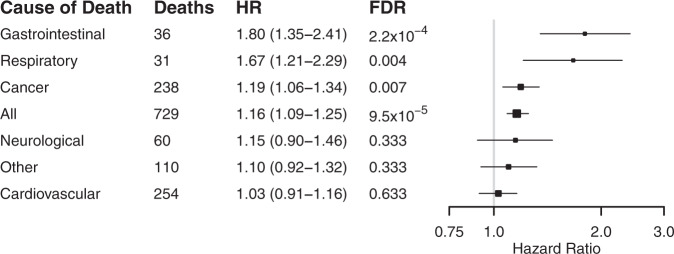
Fig. 3. The association between Enterobacteriaceae abundance and cause-specific mortality.
Cox hazard ratios and 95% confidence intervals are reported per unit variance increase in Enterobacteriaceae abundance. Box sizes are inversely proportional to P values. The entire study sample (n = 7211) was examined independently with each cause of death as end point. Analyses are adjusted for age, body mass index, sex, smoking, diabetes, use of antineoplastic and immunomodulating agents, systolic blood pressure and self-reported antihypertensive medication. HR hazard ratio, FDR false discovery rate.
Fig. 4
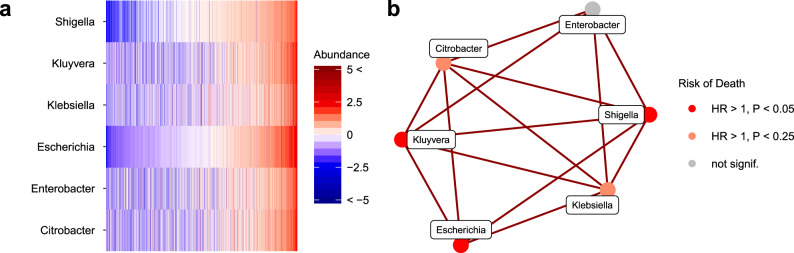
Fig. 4. Taxonomic subnetwork associated with increased mortality risk.
a Abundance variation across the study population for the subnetwork that exhibits the strongest mortality associations (CLR-transformed abundances centred at zero and scaled to unit variance). The samples are ordered by the total relative abundance of the subnetwork. b The observed subnetwork structure and mortality risk. The total subnetwork abundance was associated with elevated mortality with a hazard ratio of 1.155 (95% confidence interval [CI], 1.08–1.24; P = 0.0002, Wald two-tailed test statistic for Cox regression, 4.07) The respective hazard ratios were 1.17 (95% CI, 1.07–1.27; P = 0.001, Wald statistic 3.66) in the Eastern and 1.14 (95% CI, 1.001–1.31; P = 0.15, Wald statistic 2.02) in the Western Finnish populations. The analyses are conducted after excluding rare taxa and adjusted for age, body mass index, sex, smoking, diabetes, use of antineoplastic and immunomodulating agents, systolic blood pressure and self-reported antihypertensive medication; P values are FDR-adjusted.

References

    1. Jackson, M. A. et al. Gut microbiota associations with common diseases and prescription medications in a population-based cohort. Nat. Commun. 9, 2655 (2018). - PMC - PubMed
    1. Falony G, et al. Population-level analysis of gut microbiome variation. Science. 2016;352:560–564. doi: 10.1126/science.aad3503. - DOI - PubMed
    1. McDonald, D. et al. American Gut: an Open Platform for Citizen Science Microbiome Research. mSystems3, e00031-18 (2018). - PMC - PubMed
    1. Zhernakova A, et al. Population-based metagenomics analysis reveals markers for gut microbiome composition and diversity. Science. 2016;352:565–569. doi: 10.1126/science.aad3369. - DOI - PMC - PubMed
    1. Gilbert JA, et al. Current understanding of the human microbiome. Nat. Med. 2018;24:392–400. doi: 10.1038/nm.4517. - DOI - PMC - PubMed

Publication types

Substances