


Changes in haemolymph parameters and insect ability to respond to immune challenge during overwintering
- PMID: 33976809
- PMCID: PMC8093749
- DOI: 10.1002/ece3.7323
Changes in haemolymph parameters and insect ability to respond to immune challenge during overwintering
Abstract
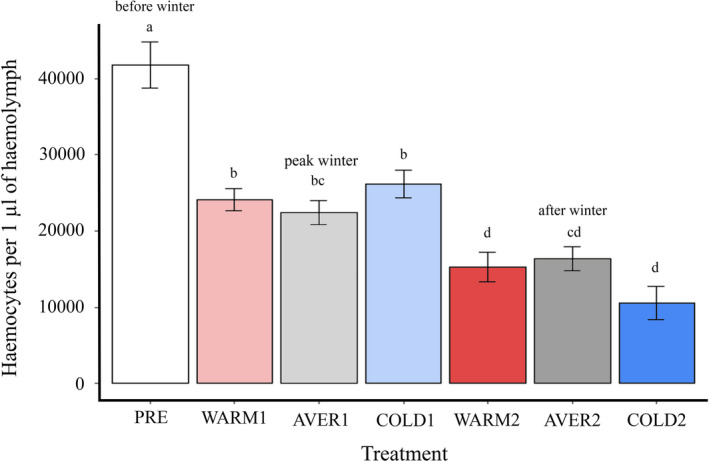
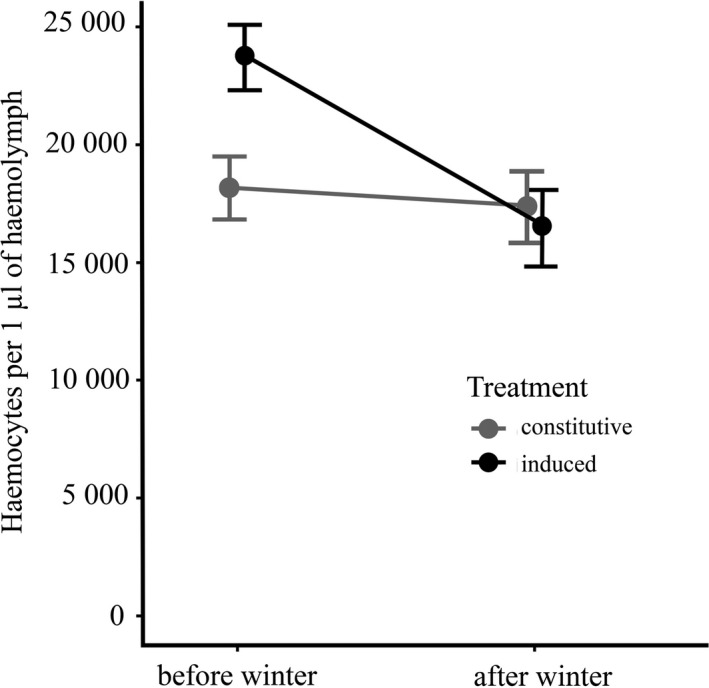
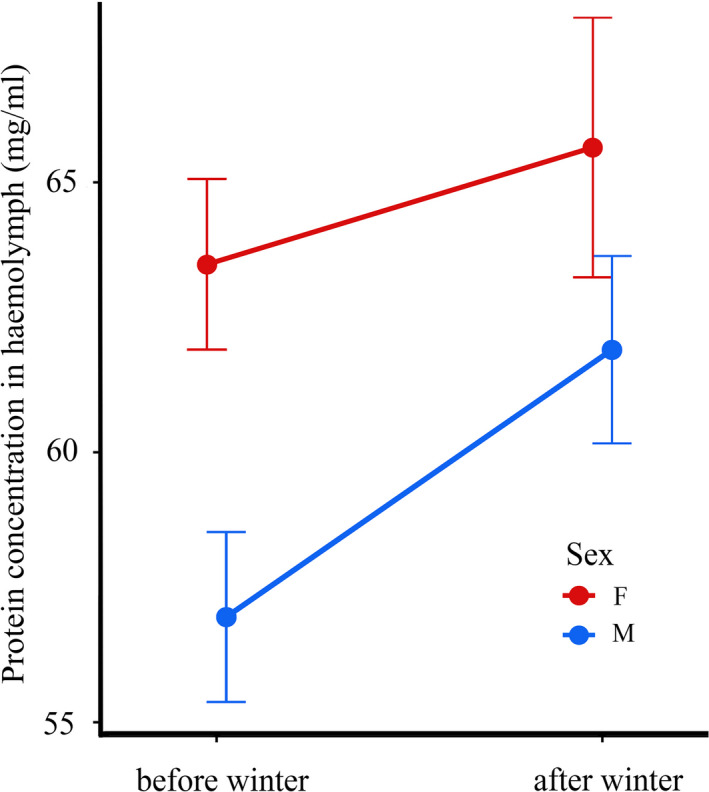
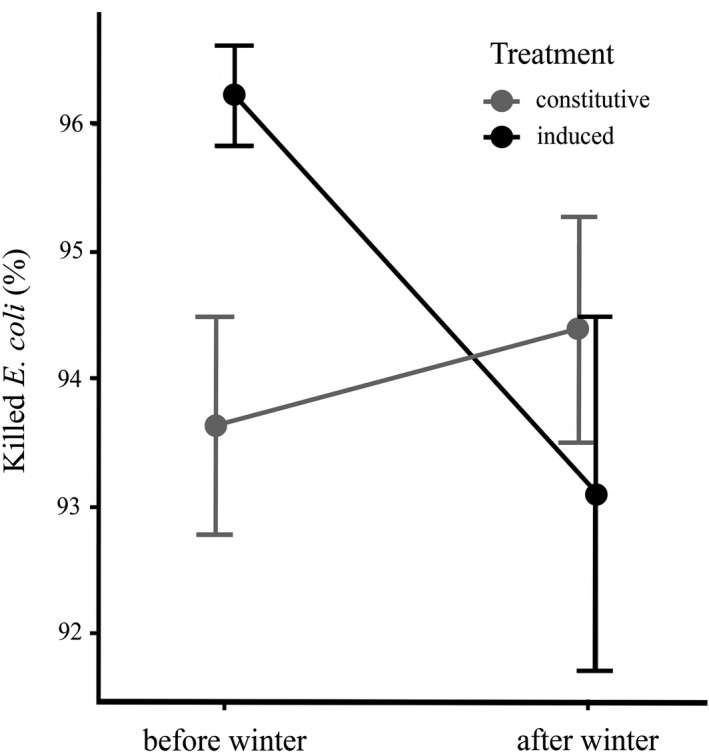
Overwintering is a challenging period in the life of temperate insects. A limited energy budget characteristic of this period can result in reduced investment in immune system. Here, we investigated selected physiological and immunological parameters in laboratory-reared and field-collected harlequin ladybirds (Harmonia axyridis). For laboratory-reared beetles, we focused on the effects of winter temperature regime (cold, average, or warm winter) on total haemocyte concentration aiming to investigate potential effects of ongoing climate change on immune system in overwintering insects. We recorded strong reduction in haemocyte concentration during winter; however, there were only limited effects of winter temperature regime on changes in haemocyte concentration in the course of overwintering. For field-collected beetles, we measured additional parameters, specifically: total protein concentration, antimicrobial activity against Escherichia coli, and haemocyte concentration before and after overwintering. The field experiment did not investigate effects of winter temperature, but focused on changes in inducibility of insect immune system during overwintering, that is, measured parameters were compared between naïve beetles and those challenged by Escherichia coli. Haemocyte concentration decreased during overwintering, but only in individuals challenged by Escherichia coli. Prior to overwintering, the challenged beetles had a significantly higher haemocyte concentration compared to naïve beetles, whereas no difference was observed after overwintering. A similar pattern was observed also for antimicrobial activity against Escherichia coli as challenged beetles outperformed naïve beetles before overwintering, but not after winter. In both sexes, total protein concentration increased in the course of overwintering, but females had a significantly higher total protein concentration in their hemolymph compared to males. In general, our results revealed that insect's ability to respond to an immune challenge is significantly reduced in the course of overwintering.
Keywords: Climate change; antimicrobial response; bacterial challenge; cold tolerance; fluctuating temperatures; haemocytes; innate immunity; invasive species; trade‐off.
© 2021 The Authors. Ecology and Evolution published by John Wiley & Sons Ltd.
Conflict of interest statement
Authors declare no conflict of interest.
Figures
References
-
- Adamo, S. A. , Davies, G. , Easy, R. , Kovalko, I. , & Turnbull, K. F. (2016). Reconfiguration of the immune system network during food limitation in the caterpillar Manduca sexta. Journal of Experimental Biology, 219, 706–718. - PubMed
-
- Bale, J. S. , & Hayward, S. A. L. (2010). Insect overwintering in a changing climate. Journal of Experimental Biology, 213, 980–994. - PubMed
-
- Berkvens, N. , Bale, J. S. , Berkvens, D. , Tirry, L. , & De Clercq, P. (2010). Cold tolerance of the harlequin ladybirdHarmonia axyridisin Europe. Journal of Insect Physiology, 56, 438–444. - PubMed
-
- Brown, P. M. J. , Thomas, C. E. , Lombaert, E. , Jeffries, D. L. , Estoup, A. , & Lawson Handley, L.‐J. (2011). The global spread of Harmonia axyridis (Coleoptera: Coccinellidae): Distribution, dispersal and routes of invasion. BioControl, 56, 623–641.
-
- Chen, C. P. , & Denlinger, D. l. (1987). A rapid cold‐hardening process in insects. Science, 238, 1415–1417. - PubMed
LinkOut - more resources
Full Text Sources
Other Literature Sources
Molecular Biology Databases
