. 2021 Aug 1;6(8):891-901.
doi: 10.1001/jamacardio.2021.1106.

Association of Left Ventricular Systolic Dysfunction Among Carriers of Truncating Variants in Filamin C With Frequent Ventricular Arrhythmia and End-stage Heart Failure

Affiliations

Association of Left Ventricular Systolic Dysfunction Among Carriers of Truncating Variants in Filamin C With Frequent Ventricular Arrhythmia and End-stage Heart Failure

Mohammed Majid Akhtar et al. JAMA Cardiol. .

Erratum in

  • Error in Author Byline.
    [No authors listed] [No authors listed] JAMA Cardiol. 2021 Aug 1;6(8):980. doi: 10.1001/jamacardio.2021.2422. JAMA Cardiol. 2021. PMID: 34160575 Free PMC article. No abstract available.

Abstract

Importance: Truncating variants in the gene encoding filamin C (FLNCtv) are associated with arrhythmogenic and dilated cardiomyopathies with a reportedly high risk of ventricular arrhythmia.

Objective: To determine the frequency of and risk factors associated with adverse events among FLNCtv carriers compared with individuals carrying TTN truncating variants (TTNtv).

Design, setting, and participants: This cohort study recruited 167 consecutive FLNCtv carriers and a control cohort of 244 patients with TTNtv matched for left ventricular ejection fraction (LVEF) from 19 European cardiomyopathy referral units between 1990 and 2018. Data analyses were conducted between June and October, 2020.

Main outcomes and measures: The primary end point was a composite of malignant ventricular arrhythmia (MVA) (sudden cardiac death, aborted sudden cardiac death, appropriate implantable cardioverter-defibrillator shock, and sustained ventricular tachycardia) and end-stage heart failure (heart transplant or mortality associated with end-stage heart failure). The secondary end point comprised MVA events only.

Results: In total, 167 patients with FLNCtv were studied (55 probands [33%]; 89 men [53%]; mean [SD] age at baseline evaluation, 43 [18] years). For a median follow-up of 20 months (interquartile range, 7-60 months), 29 patients (17.4%) reached the primary end point (19 patients with MVA and 10 patients with end-stage heart failure). Eight (44%) arrhythmic events occurred among individuals with baseline mild to moderate left ventricular systolic dysfunction (LVSD) (LVEF = 36%-49%). Univariable risk factors associated with the primary end point included proband status, LVEF decrement per 10%, ventricular ectopy (≥500 in 24 hours) and myocardial fibrosis detected on cardiac magnetic resonance imaging. The LVEF decrement (hazard ratio [HR] per 10%, 1.83 [95% CI, 1.30-2.57]; P < .001) and proband status (HR, 3.18 [95% CI, 1.12-9.04]; P = .03) remained independent risk factors on multivariable analysis (excluding myocardial fibrosis and ventricular ectopy owing to case censoring). There was no difference in freedom from MVA between FLNCtv carriers with mild to moderate or severe (LVEF ≤35%) LVSD (HR, 1.29 [95% CI, 0.45-3.72]; P = .64). Carriers of FLNCtv with impaired LVEF at baseline evaluation (n = 69) had reduced freedom from MVA compared with 244 TTNtv carriers with similar baseline LVEF (for mild to moderate LVSD: HR, 16.41 [95% CI, 3.45-78.11]; P < .001; for severe LVSD: HR, 2.47 [95% CI, 1.04-5.87]; P = .03).

Conclusions and relevance: The high frequency of MVA among patients with FLNCtv with mild to moderate LVSD suggests that higher LVEF values than those currently recommended should be considered for prophylactic implantable cardioverter-defibrillator therapy in FLNCtv carriers.


Conflict of interest statement

Conflict of Interest Disclosures: Dr Lorenzini reported receiving personal fees from Pfizer outside the submitted work. Dr Molina reported receiving grants from Instituto de Salud Carlos III during the conduct of the study. Dr Truszkowska reported receiving grants from the National Science Centre during the conduct of the study. Dr Ortiz-Genga reported receiving personal fees from Health in Code SL outside the submitted work. Dr Gautel reported receiving grants from Wellcome Trust and from the Medical Research Council during the conduct of the study; and receiving grants from the Medical Research Council outside the submitted work. Dr Bilinska reported receiving grants from the National Science Centre Poland and from ERA-CVD DETECTIN-HF during the conduct of the study. Dr Barriales-Villa reported receiving personal fees from, Akcea, Alnaylam, Myokardia, Pfizer, and Sanofi-Genzyme outside the submitted work. No other disclosures were reported.

Figures

Figure 1.
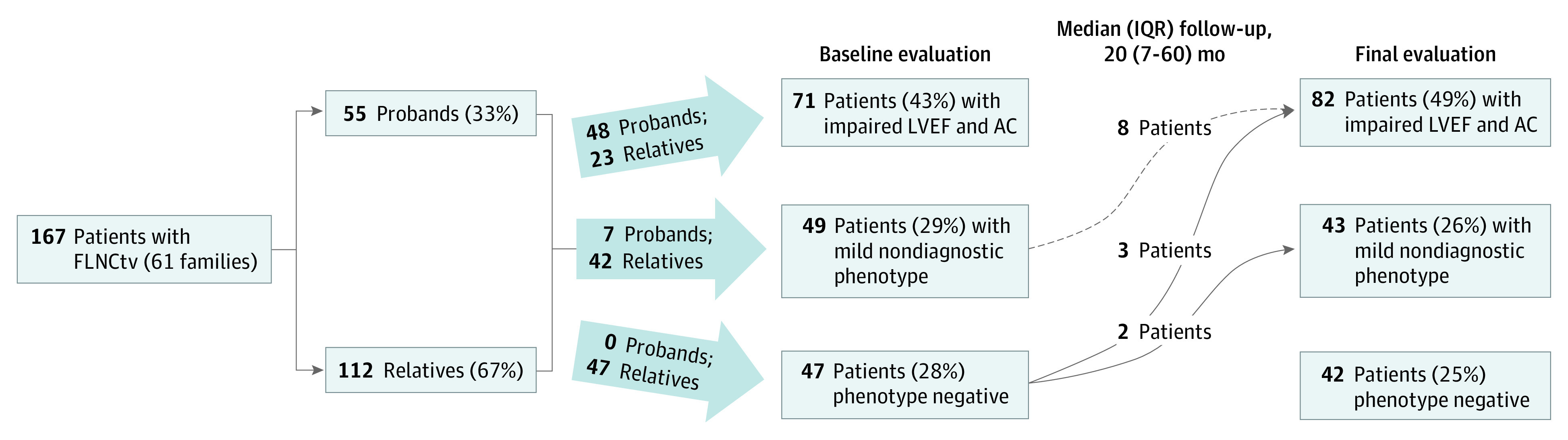
Figure 1.. Flowchart Showing the Proportion of Patients With FLNC Truncating Variants (FLNCtvs) Who Had Impaired Left Ventricular Ejection Fraction (LVEF) and Arrhythmogenic Cardiomyopathy (AC), Normal Phenotype, or Mild Nondiagnostic Criteria at Baseline and Final Evaluation
Mild nondiagnostic criteria included isolated left or right ventricular dilation on transthoracic echocardiogram or cardiac magnetic resonance imaging, atrial fibrillation, nonsustained ventricular tachycardia, frequent ventricular ectopy, late gadolinium enhancement on cardiac magnetic resonance imaging, and T-wave inversion on electrocardiogram with LVEF 50% or higher. IQR indicates interquartile range.
Figure 2.
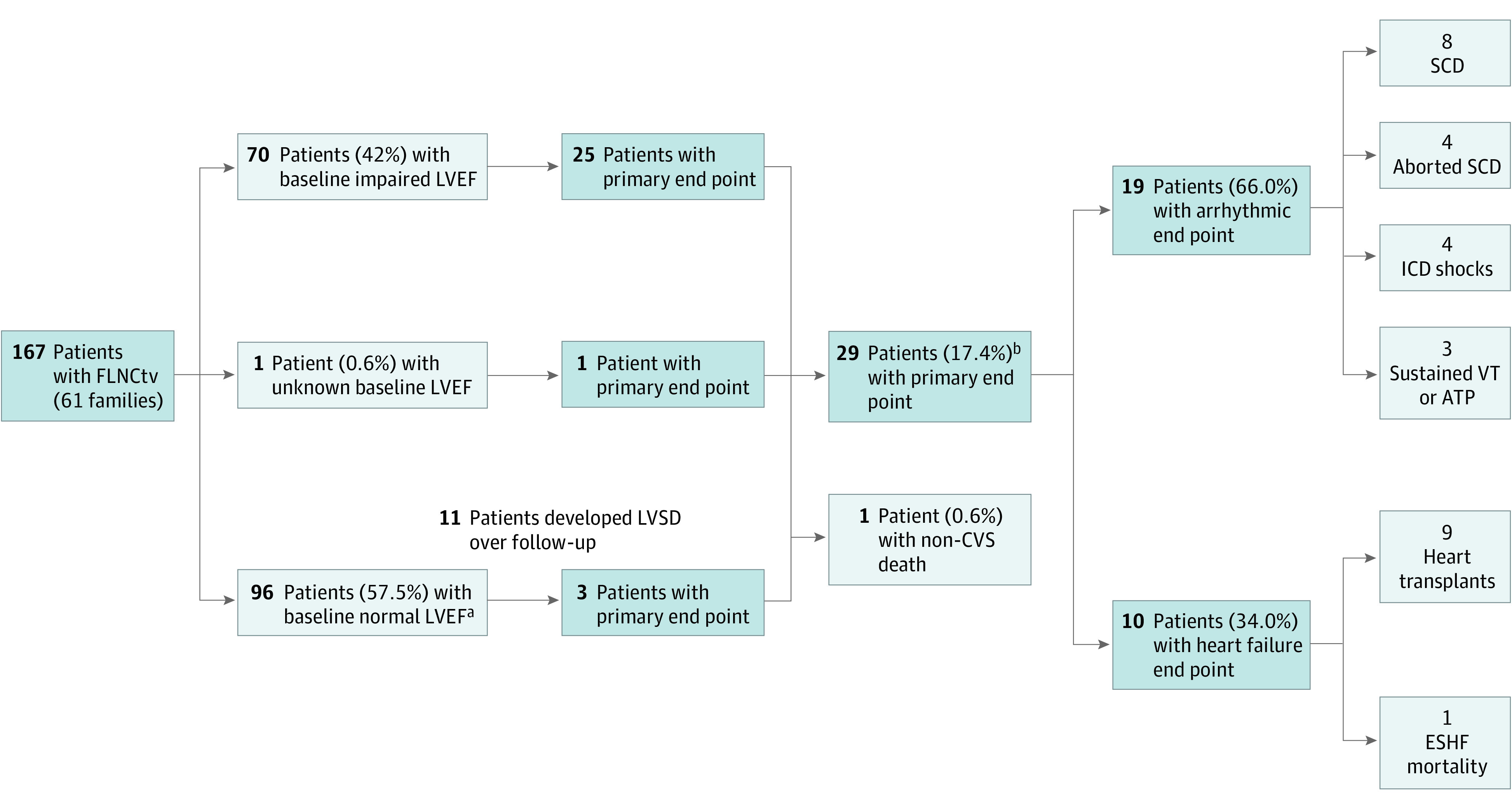
Figure 2.. Flowchart Showing the Outcomes of Patients With FLNC Truncating Variants (FLNCtvs) During Follow-up With Respect to the Composite Primary End Point (Malignant Ventricular Arrhythmia and End-stage Heart Failure End Points)
ATP indicates antitachycardia pacing; CVS, cardiovascular; ESHF, end-stage heart failure; LVEF, left ventricular ejection fraction; LVSD, left ventricular systolic dysfunction; ICD, implantable cardioverter-defibrillator; SCD, sudden cardiac death; VT, ventricular tachycardia. aIncludes 1 patient with arrhythmogenic cardiomyopathy and LVEF within reference ranges. bFive patients (3%) had multiple malignant ventricular arrhythmia or end-stage heart failure events during follow-up.
Figure 3.
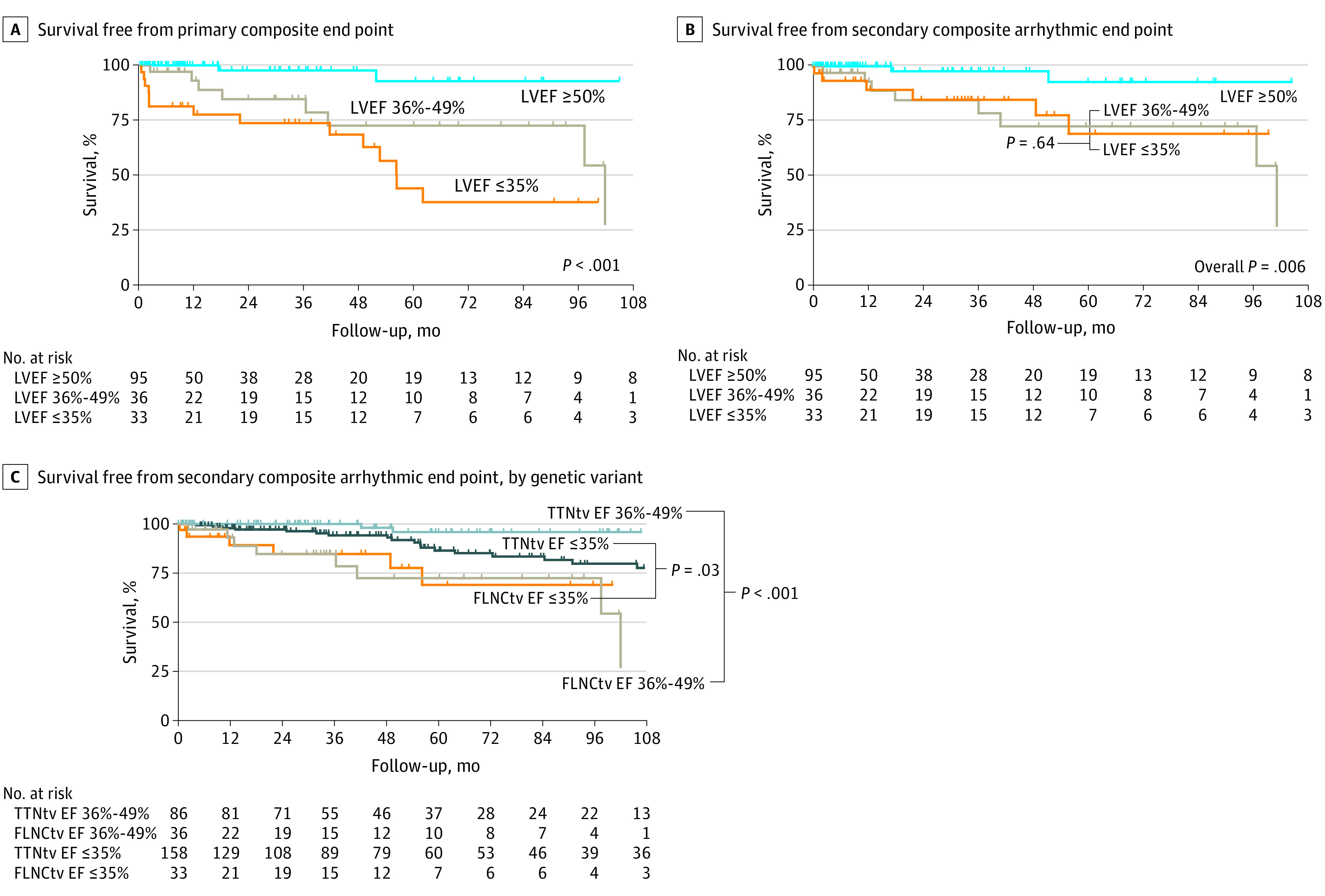
Figure 3.. Kaplan-Meier Survival Analyses
A, Kaplan-Meier survival analysis from baseline evaluation for the primary end point stratified according to the presence of left ventricular ejection fraction (LVEF) within reference ranges (LVEF ≥50%), mild to moderate left ventricular systolic dysfunction (LVSD) (LVEF 36%-49%), or severe LVSD (LVEF ≤35%) on transthoracic echocardiogram (TTE) or cardiac magnetic resonance (CMR) imaging for patients with FLNC truncating variants (FLNCtvs). B, Kaplan-Meier survival analysis from baseline evaluation for the arrhythmic secondary end point stratified according to the presence of LVEF within reference ranges, mild to moderate LVSD, or severe LVSD on TTE or CMR imaging for patients with FLNCtv. C, Kaplan-Meier survival analysis from baseline evaluation for the arrhythmic secondary end point stratified according to genetic variant (for TTN or FLNC) and the presence of baseline mild to moderate LVSD or severe LVSD on TTE or CMR imaging.

Comment in

References

    1. Towbin JA, Bowles NE. The failing heart. Nature. 2002;415(6868):227-233. doi:10.1038/415227a - DOI - PubMed
    1. Hershberger RE, Hedges DJ, Morales A. Dilated cardiomyopathy: the complexity of a diverse genetic architecture. Nat Rev Cardiol. 2013;10(9):531-547. doi:10.1038/nrcardio.2013.105 - DOI - PubMed
    1. Ortiz-Genga MF, Cuenca S, Dal Ferro M, et al. . Truncating FLNC mutations are associated with high-risk dilated and arrhythmogenic cardiomyopathies. J Am Coll Cardiol. 2016;68(22):2440-2451. doi:10.1016/j.jacc.2016.09.927 - DOI - PubMed
    1. Begay RL, Graw SL, Sinagra G, et al. . Filamin C truncation mutations are associated with arrhythmogenic dilated cardiomyopathy and changes in the cell-cell adhesion structures. JACC Clin Electrophysiol. 2018;4(4):504-514. doi:10.1016/j.jacep.2017.12.003 - DOI - PMC - PubMed
    1. World Medical Association . World Medical Association Declaration of Helsinki: ethical principles for medical research involving human subjects. JAMA. 2013;310(20):2191-2194. doi:10.1001/jama.2013.281053 - DOI - PubMed

Publication types

MeSH terms