


One in Seven Insulin-Treated Patients in Developing Countries Reported Poor Persistence with Insulin Therapy: Real World Evidence from the Cross-Sectional International Diabetes Management Practices Study (IDMPS)
- PMID: 33978906
- PMCID: PMC8189989
- DOI: 10.1007/s12325-021-01736-4
One in Seven Insulin-Treated Patients in Developing Countries Reported Poor Persistence with Insulin Therapy: Real World Evidence from the Cross-Sectional International Diabetes Management Practices Study (IDMPS)
Abstract
Introduction: Although poor adherence to insulin is widely recognised, periodic discontinuation of insulin may cause more severe hyperglycaemia than poor adherence. We assessed persistence with insulin therapy in patients with type 1 (T1D) or type 2 diabetes (T2D) in developing countries and the reasons for insulin discontinuation.
Methods: The International Diabetes Management Practices Study collected real-world data from developing countries in seven waves between 2005 and 2017. In Wave 7 (2016-2017), we asked adult patients with T1D and insulin-treated T2D to report whether they had ever discontinued insulin, the estimated duration of discontinuation and underlying reasons.
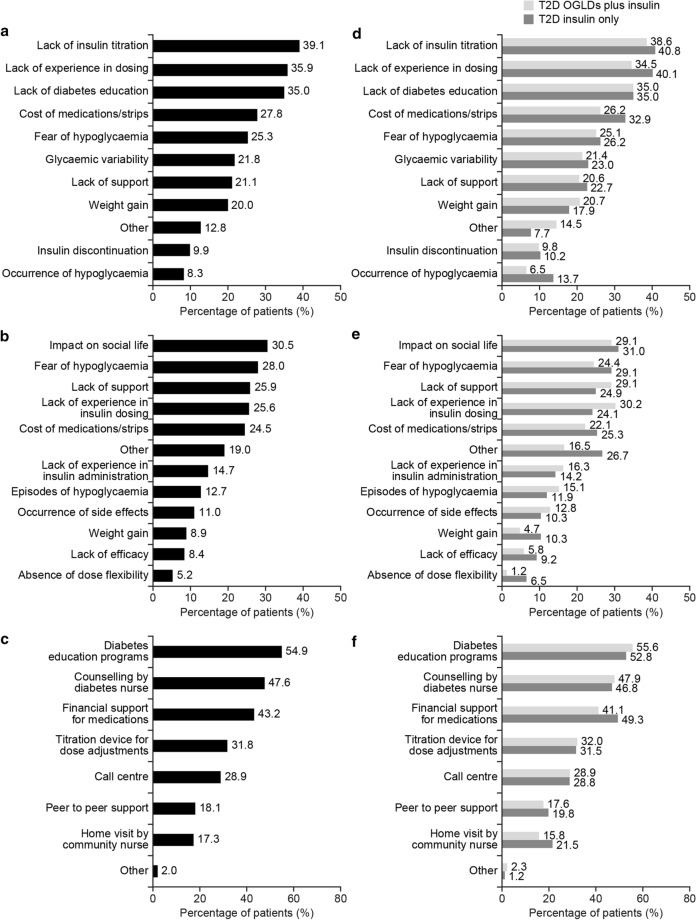
Results: Among 8303 patients recruited from 24 countries by 620 physicians, 4596 were insulin-treated (T1D: 2000; T2D: 2596). In patients with T1D, 14.0% (95% CI: 12.5-15.6) reported having self-discontinued insulin for a median duration of 1.0 month (IQR: 0.5, 3.5). The respective figures in patients with T2D were 13.7% (12.4-15.1) and 2.0 months (IQR: 1.0, 6.0). The main reasons for discontinuation were impact on social life (T1D: 41.0%; T2D: 30.5%), cost of medications and test strips (T1D: 34.4%; T2D: 24.5%), fear of hypoglycaemia (T1D: 26.7%; T2D: 28.0%) and lack of support (T1D: 26.4%; T2D: 25.9%). Other factors included age < 40 years, non-university education and short disease duration (T1D: ≤ 1 year; T2D: > 1-≤ 5 years). Patients with T1D who did not perform self-monitoring of blood glucose (SMBG) or self-adjust their insulin dosage, and patients with T1D or T2D without glucose meters were less likely to persist with insulin. Nearly 50% of patients who reported poor persistence had HbA1c > 75 mmol/mol (> 9%) and > 50% of physicians recommended diabetes education programmes to improve treatment persistence.
Conclusion: In developing countries, poor persistence with insulin is common among insulin-treated patients, supporting calls for urgent actions to ensure easy access to insulin, tools for SMBG and education.
Keywords: Clinical science and care; Healthcare delivery; Insulin therapy.
Figures

References
-
- International Diabetes Federation. IDF Diabetes Atlas, 9th ed. 2019. https://diabetesatlas.org/en/resources/. Cited 6 Oct 2020.
Publication types
MeSH terms
Substances
LinkOut - more resources
Full Text Sources
Other Literature Sources
Medical
Miscellaneous
