


Sterol O-acyltransferase 2 chaperoned by apolipoprotein J facilitates hepatic lipid accumulation following viral and nutrient stresses
- PMID: 33980978
- PMCID: PMC8115332
- DOI: 10.1038/s42003-021-02093-2
Sterol O-acyltransferase 2 chaperoned by apolipoprotein J facilitates hepatic lipid accumulation following viral and nutrient stresses
Abstract
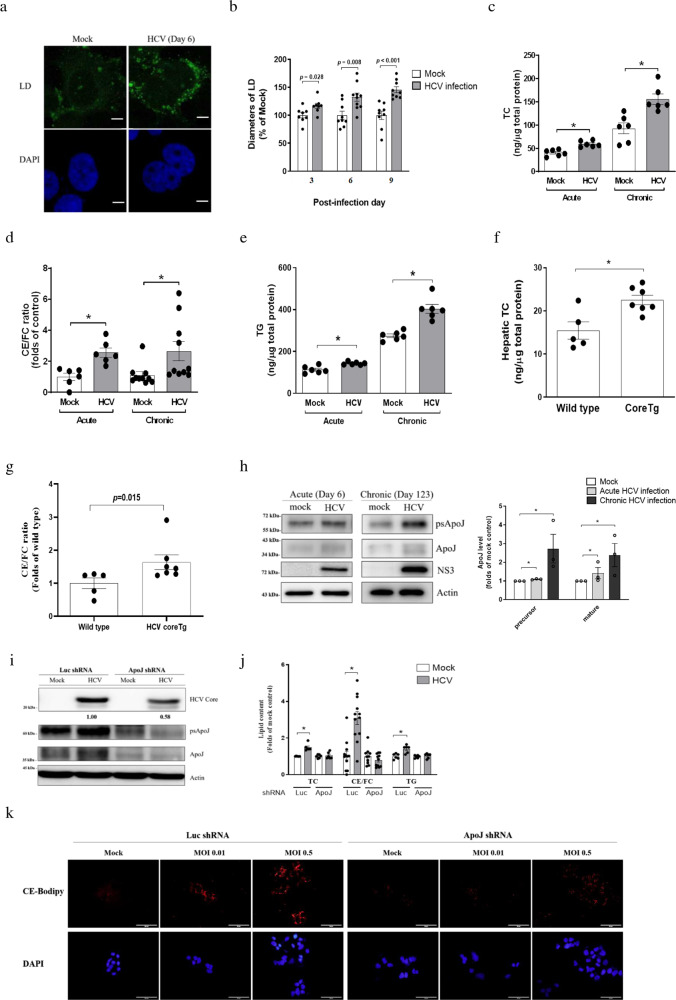
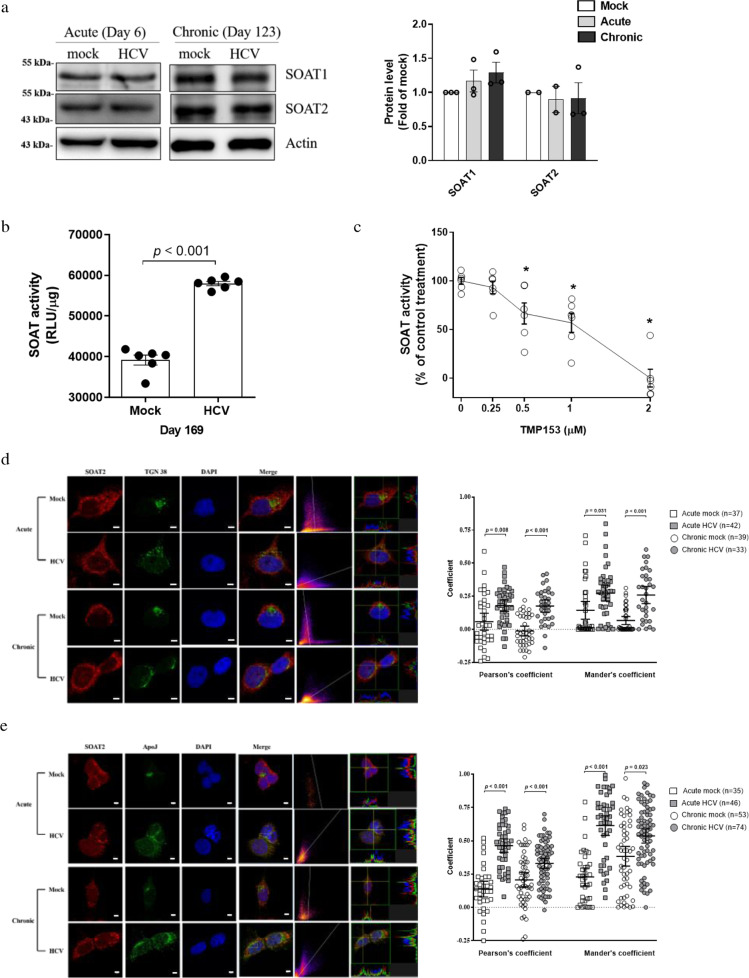
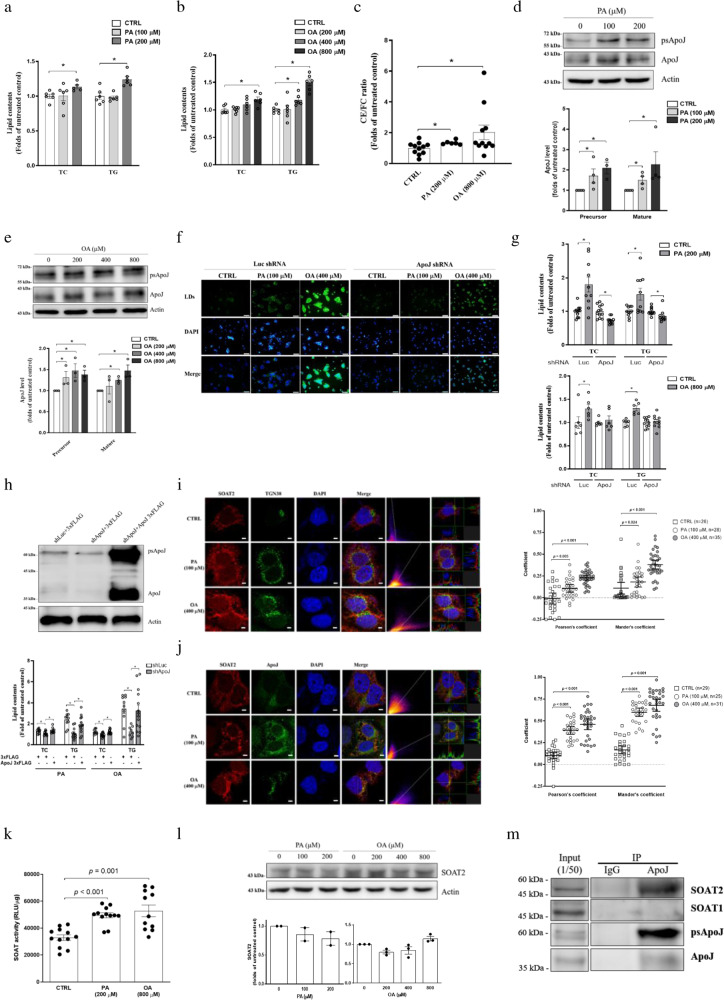
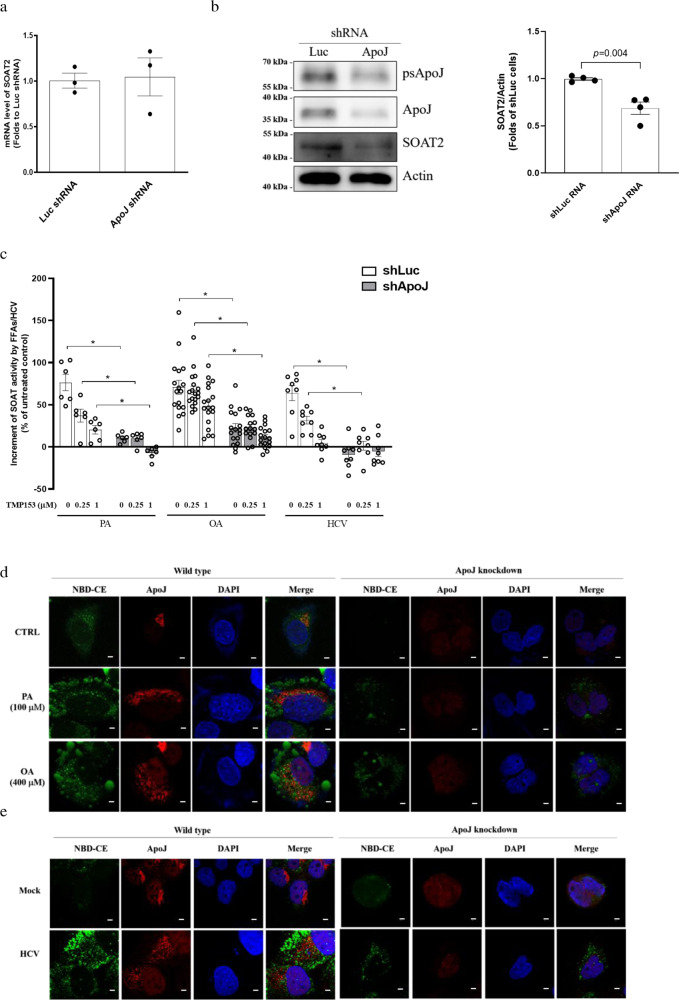
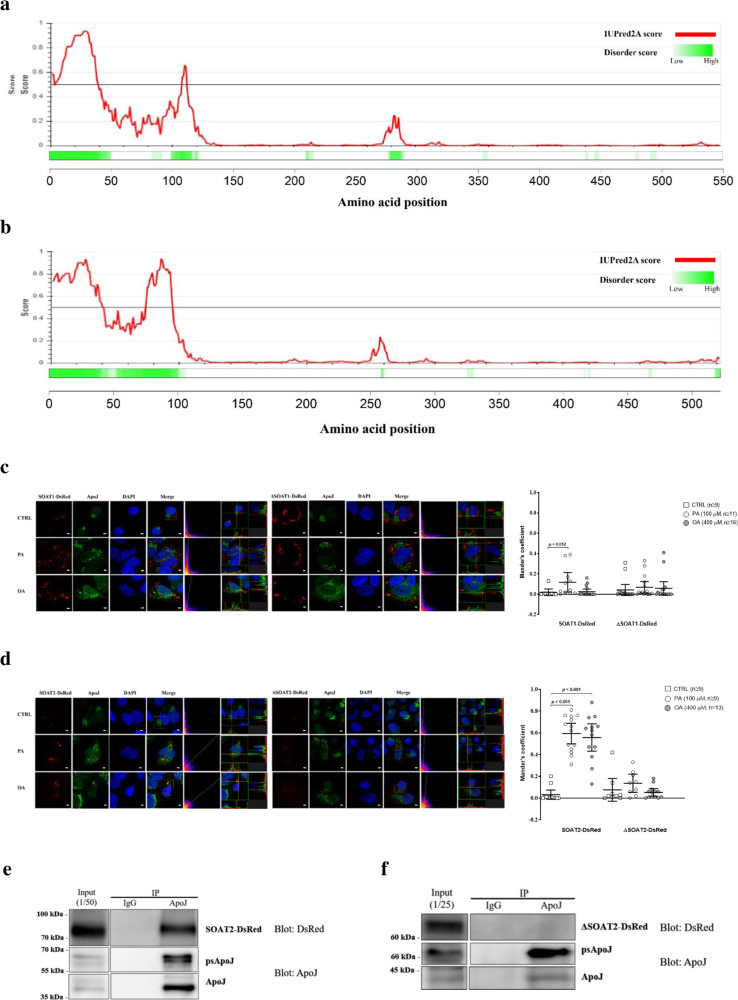
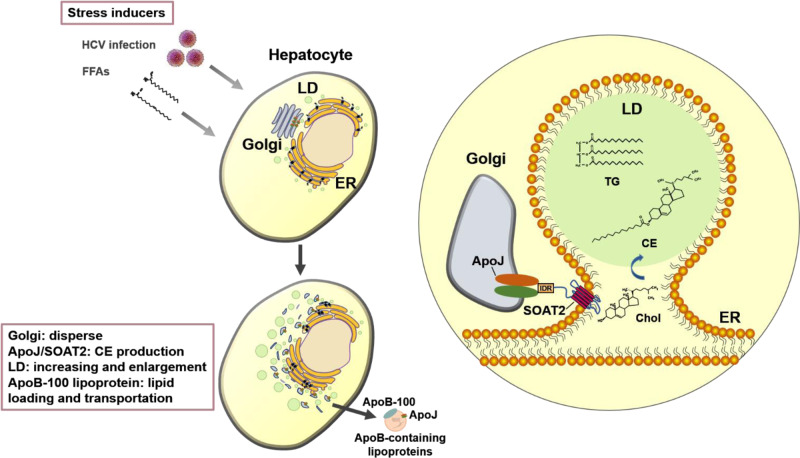
The risks of non-alcoholic fatty liver disease (NAFLD) include obese and non-obese stresses such as chronic hepatitis C virus (HCV) infection, but the regulatory determinants remain obscure. Apolipoprotein J (ApoJ) served as an ER-Golgi contact-site chaperone near lipid droplet (LD), facilitating HCV virion production. We hypothesized an interplay between hepatic ApoJ, cholesterol esterification and lipid deposit in response to NAFLD inducers. Exposures of HCV or free-fatty acids exhibited excess LDs along with increased ApoJ expression, whereas ApoJ silencing alleviated hepatic lipid accumulation. Both stresses could concomitantly disperse Golgi, induce closer ApoJ and sterol O-acyltransferase 2 (SOAT2) contacts via the N-terminal intrinsically disordered regions, and increase cholesteryl-ester. Furthermore, serum ApoJ correlated positively with cholesterol and low-density lipoprotein levels in normal glycaemic HCV patients, NAFLD patients and in mice with steatosis. Taken together, hepatic ApoJ might activate SOAT2 to supply cholesteryl-ester for lipid loads, thus providing a therapeutic target of stress-induced steatosis.
Conflict of interest statement
The authors declare no competing interests.
Figures

References
-
- Schade, M. et al. Cellular senescence and their role in liver metabolism in health and disease: overview and future directions. World J. Surg. Surgcal Res. 1, 1035 (2018).
Publication types
MeSH terms
Substances
LinkOut - more resources
Full Text Sources
Other Literature Sources
Molecular Biology Databases
Research Materials
Miscellaneous
