


International Society of Nephrology Global Kidney Health Atlas: structures, organization, and services for the management of kidney failure in Western Europe
- PMID: 33981476
- PMCID: PMC8084721
- DOI: 10.1016/j.kisu.2021.01.007
International Society of Nephrology Global Kidney Health Atlas: structures, organization, and services for the management of kidney failure in Western Europe
Abstract
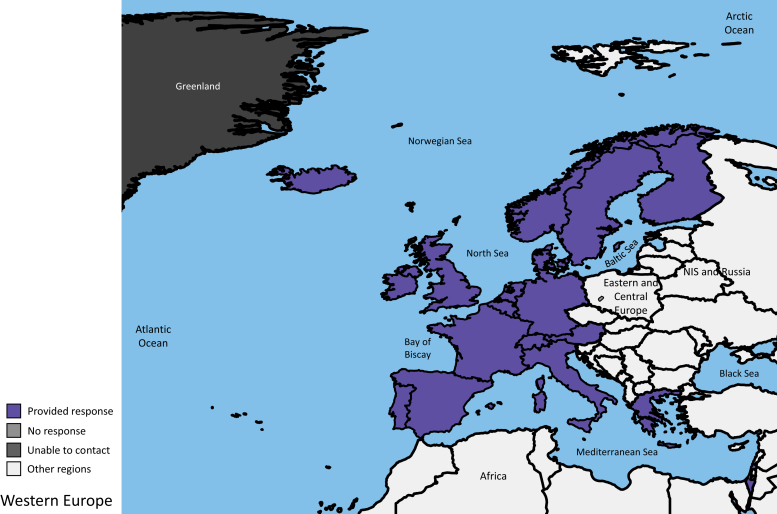
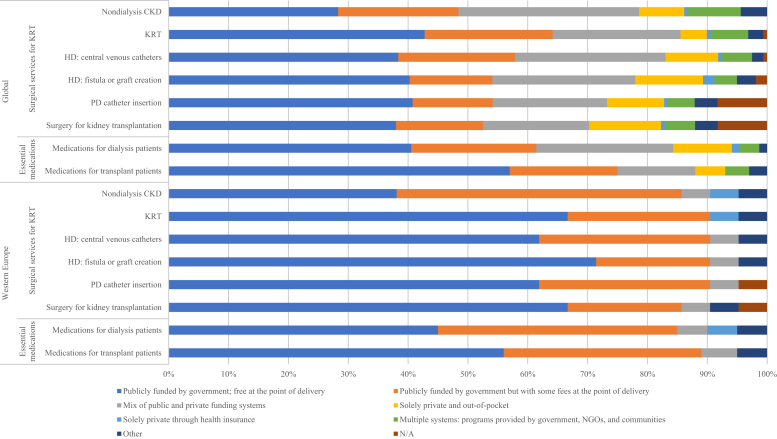
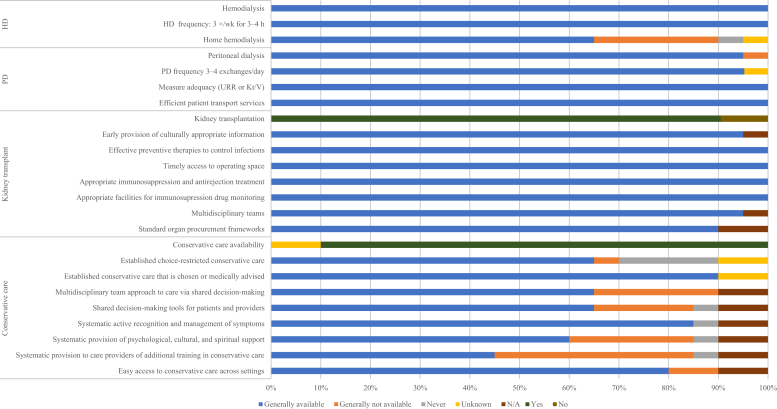
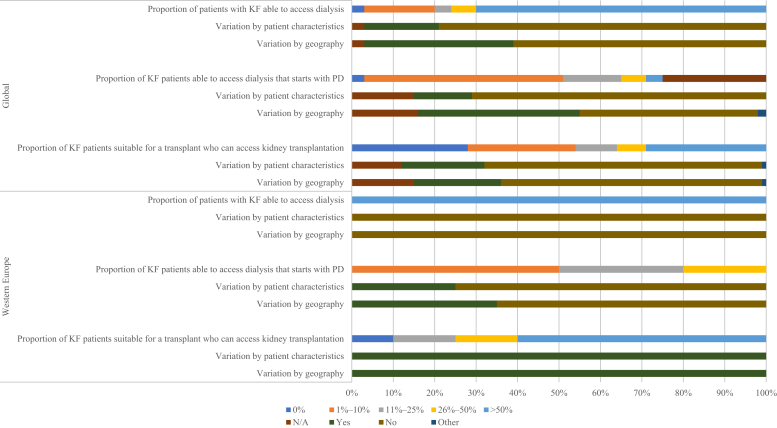
Populations in the high-income countries of Western Europe are aging due to increased life expectancy. As the prevalence of diabetes and obesity has increased, so has the burden of kidney failure. To determine the global capacity for kidney replacement therapy and conservative kidney management, the International Society of Nephrology conducted multinational, cross-sectional surveys and published the findings in the International Society of Nephrology Global Kidney Health Atlas. In the second iteration of the International Society of Nephrology Global Kidney Health Atlas, we aimed to describe the availability, accessibility, quality, and affordability of kidney failure care in Western Europe. Among the 29 countries in Western Europe, 21 (72.4%) responded, representing 99% of the region's population. The burden of kidney failure prevalence varied widely, ranging from 760 per million population (pmp) in Iceland to 1612 pmp in Portugal. Coverage of kidney replacement therapy from public funding was nearly universal, with the exceptions of Germany and Liechtenstein where part of the costs was covered by mandatory insurance. Fourteen (67%) of 21 countries charged no fees at the point of care delivery, but in 5 countries (24%), patients do pay some out-of-pocket costs. Long-term dialysis services (both hemodialysis and peritoneal dialysis) were available in all countries in the region, and kidney transplantation services were available in 19 (90%) countries. The incidence of kidney transplantation varied widely between countries from 12 pmp in Luxembourg to 70.45 pmp in Spain. Conservative kidney care was available in 18 (90%) of 21 countries. The median number of nephrologists was 22.9 pmp (range: 9.47-55.75 pmp). These data highlight the uniform capacity of Western Europe to provide kidney failure care, but also the scope for improvement in disease prevention and management, as exemplified by the variability in disease burden and transplantation rates.
Keywords: chronic kidney disease; dialysis; end-stage kidney disease; kidney failure; kidney registries; kidney transplantation.
© 2021 International Society of Nephrology. Published by Elsevier Inc. All rights reserved.
Figures
References
-
- Bello A.K., Levin A., Tonelli M. International Society of Nephrology; Brussels, Belgium: 2017. Global Kidney Health Atlas: A report by the International Society of Nephrology on the current state of organization and structures for kidney care across the globe.
-
- Rondeau E., Luyckx V.A., Anders H.J. Challenges and opportunities for nephrology in Western Europe. Kidney Int. 2019;95:1037–1040. - PubMed
-
- World Health Organization European health report 2018: more than numbers—evidence for all. https://www.euro.who.int/en/data-and-evidence/european-health-report/eur... Available at:
-
- European Kidney Health Alliance Recommendations for sustainable kidney care; 2015. http://ekha.eu/wp-content/uploads/2016/01/EKHA-Recs-for-Sustainable-Kidn... Available at:
-
- Pippias M., Jager K.J., Kramer A. The changing trends and outcomes in renal replacement therapy: data from the ERA-EDTA Registry. Nephrol Dial Transplant. 2016;31:831–841. - PubMed
Publication types
LinkOut - more resources
Full Text Sources
Other Literature Sources
Research Materials
