


Prognostic factors for pain chronicity in low back pain: a systematic review
- PMID: 33981936
- PMCID: PMC8108595
- DOI: 10.1097/PR9.0000000000000919
Prognostic factors for pain chronicity in low back pain: a systematic review
Abstract
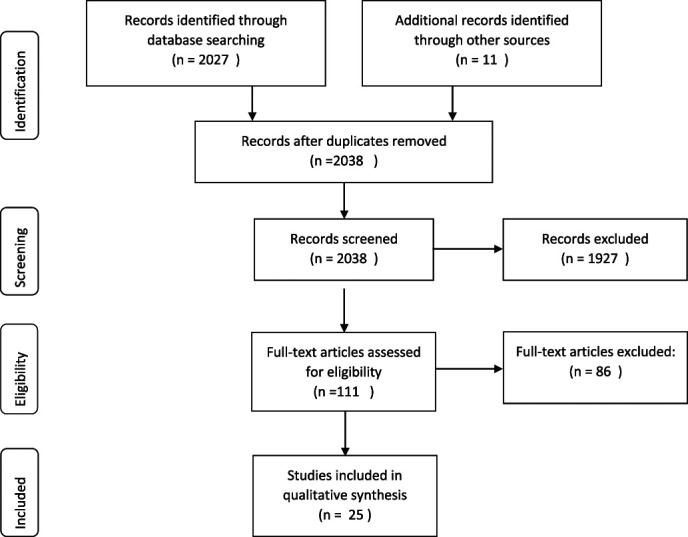
Low back pain is the leading cause for years lived in disability. Most people with acute low back pain improve rapidly, but 4% to 25% of patients become chronic. Since the previous systematic reviews on the subject, a large number of new studies have been conducted. The objective of this article was to review the evidence of the prognostic factors behind nonspecific chronic low back pain. A systematic literature search was performed without date limitation from the MEDLINE, Cochrane library, and Medic databases. Specific inclusion criteria were used, and risk factors before the onset of chronic symptoms were searched. Study quality was assessed by 2 independent reviewers. One hundred eleven full articles were read for potential inclusion, and 25 articles met all the inclusion criteria. One study was rated as good quality, 19 studies were rated as fair quality, and 5 articles were rated as poor quality. Higher pain intensity, higher body weight, carrying heavy loads at work, difficult working positions, and depression were the most frequently observed risk factors for chronic low back pain. Maladaptive behavior strategies, general anxiety, functional limitation during the episode, smoking, and particularly physical work were also explicitly predictive of chronicity. According to this systematic review, several prognostic factors from the biomechanical, psychological and psychosocial point of view are significant for chronicity in low back pain.
Keywords: Chronic pain; Low back pain; Nonspecific; Prognostic factors; Risk factors.
Copyright © 2021 The Author(s). Published by Wolters Kluwer Health, Inc. on behalf of The International Association for the Study of Pain.
Conflict of interest statement
The authors have no conflicts of interest to declare.Sponsorships or competing interests that may be relevant to content are disclosed at the end of this article.
Figures
References
-
- Alsaadi SM, McAuley JH, Hush JM. The bidirectional relationship between pain intensity and sleep disturbance/quality in patients with low back pain. Clin J Pain 2014;30:755–65. - PubMed
-
- Amorim AB, Ferreira PH, Ferreira ML, Lier R, Simic M, Pappas E, Zadro JR, Mork PJ, Nilsen TI. Influence of family history on prognosis of spinal pain and the role of leisure time physical activity and body mass index: a prospective study using family-linkage data from the Norwegian HUNT study. BMJ Open 2018;8:e022785. - PMC - PubMed
-
- Andersen LL, Clausen T, Persson R, Holtermann A. Perceived physical exertion during healthcare work and risk of chronic pain in different body regions: prospective cohort study. Int Arch Occup Environ Health 2013;86:681–7. - PubMed
Publication types
LinkOut - more resources
Full Text Sources
Other Literature Sources
Medical
Miscellaneous