


HDL-small RNA Export, Transport, and Functional Delivery in Atherosclerosis
- PMID: 33983531
- PMCID: PMC8455070
- DOI: 10.1007/s11883-021-00930-7
HDL-small RNA Export, Transport, and Functional Delivery in Atherosclerosis
Abstract
Purpose of review: This review highlights recent advances on the mechanisms and impact of HDL-small non-coding RNAs (sRNA) on intercellular communication in atherosclerosis.
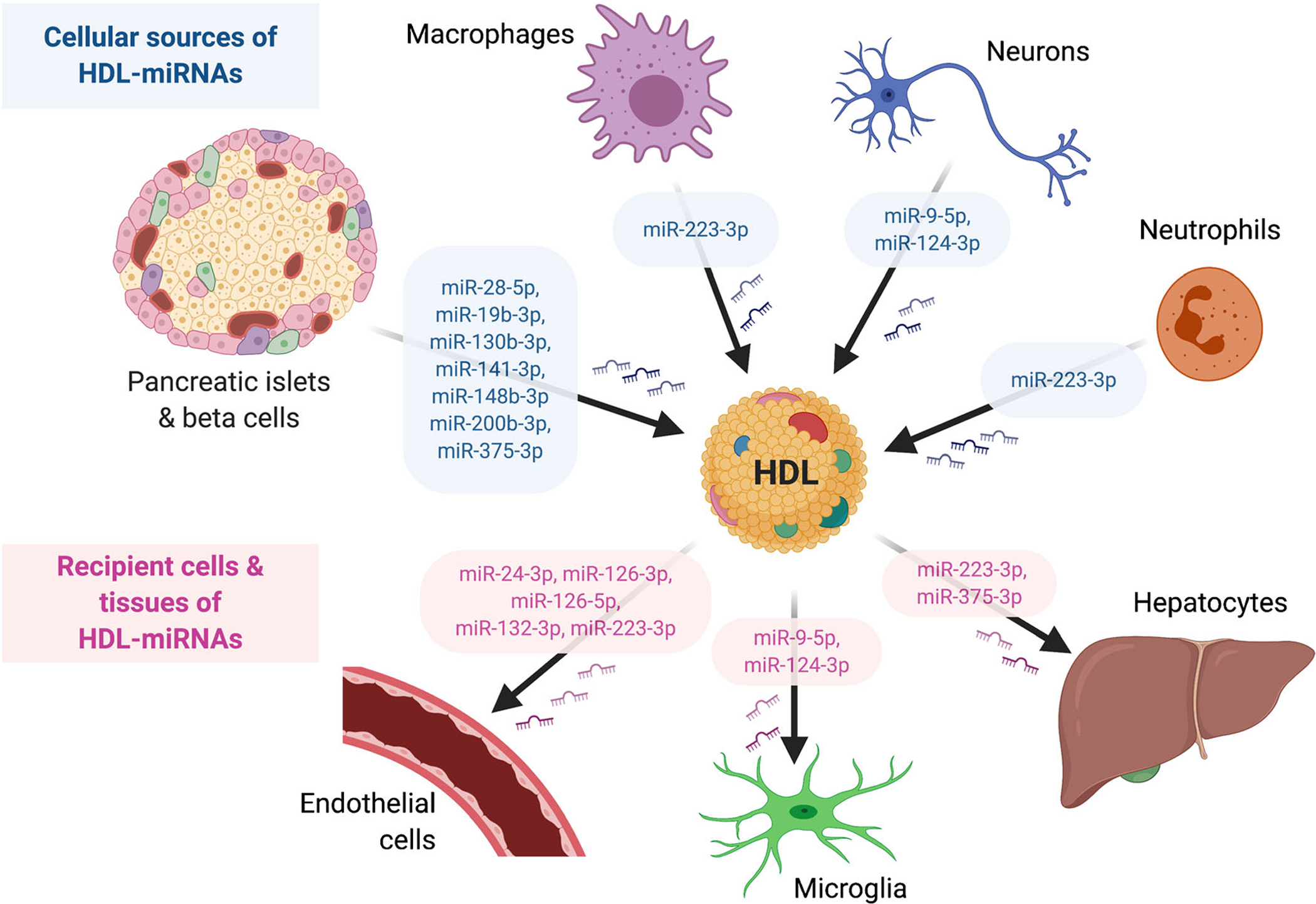
Recent findings: Studies demonstrate that HDL-microRNAs (miRNA) are significantly altered in atherosclerotic cardiovascular disease (ASCVD), and are responsive to diet, obesity, and diabetes. Immune cells, pancreatic beta cells, and neurons are shown to export miRNAs to HDL. In turn, HDL can deliver functional miRNAs to recipient hepatocytes and endothelial cells regulating adhesion molecule expression, cytokines, and angiogenesis. With high-throughput sRNA sequencing, we now appreciate the full sRNA signature on circulating HDL, including the transport of rRNA and tRNA-derived fragments. Strikingly, HDL were highly enriched with exogenous microbial sRNAs. HDL transport a diverse set of host and non-host sRNAs that are altered in cardiometabolic diseases. Given the bioactivity of these sRNAs, they likely contribute to cellular communication within atherosclerotic lesions, and are potential disease biomarkers and therapeutic targets.
Keywords: Atherosclerosis; Endothelial cells; HDL; Macrophages; MicroRNA; Obesity.
Conflict of interest statement
Figures
References
-
- Camont L, Chapman MJ, Kontush A. Biological activities of HDL subpopulations and their relevance to cardiovascular disease. Trends Mol Med. 2011;17(10):594–603. - PubMed
-
- Ganjali S, Momtazi AA, Banach M, Kovanen PT, Stein EA, Sahebkar A. HDL abnormalities in familial hypercholesterolemia: focus on biological functions. Prog Lipid Res. 2017;67:16–26. - PubMed
-
- Karlsson H, Leanderson P, Tagesson C, Lindahl M. Lipoproteomics II: mapping of proteins in high-density lipoprotein using two-dimensional gel electrophoresis and mass spectrometry. Proteomics. 2005;5(5):1431–45. - PubMed
Publication types
MeSH terms
Substances
Grants and funding
LinkOut - more resources
Full Text Sources
Other Literature Sources
Medical
