


From generalist to specialists: Variation in the host range and performance of anther-smut pathogens on Dianthus
- PMID: 33983636
- PMCID: PMC8487925
- DOI: 10.1111/evo.14264
From generalist to specialists: Variation in the host range and performance of anther-smut pathogens on Dianthus
Abstract
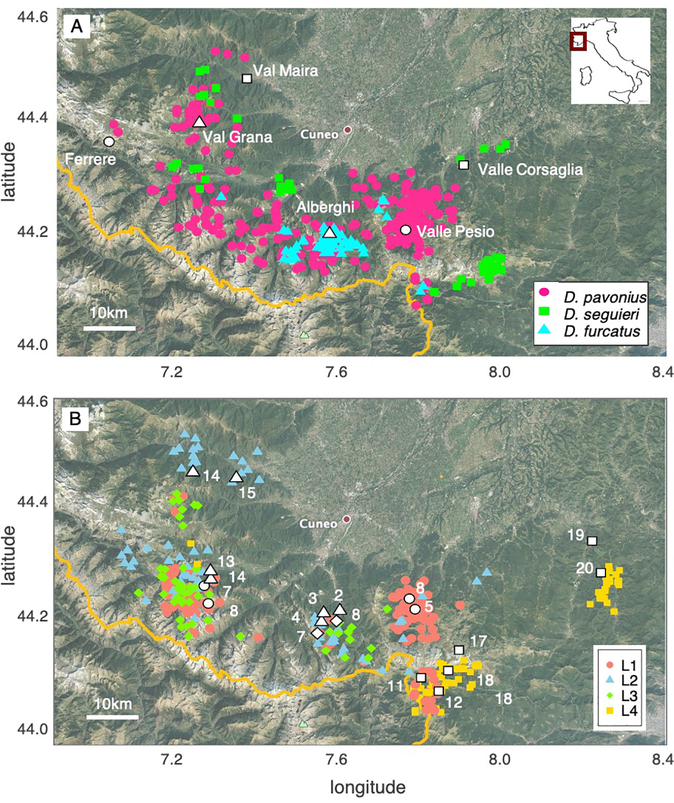
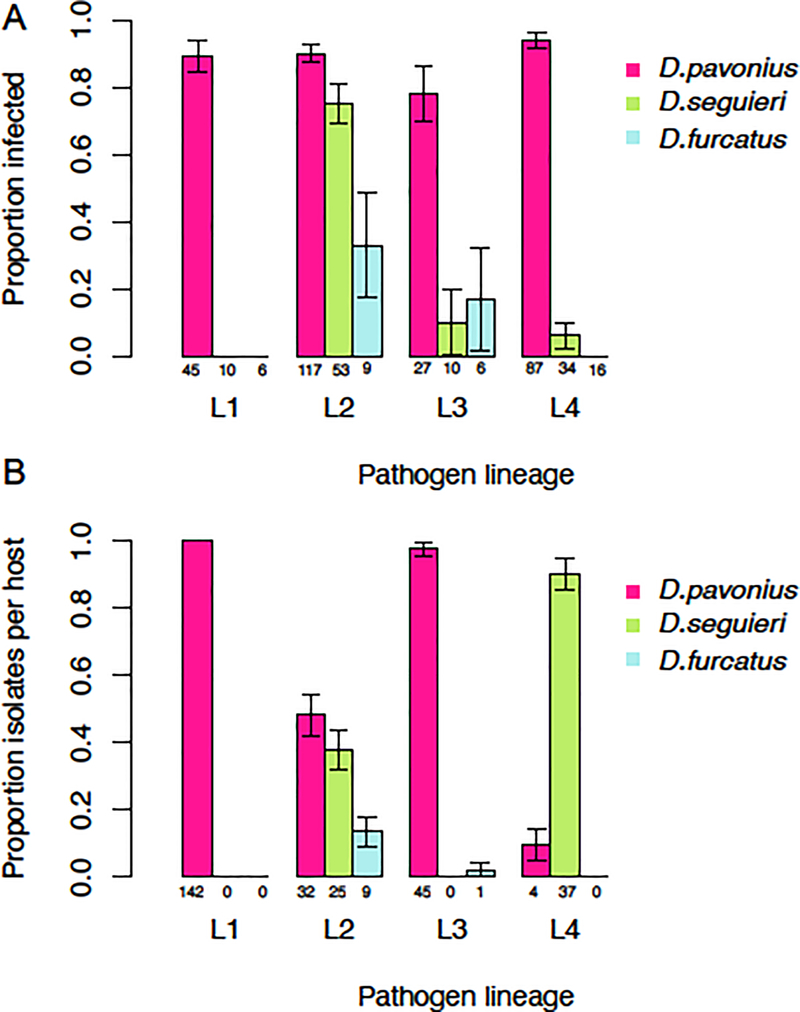
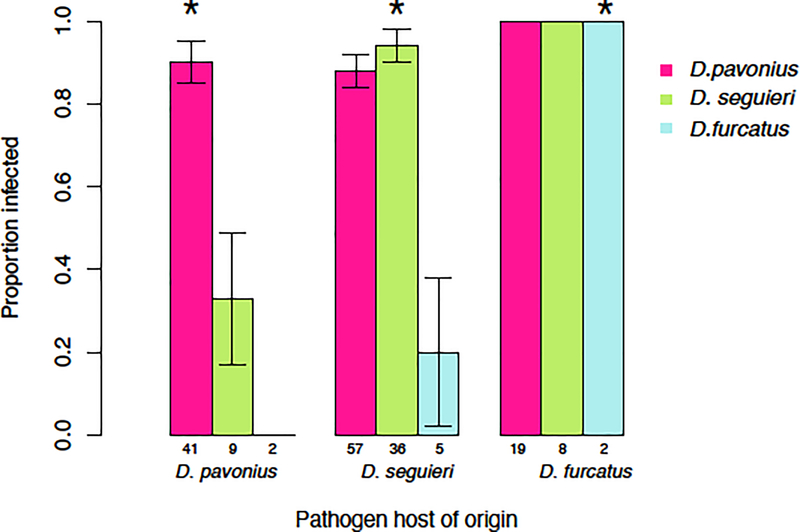
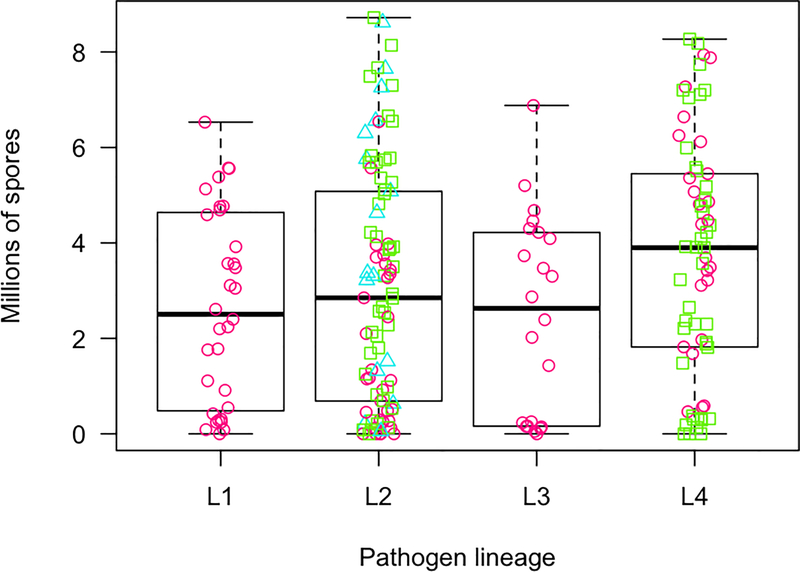
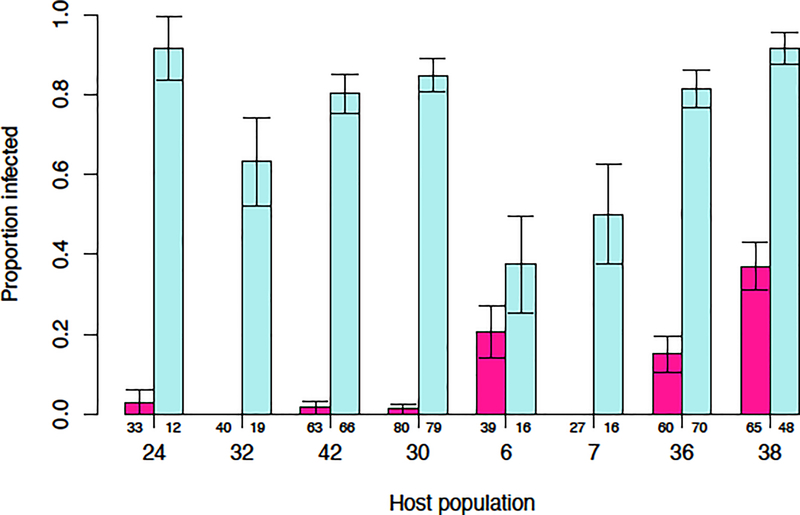
Determining the processes that drive the evolution of pathogen host range can inform our understanding of disease dynamics and the potential for host shifts. In natural populations, patterns of host range could be driven by genetically based differences in pathogen infectivity or ecological differences in host availability. In northwestern Italy, four reproductively isolated lineages of the fungal plant-pathogen Microbotryum have been shown to co-occur on several species in the genus Dianthus. We carried out cross-inoculation experiments to determine whether patterns of realized host range in these four lineages were driven by differences in infectivity and to test whether there was evidence of a trade-off between host range and within-host reproduction. We found strong concordance between field patterns of host range and pathogen infectivity on different Dianthus species using experimental inoculation, indicating that infection ability is a major driving force of host range. However, we found no evidence of a trade-off between the ability to infect a wider range of host species and spore production on a shared host.
Keywords: Generalist; Microbotryum; host range; infectivity; specialist; trade-offs.
© 2021 The Authors. Evolution © 2021 The Society for the Study of Evolution.
Conflict of interest statement
CONFLICT OF INTEREST
The authors have no conflicts of interest to report
Figures
Comment in
-
Digest: Evolutionary dynamics of specialization of a fungal pathogen.Evolution. 2021 Oct;75(10):2616-2617. doi: 10.1111/evo.14322. Epub 2021 Aug 30. Evolution. 2021. PMID: 34383291
References
-
- Alexander HM 2010. Disease in natural plant populations, communities, and ecosystems: insights into ecological and evolutionary processes. Plant Disease 94:492–503. - PubMed
-
- Antonovics J, Hood M, and Partain J. 2002. The ecology and genetics of a host Shift: Microbotryum as a model system. The American Naturalist 160: S40–S53. - PubMed
-
- Antonovics J, Boots M, Ebert D, Koskella B, Poss M, Sadd BM 2013. The Origin of Specificity by Means of Natural Selection: Evolved and Nonhost Resistance in Host–Pathogen Interactions. Evolution 67: 1–9 - PubMed
-
- Asplen MK, Bruns E, David AS, Denison RF, Epstein B, Kaiser MC, Kaser JM, Lacroix C, Mohl EK, Quiram G, Prescott K, Stanton-Geddes J, Vincent JB, Wragg PD, and May G. 2012. Do trade-offs have explanatory power for the evolution of organismal interactions? Evolution 66:1297–1307. - PubMed
-
- Bedhomme S, Lafforgue G, and Elena SF. 2012. Multihost Experimental Evolution of a Plant RNA virus reveals local adaptation and host-specific mutations. Mol Biol Evol 29:1481–1492. - PubMed
Publication types
MeSH terms
Associated data
Grants and funding
LinkOut - more resources
Full Text Sources
Other Literature Sources