


Interventions to reduce meat consumption by appealing to animal welfare: Meta-analysis and evidence-based recommendations
- PMID: 33984401
- PMCID: PMC9205607
- DOI: 10.1016/j.appet.2021.105277
Interventions to reduce meat consumption by appealing to animal welfare: Meta-analysis and evidence-based recommendations
Abstract
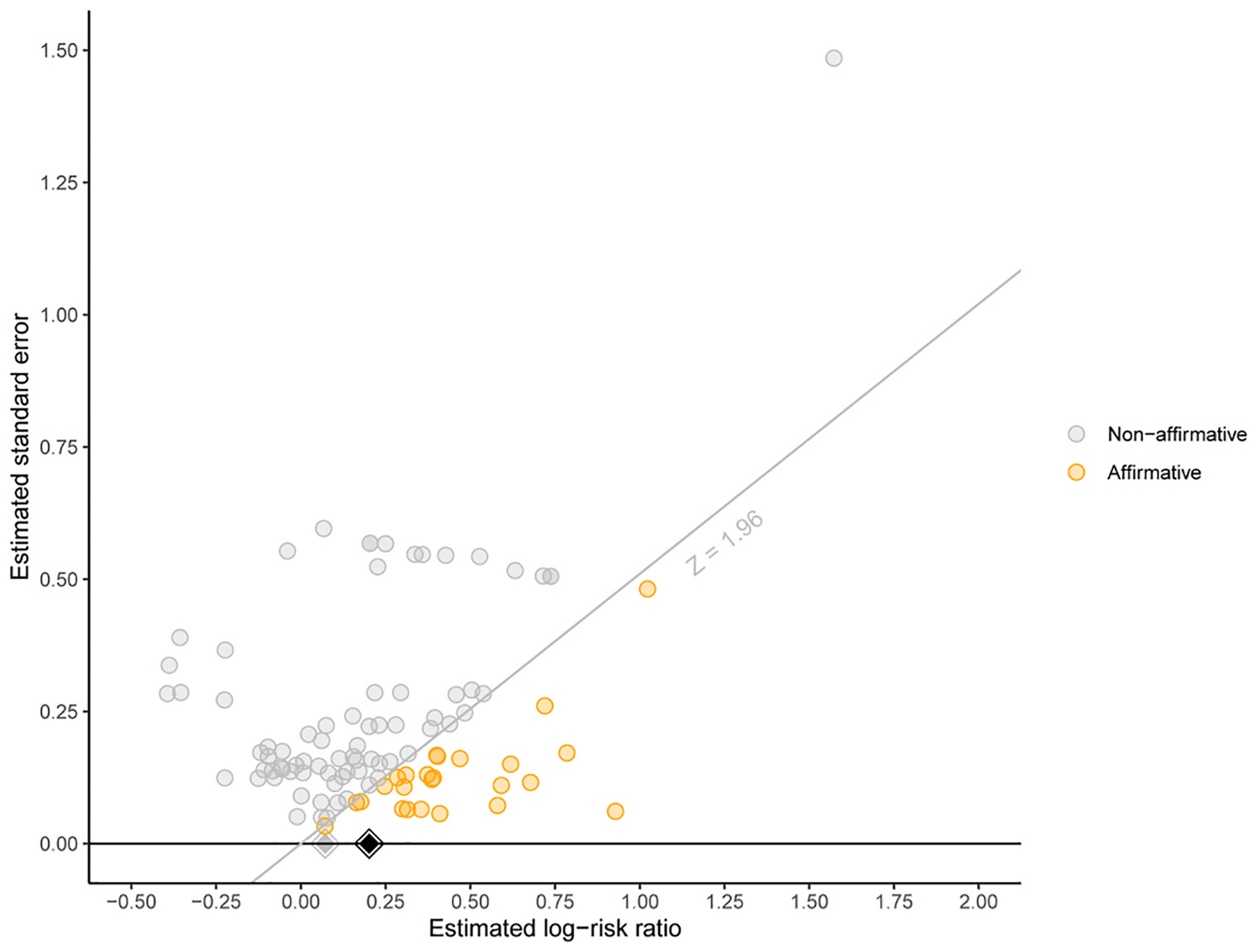
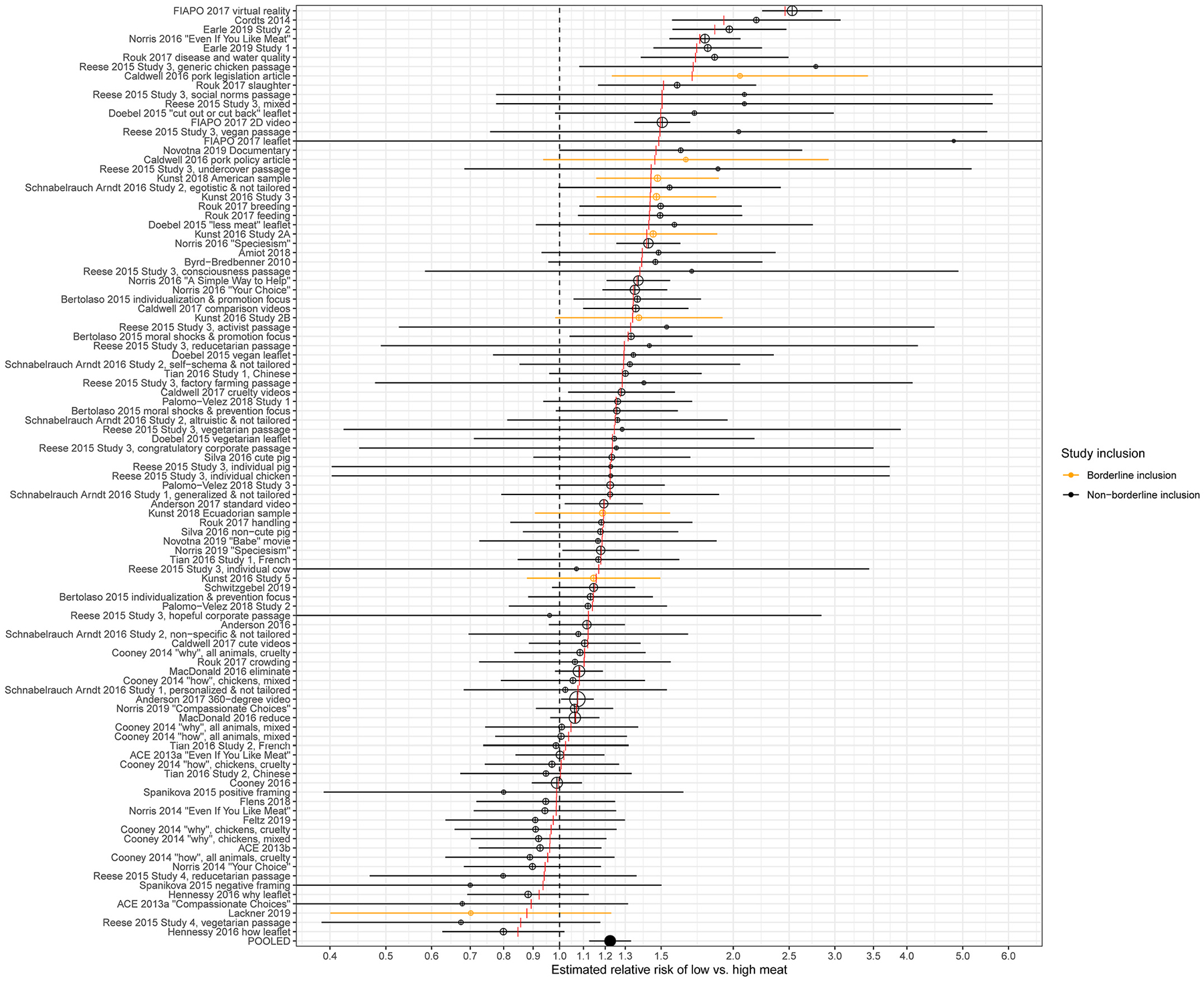
Reducing meat consumption may improve human health, curb environmental damage, and limit the large-scale suffering of animals raised in factory farms. Most attention to reducing consumption has focused on restructuring environments where foods are chosen or on making health or environmental appeals. However, psychological theory suggests that interventions appealing to animal welfare concerns might operate on distinct, potent pathways. We conducted a systematic review and meta-analysis evaluating the effectiveness of these interventions. We searched eight academic databases and extensively searched grey literature. We meta-analyzed 100 studies assessing interventions designed to reduce meat consumption or purchase by mentioning or portraying farm animals, that measured behavioral or self-reported outcomes related to meat consumption, purchase, or related intentions, and that had a control condition. The interventions consistently reduced meat consumption, purchase, or related intentions at least in the short term with meaningfully large effects (meta-analytic mean risk ratio [RR] = 1.22; 95% CI: [1.13, 1.33]). We estimated that a large majority of population effect sizes (71%; 95% CI: [59%, 80%]) were stronger than RR = 1.1 and that few were in the unintended direction. Via meta-regression, we identified some specific characteristics of studies and interventions that were associated with effect size. Risk-of-bias assessments identified both methodological strengths and limitations of this literature; however, results did not differ meaningfully in sensitivity analyses retaining only studies at the lowest risk of bias. Evidence of publication bias was not apparent. In conclusion, animal welfare interventions preliminarily appear effective in these typically short-term studies of primarily self-reported outcomes. Future research should use direct behavioral outcomes that minimize the potential for social desirability bias and are measured over long-term follow-up.
Keywords: Behavior interventions; Meat consumption; Meta-analysis; Nutrition; Planetary health.
Copyright © 2021 The Author(s). Published by Elsevier Ltd.. All rights reserved.
Conflict of interest statement
Appendix A. Supplementary data
Supplementary data to this article can be found online at
Figures
References
-
- Anderson J (2017). An experimental investigation of the impact of video media on pork consumption. Technical report, Faunalytics https://drive.google.com/file/d/1ovZ0xvJPKLGayAX-uCyGuZtJKCFcY0TP/view.
-
- Anderson J (2020). “Reduce” or “go veg?” effects on meal choice. Technical report, Faunalytics https://faunalytics.org/reduce-or-go-veg/.
Publication types
MeSH terms
Grants and funding
LinkOut - more resources
Full Text Sources
Other Literature Sources
