


The prevalence of depressive symptoms, anxiety symptoms and sleep disturbance in higher education students during the COVID-19 pandemic: A systematic review and meta-analysis
- PMID: 33984824
- PMCID: PMC9225824
- DOI: 10.1016/j.psychres.2021.113863
The prevalence of depressive symptoms, anxiety symptoms and sleep disturbance in higher education students during the COVID-19 pandemic: A systematic review and meta-analysis
Abstract
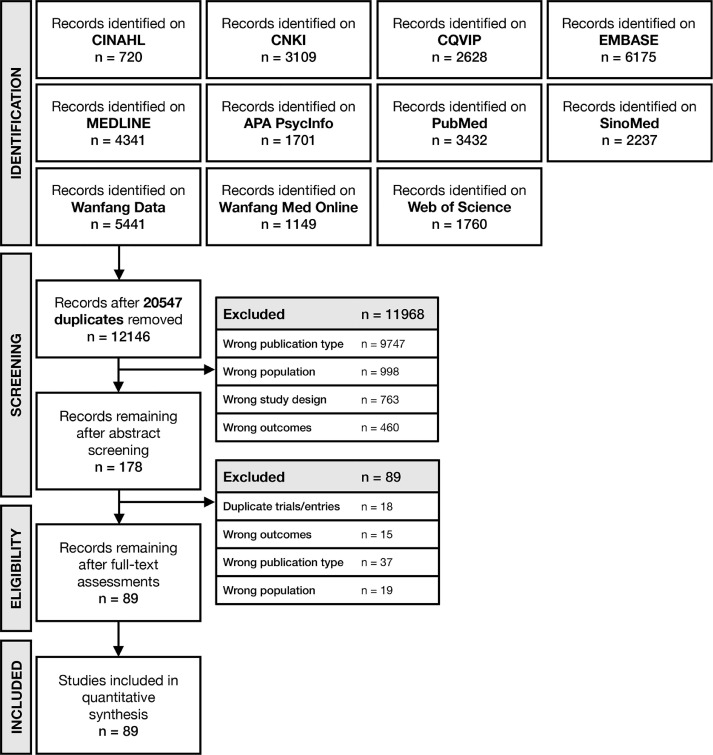
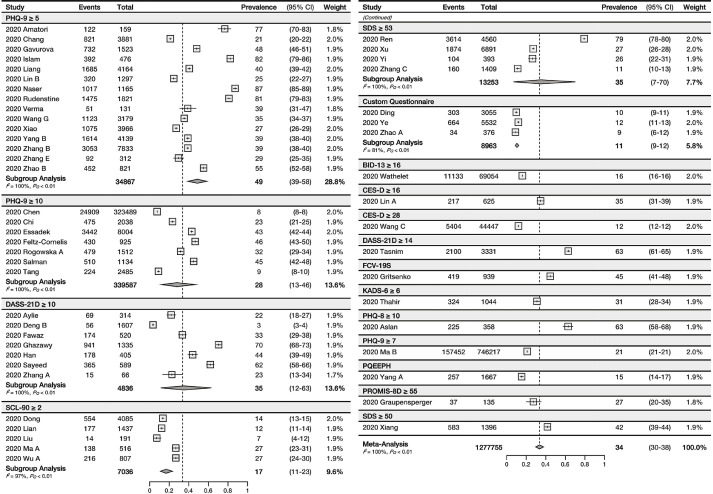
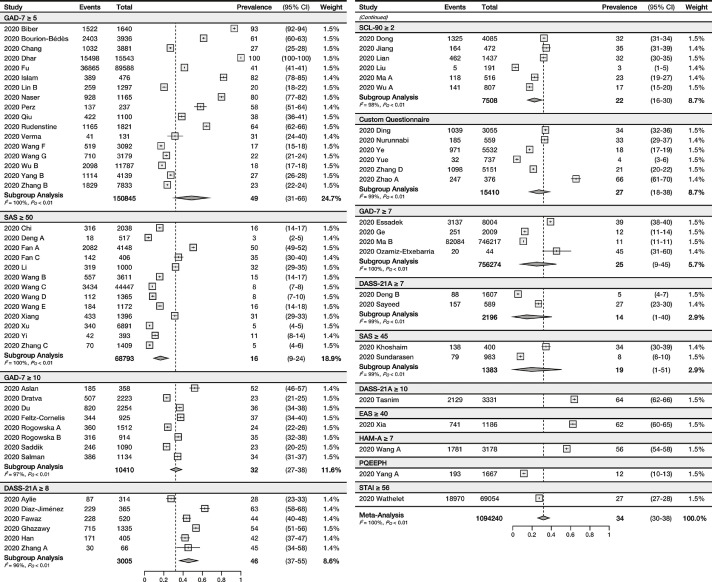
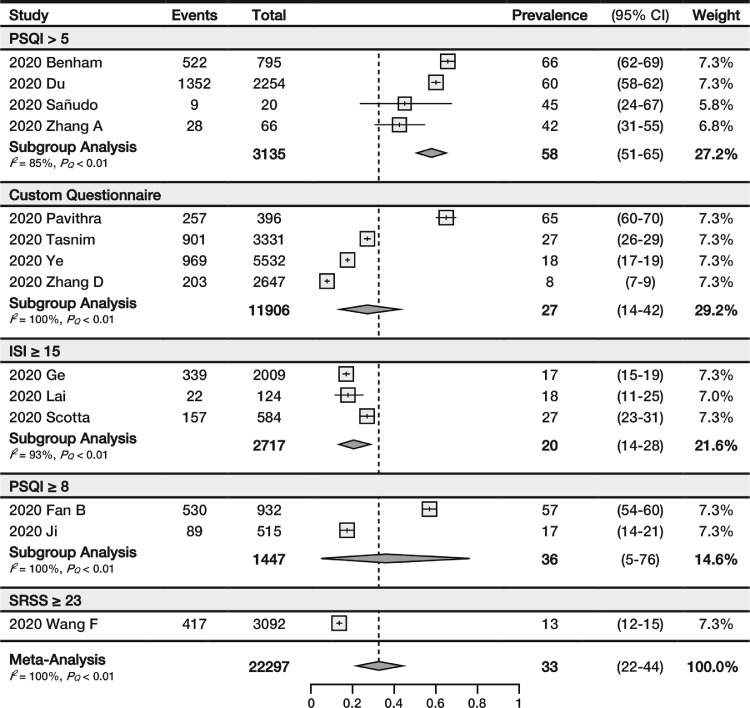
The COVID-19 pandemic and its accompanying infection control measures introduced significant disruptions to the routines of many higher education students around the world. It also deprived them of in-person counselling services and social support. These changes have put students at a greater risk of developing mental illness. The objective of this review is to assess the prevalence of depressive symptoms, anxiety symptoms and sleep disturbances in higher education students during the pandemic. A systematic search of English and Chinese databases was conducted current to January 1st, 2021. The quality of included studies was evaluated using a modified Newcastle-Ottawa scale. Prevalence of depressive symptoms, anxiety symptoms and sleep disturbances were pooled using random-effects meta-analysis. Eighty-nine studies (n=1,441,828) were included. The pooled prevalence of depressive symptoms, anxiety symptoms, and sleep disturbances was 34%, 32% and 33%, respectively. The prevalence values differ based on geographical regions, diagnostic criteria, education level, undergraduate year of study, financial situation, living arrangements and gender. Overall, the prevalence of depressive symptoms and anxiety symptoms synthesized in this study was higher compared to pre-pandemic prevalence in similar populations. Evidently, mental health screening and intervention should be a top priority for universities and colleges during the pandemic.
Keywords: Anxiety; COVID-19; Depression; Pandemic; Sleep Disturbance; Student; University.
Copyright © 2021 Elsevier B.V. All rights reserved.
Conflict of interest statement
The authors declare no conflict of interest.
Figures
References
-
- Alsubaie M.M., Stain H.J., Webster L.A.D., Wadman R. The role of sources of social support on depression and quality of life for university students. Int. J. Adolesc. Youth. 2019;24:484–496. doi: 10.1080/02673843.2019.1568887. - DOI
-
- Amatori S., Donati Zeppa S., Preti A., Gervasi M., Gobbi E., Ferrini F., Rocchi M.B.L., Baldari C., Perroni F., Piccoli G., Stocchi V., Sestili P., Sisti D. Dietary Habits and Psychological States during COVID-19 Home Isolation in Italian College Students: The Role of Physical Exercise. Nutrients. 2020;12 doi: 10.3390/nu12123660. - DOI - PMC - PubMed
Publication types
MeSH terms
LinkOut - more resources
Full Text Sources
Other Literature Sources
Medical
