


Epidemiology, species distribution, and outcome of nosocomial Candida spp. bloodstream infection in Shanghai: an 11-year retrospective analysis in a tertiary care hospital
- PMID: 33985505
- PMCID: PMC8120712
- DOI: 10.1186/s12941-021-00441-y
Epidemiology, species distribution, and outcome of nosocomial Candida spp. bloodstream infection in Shanghai: an 11-year retrospective analysis in a tertiary care hospital
Abstract
Background: The incidence of Candida bloodstream infections (BSIs), has increased over time. In this study, we aimed to describe the current epidemiology of Candida BSI in a large tertiary care hospital in Shanghai and to determine the risk factors of 28-day mortality and the impact of antifungal therapy on clinical outcomes.
Methods: All consecutive adult inpatients with Candida BSI at Ruijin Hospital between January 1, 2008, and December 31, 2018, were enrolled. Underlying diseases, clinical severity, species distribution, antifungal therapy, and their impact on the outcomes were analyzed.
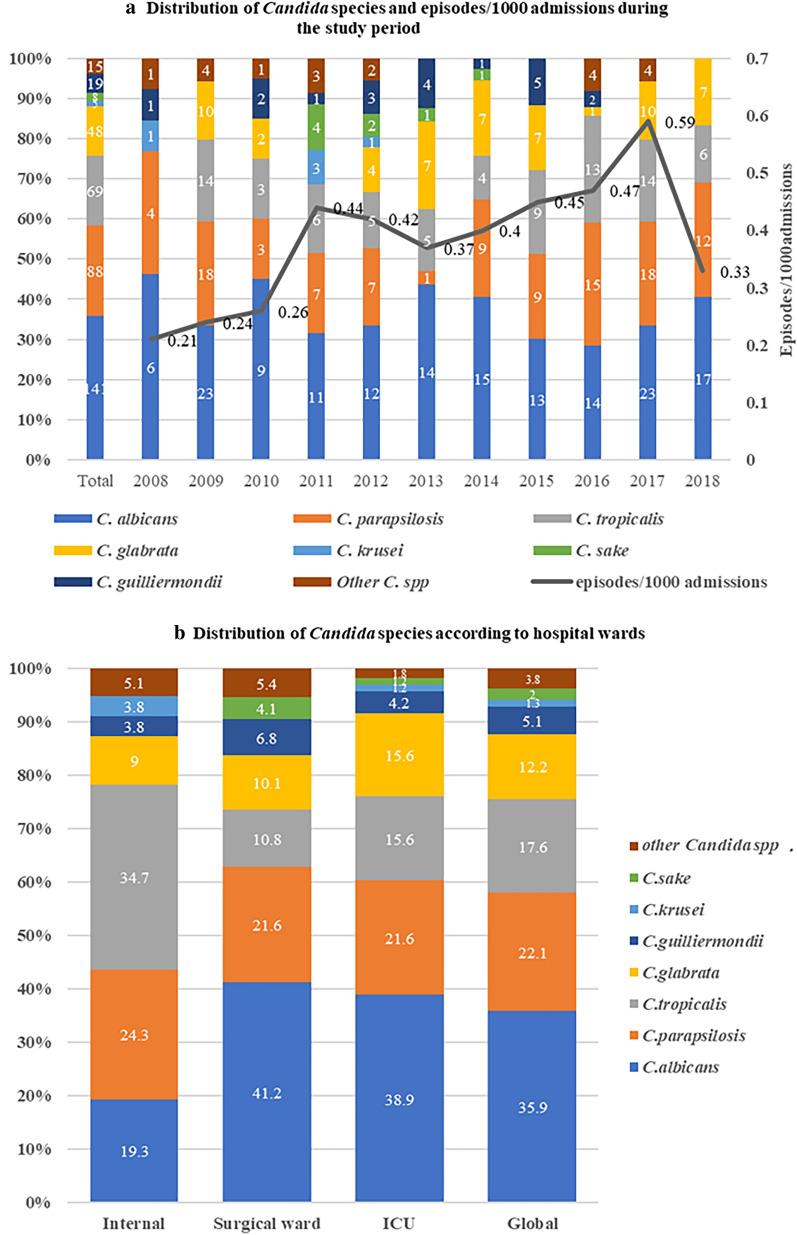
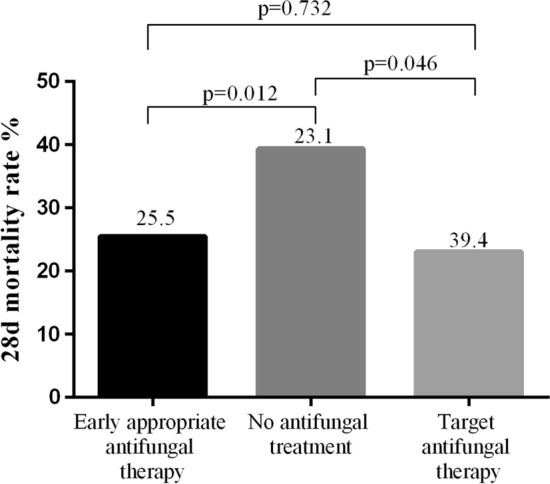
Results: Among the 370 inpatients with 393 consecutive episodes of Candida BSI, the incidence of nosocomial Candida BSI was 0.39 episodes/1000 hospitalized patients. Of the 393 cases, 299 (76.1%) were treated with antifungal therapy (247 and 52 were treated with early appropriate and targeted antifungal therapy, respectively). The overall 28-day mortality rate was 28.5%, which was significantly lower in those who received early appropriate (25.5%) or targeted (23.1%) antifungal therapy than in those who did not (39.4%; P = 0.012 and P = 0.046, respectively). In multivariate Cox regression analysis, age, chronic renal failure, mechanical ventilation, and severe neutropenia were found to be independent risk factors of the 28-day mortality rate. Patients who received antifungal therapy had a lower mortality risk than did those who did not.
Conclusions: The incidence of Candida BSI has increased steadily in the past 11 years at our tertiary care hospital in Shanghai. Antifungal therapy influenced short-term survival, but no significant difference in mortality was observed between patients who received early appropriate and targeted antifungal therapy.
Keywords: Antifungal therapy; Bloodstream infection; Candida spp.; Early treatment; Epidemiology; Species distribution.
Conflict of interest statement
The authors declare that they have no competing interests.
Figures
References
MeSH terms
Substances
Grants and funding
- 81772107/National Natural Science Foundation of China
- 81772040/National Natural Science Foundation of China
- 18411950900/Science and Technology Commission of Shanghai Municipality
- 2016ZB0206/Shanghai Municipal Population and Family Planning Commission
- SHDC12017116/Shanghai Hospital Development Center
LinkOut - more resources
Full Text Sources
Other Literature Sources
Medical
Miscellaneous
