


Successful elimination of bilirubin in critically ill patients with acute liver dysfunction using a cytokine adsorber and albumin dialysis: a pilot study
- PMID: 33986443
- PMCID: PMC8119427
- DOI: 10.1038/s41598-021-89712-4
Successful elimination of bilirubin in critically ill patients with acute liver dysfunction using a cytokine adsorber and albumin dialysis: a pilot study
Abstract
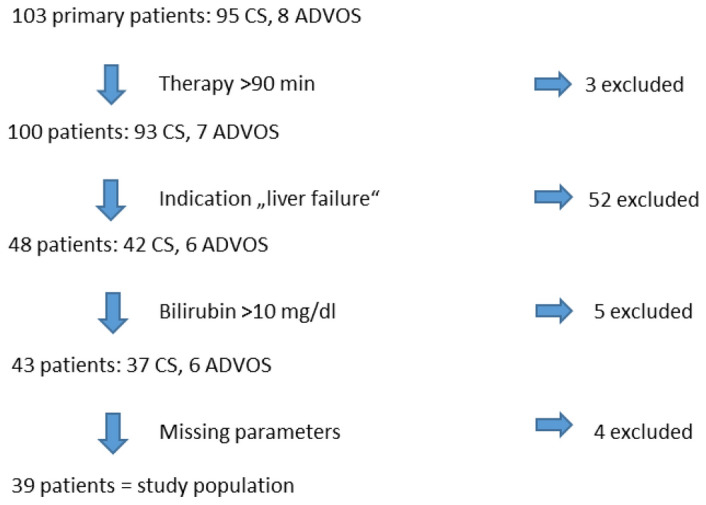
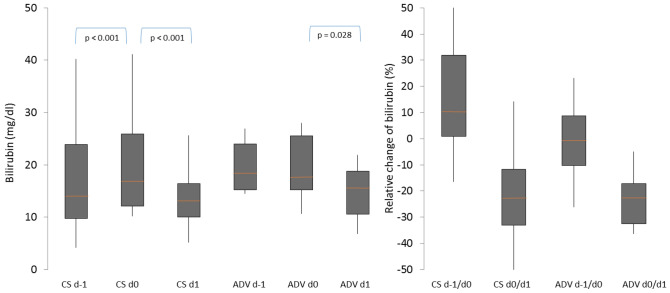
There are different methods of artificial liver support for patients with acute liver dysfunction (ALD). However, CytoSorb (CS) might be a new approved option for those patients. Question of interest is whether the elimination performance of CS was comparable to that of advanced organ support (ADVOS). Patients, treated with CS (integrated into high-flux dialysis) or ADVOS and a total bilirubin > 10 mg/dl were included. Laboratory parameters were evaluated before starting therapy (d0) and 12-24 h thereafter (d1). The Wilcoxon-test with associated samples was used for statistical analysis. Thirty-nine patients (33 CS, 6 ADVOS) were included. The median bilirubin at d0 was 16.9 and 17.7 mg/dl and at d1 was 13.2 and 15.9 mg/dl, in the CS and ADVOS group, respectively. There was a significant bilirubin reduction as well in the CS group (p < 0.001, median relative reduction: 22.5%) as in the ADVOS group (p = 0.028, median relative reduction: 22.8%). There was no significant difference in the relative bilirubin reduction between CS and ADVOS therapies. The use of CytoSorb and ADVOS in patients with ALD led to a significant and comparable decrease in total bilirubin. The easy use of CS might be an advantage compared to other procedures.
Conflict of interest statement
The authors declare no competing interests.
Figures
References
Publication types
MeSH terms
Substances
LinkOut - more resources
Full Text Sources
Other Literature Sources
Medical
