. 2021 Apr-Jun:58:101045.
doi: 10.1016/j.cogdev.2021.101045. Epub 2021 Apr 16.

Mechanisms linking socioeconomic status and academic achievement in early childhood: Cognitive stimulation and language

Affiliations

Mechanisms linking socioeconomic status and academic achievement in early childhood: Cognitive stimulation and language

Lucy A Lurie et al. Cogn Dev. 2021 Apr-Jun.

Abstract

There is a strong positive association between childhood socioeconomic status (SES) and academic achievement. This disparity may, in part, be explained by differences in early environmental experiences and language development. Cognitive stimulation-including language exposure, access to learning materials, caregiver involvement in children's learning, and variety of experiences-varies by SES and may link SES to language development. Childhood language development in turn is associated with academic achievement. In the current longitudinal study of 101 children (60-75 months), SES was positively associated with cognitive stimulation and performance on language measures. Cognitive stimulation mediated the association between SES and children's language. Furthermore, children's language mediated the association between SES and academic achievement 18 months later. In addition to addressing broader inequalities in access to resources that facilitate caregivers' abilities to provide cognitive stimulation, cognitive stimulation itself could be targeted in future interventions to mitigate SES-related disparities in language and academic achievement.

Keywords: SES-achievement gap; cognitive development; home environment; language development; longitudinal studies; societal inequities.


Figures

Figure 1.
Figure 1.
Associations of SES with receptive language (A and D), expressive language quality (B and E), and expressive language complexity (C and E), controlling for age at T1, sex, and violence exposure. P-values are FDR corrected.
Figure 2.
Figure 2.
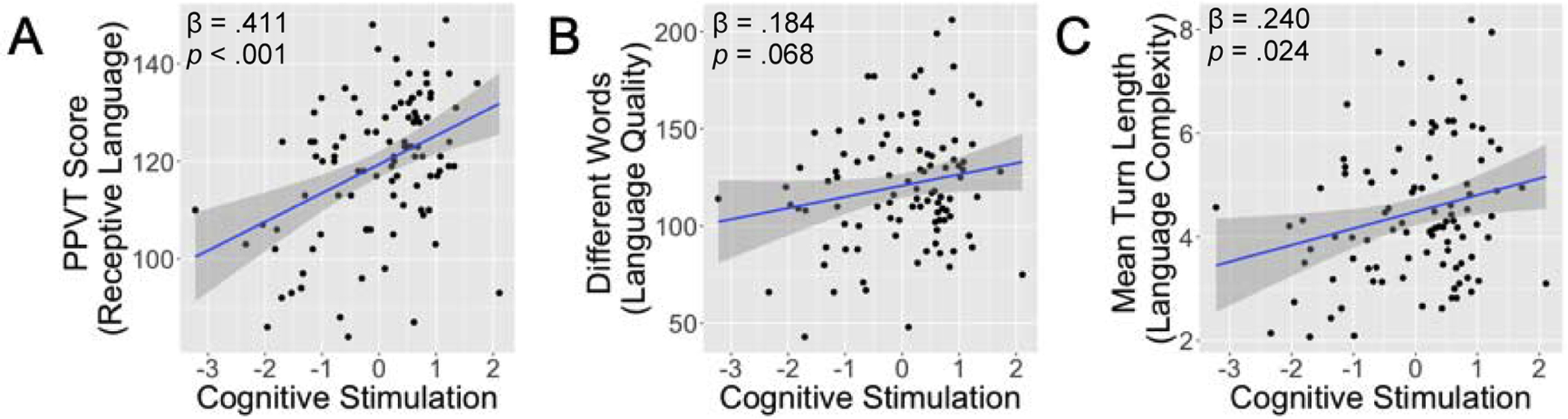
Associations of cognitive stimulation with receptive language (A), expressive language quality (B), and expressive language complexity (C), controlling for age, sex, and violence exposure at T1. P-values are FDR corrected.
Figure 3.
Figure 3.
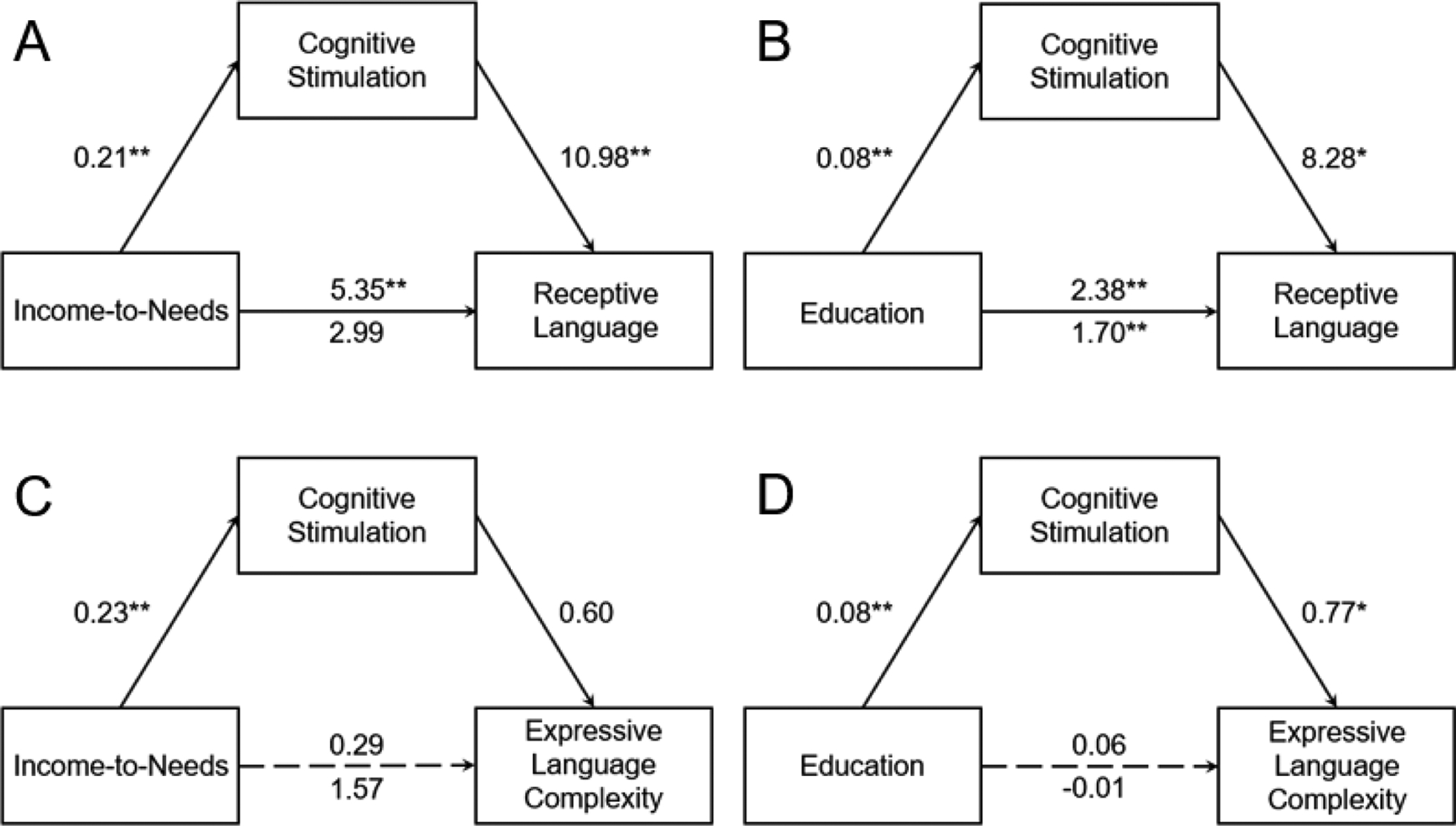
Mediation Models. Cognitive stimulation mediated the associations between income-to-needs (A) and caregiver education (B) with receptive language. Cognitive stimulation also mediated the association between income-to-needs (C) and caregiver education (D) with expressive language complexity. Coefficients are unstandardized. *p < .05 **p < .01 formula imageSignificant c-path formula image Non-significant c-path
Figure 4.
Figure 4.
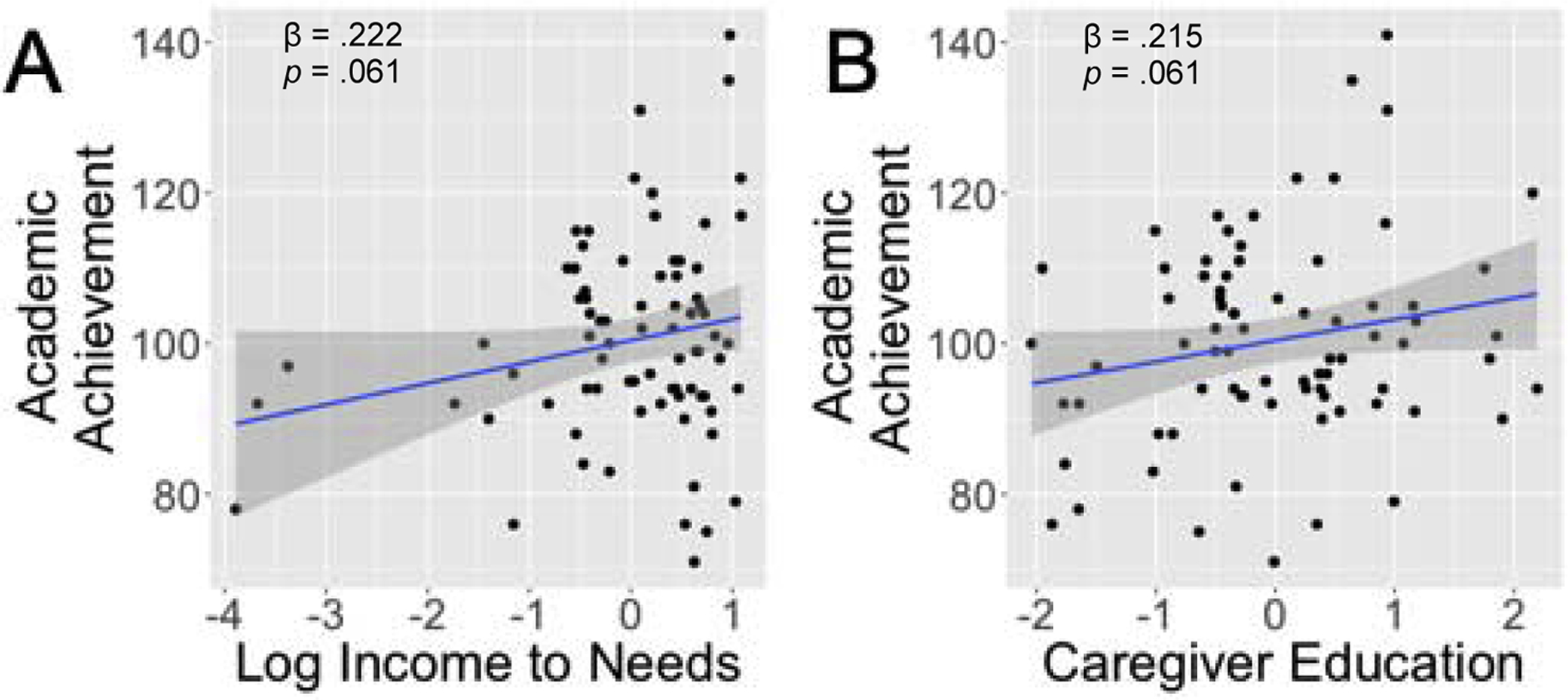
Associations of income-to-needs (A) and caregiver education (B) with academic achievement, controlling for age at T2, sex, and violence exposure at T1. P-values are FDR corrected.
Figure 5.
Figure 5.
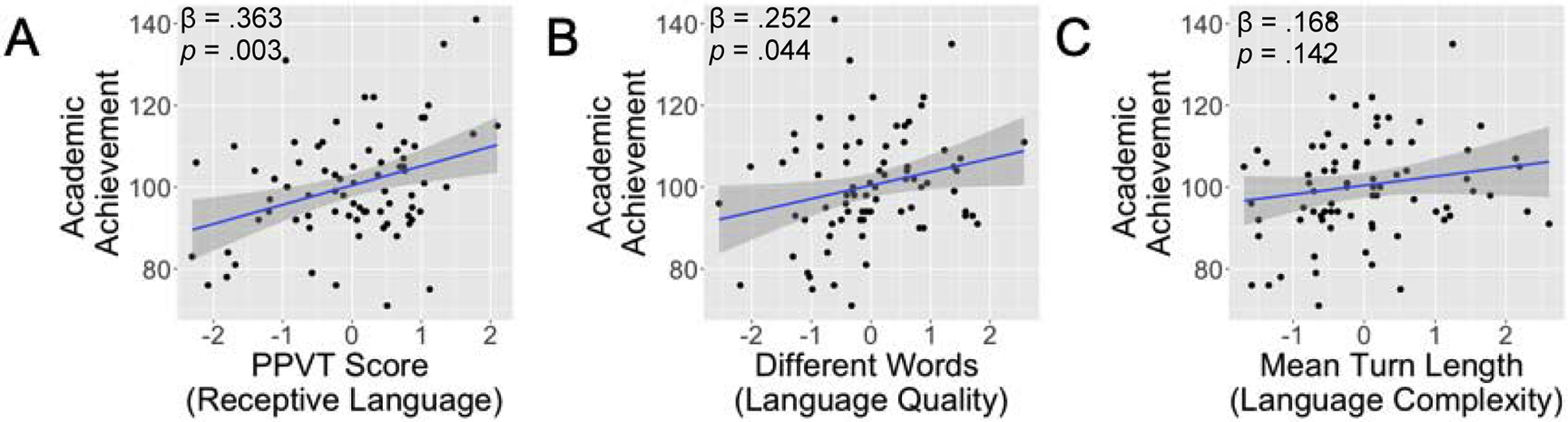
Associations between receptive language (A), expressive language quality (B), and expressive language complexity (C) with academic achievement controlling for age at T2, sex, and violence exposure at T1. P-values are FDR corrected.
Figure 6.
Figure 6.
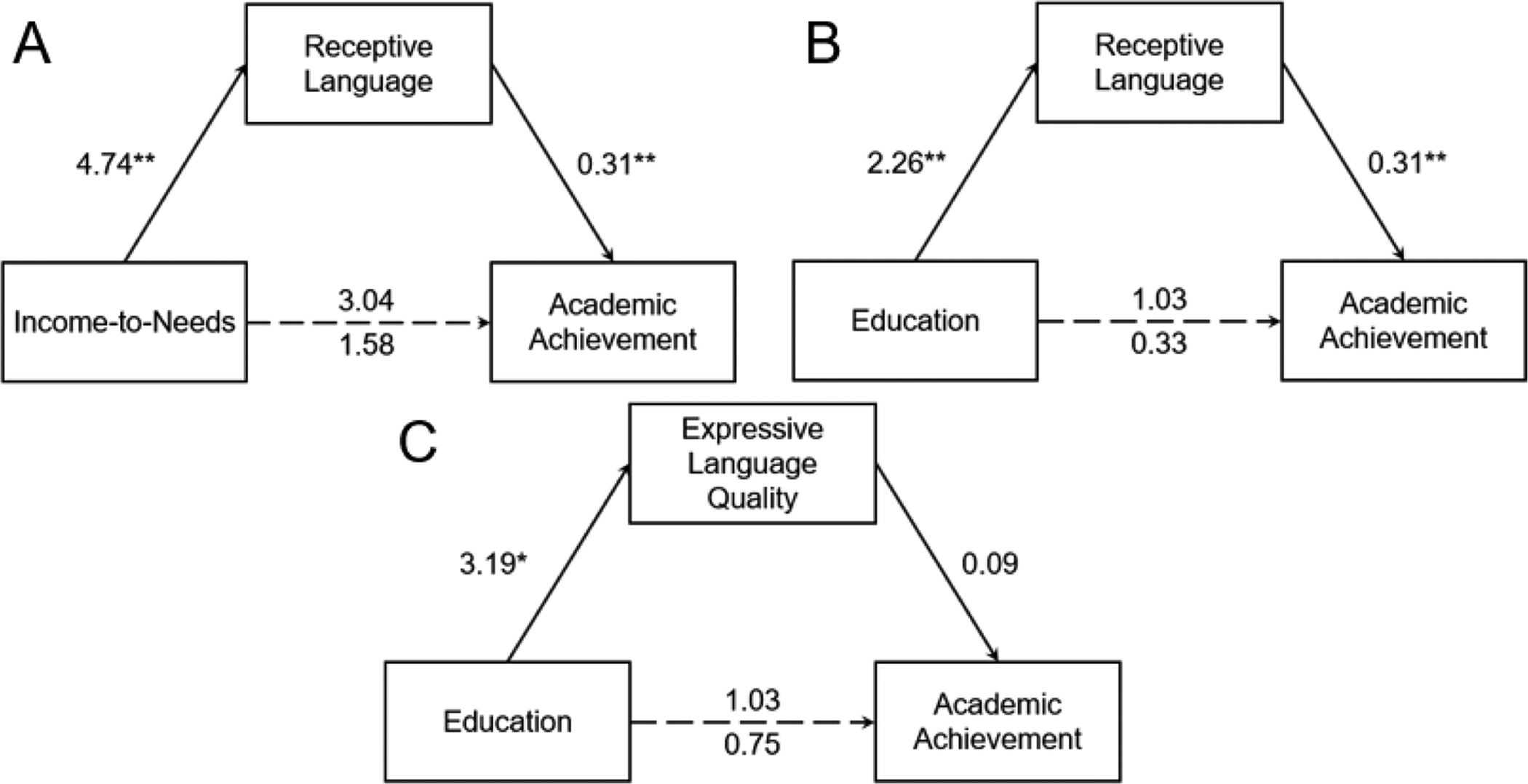
Mediation models. Receptive language mediated the association between income-to-needs and academic achievement at T2 (A) as well as between caregiver education and academic achievement at T2 (B). Expressive language quality mediated the association between caregiver education and academic achievement at T2 (C). Coefficients are unstandardized. *p < .05 **p < .01 formula imageSignificant c-path formula image Non-significant c-path

References

    1. Blair C, & Razza RP (2007). Relating effortful control, executive function, and false belief understanding to emerging math and literacy ability in kindergarten. Child Development, 78, 647–663. 10.1111/j.1467-8624.2007.01019.x - DOI - PubMed
    1. Bradley RH, & Caldwell BM (1984). The relation of infants’ home environments to achievement test performance in first grade: A follow-up study. Child Development, 55, 803–809. 10.2307/1130131 - DOI - PubMed
    1. Bradley RH, & Corwyn RF (2002). Socioeconomic status and child development. Annual Review of Psychology, 53, 371–399. 10.1146/annurev.psych.53.100901.135233 - DOI - PubMed
    1. Bradley RH, Corwyn RF, McAdoo HP, & García Coll C (2001). The home environments of children in the United States part I: Variations by age, ethnicity, and poverty status. Child Development, 72, 1844–1867. 10.1111/1467-8624.t01-1-00382 - DOI - PubMed
    1. Brito NH (2017). Influence of the home linguistic environment on early language development. Policy Insights from the Behavioral and Brain Sciences, 4, 155–162. 10.1177/2372732217720699 - DOI

LinkOut - more resources