


Music Listening in Classical Concerts: Theory, Literature Review, and Research Program
- PMID: 33986708
- PMCID: PMC8110713
- DOI: 10.3389/fpsyg.2021.638783
Music Listening in Classical Concerts: Theory, Literature Review, and Research Program
Abstract
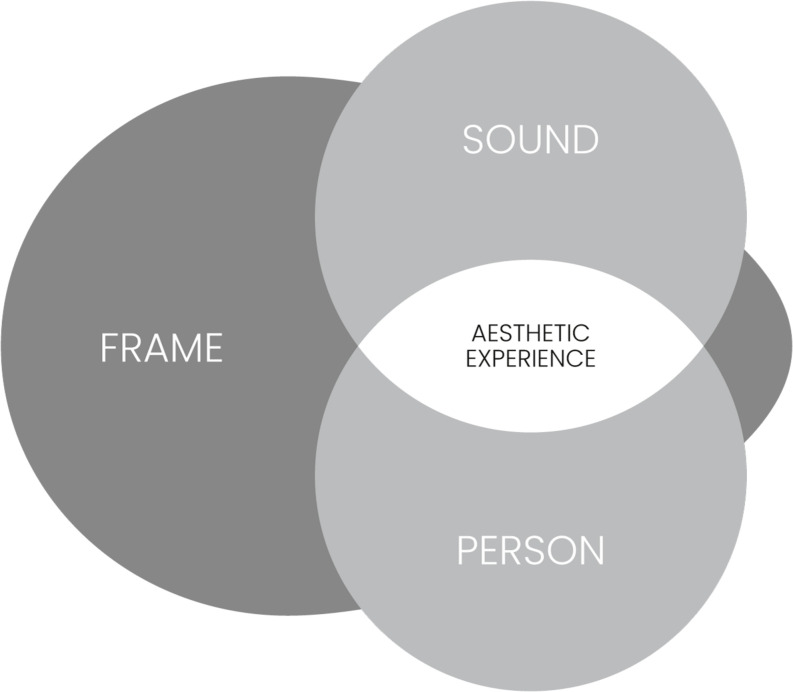
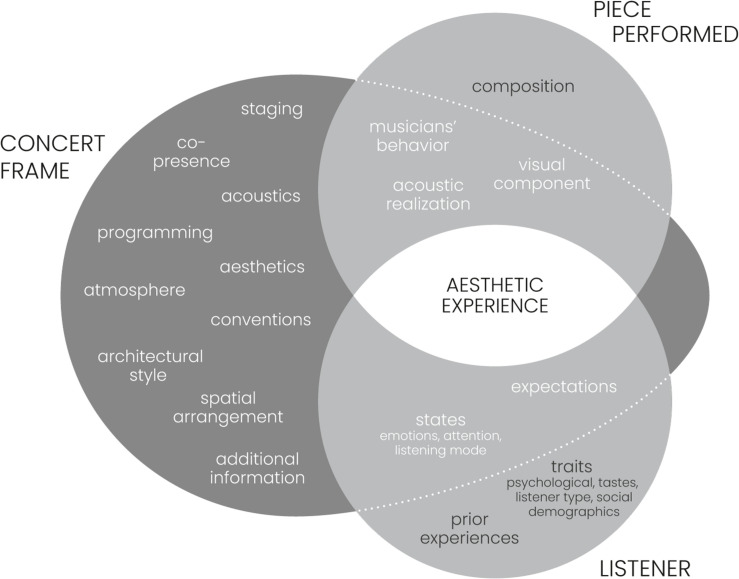
Performing and listening to music occurs in specific situations, requiring specific media. Empirical research on music listening and appreciation, however, tends to overlook the effects these situations and media may have on the listening experience. This article uses the sociological concept of the frame to develop a theory of an aesthetic experience with music as the result of encountering sound/music in the context of a specific situation. By presenting a transdisciplinary sub-field of empirical (concert) studies, we unfold this theory for one such frame: the classical concert. After sketching out the underlying theoretical framework, a selective literature review is conducted to look for evidence on the general plausibility of the single elements of this emerging theory and to identify desiderata. We refer to common criticisms of the standard classical concert, and how new concert formats try to overcome alleged shortcomings and detrimental effects. Finally, an empirical research program is proposed, in which frames and frame components are experimentally manipulated and compared to establish their respective affordances and effects on the musical experience. Such a research program will provide empirical evidence to tackle a question that is still open to debate, i.e., whether the diversified world of modern-day music listening formats also holds a place for the classical concert - and if so, for what kind of classical concert.
Keywords: aesthetic experience; classical music; concert; music listening; performance.
Copyright © 2021 Wald-Fuhrmann, Egermann, Czepiel, O’Neill, Weining, Meier, Tschacher, Uhde, Toelle and Tröndle.
Conflict of interest statement
The authors declare that the research was conducted in the absence of any commercial or financial relationships that could be construed as a potential conflict of interest.
Figures
References
-
- Abeles H., Chung J. W. (1996). “Response to music,” in Handbook of Music Psychology, 2nd Edn, ed. Hodges D. A. (Hong Kong: IMR Press; ), 285–342.
-
- Attali J. (1977). Bruits: Essai sur l’économie politique de la musique. Paris: Presses universitaires de France.
-
- Attali J. (1985). Noise: The Political Economy of Music. Minneapolis, MN: University of Minnesota Press.
-
- Auslander P. (2008). Liveness: Performance in a Mediatized Culture, 2nd Edn. Milton Park: Routledge.
Publication types
LinkOut - more resources
Full Text Sources
Other Literature Sources
