Salernitan Medical School or Langobardic Medical School?
- PMID: 33988182
- PMCID: PMC8182603
- DOI: 10.23750/abm.v92i2.9109
Salernitan Medical School or Langobardic Medical School?
Abstract
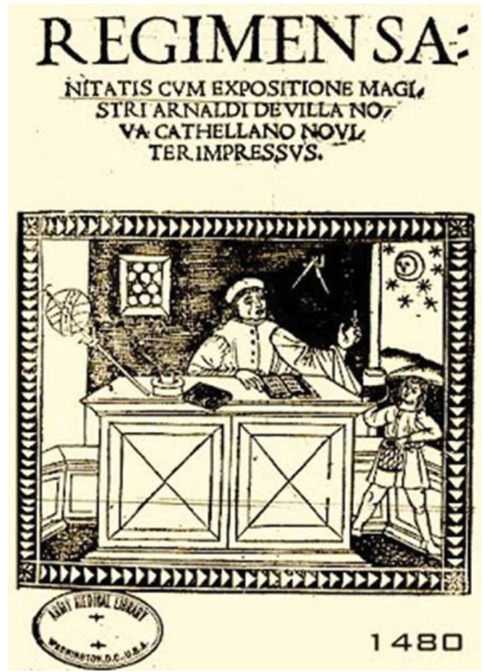
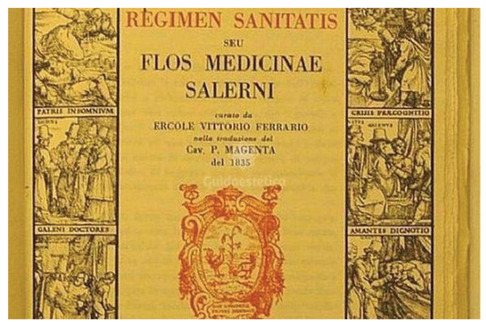
Already famous since the high Middle Ages, the Salernitan Medical School reached its whole scientific role between the 11th and 12th century, declining later due to the rising of modern universities. Information on the earliest period of the School is very poor but, starting from the 10th century, we know that Salernitan physicians were widely recognized as researchers and healers. This paper is focused on the heavy role recognized to the Langobards (first) and Normans (later) on development of the Salernitan Medical School. A special role must be recognized to Alfanus I, Gariopontus and Trotula de Ruggiero: they left memories on their enterprises and many manuscripts of great relevance for the development of Middle Ages and Renaissance Medicine. Their multicultural experience dragged the Salernitan School to become the greatest expression of medical science of its age. This role was expressed in the "Regimen Sanitatis Salernitanum" or "Flos Medicinae Salerni", a book that resumes the highest knowledges on general hygiene, dietetics, physiotherapy, comparative anatomy and surgery. The book had a tremendous success, having more than 300 editions in many languages up to 1846. It was an essential reference for western medical literature up to Renaissance. Furthermore, Langobards took care of health laws, mainly in the Rotari edict, which included laws on medical practice and on the physicians' role. (www.actabiomedica.it).
Conflict of interest statement
Each author declares that he or she has no commercial associations (e.g. consultancies, stock ownership, equity interest, patent/licensing arrangement etc.) that might pose a conflict of interest in connection with the submitted article
Figures
References
-
- De Renzi S. Storia documentata della Scuola Medica di Salerno. 1857, Gaetano Nobile Tipografo, Napoli; Ristampa Ferro Edizioni, Milano 1967
-
- Sudhoff K. Salerno, a Medieval Health Resort and Medical School. In: Essays in the History of Medicine. Garrison Ed; 1926.
-
- Castiglioni A. The School of Salerno (Work of Roger) Bull Hist Med. 1938;6:883.
-
- Pasca M. La Scuola Medica Salernitana. Electa Ed., Napoli; 1988.
MeSH terms
LinkOut - more resources
Full Text Sources