


Effects of Providing Tailored Information About e-Cigarettes in a Web-Based Smoking Cessation Intervention: Protocol for a Randomized Controlled Trial
- PMID: 33988520
- PMCID: PMC8164120
- DOI: 10.2196/27088
Effects of Providing Tailored Information About e-Cigarettes in a Web-Based Smoking Cessation Intervention: Protocol for a Randomized Controlled Trial
Abstract
Background: There is an ongoing debate whether electronic cigarettes (e-cigarettes) should be advocated for smoking cessation. Because of this uncertainty, information about the use of e-cigarettes for smoking cessation is usually not provided in governmental smoking cessation communications. However, there is an information need among smokers because despite this uncertainty, e-cigarettes are used by many smokers to reduce and quit tobacco smoking.
Objective: The aim of this study is to describe the protocol of a randomized controlled trial that assesses the effect of providing tailored information about e-cigarettes compared to not providing this information on determinants of decision making and smoking reduction and abstinence. This information is provided in the context of a digital smoking cessation intervention.
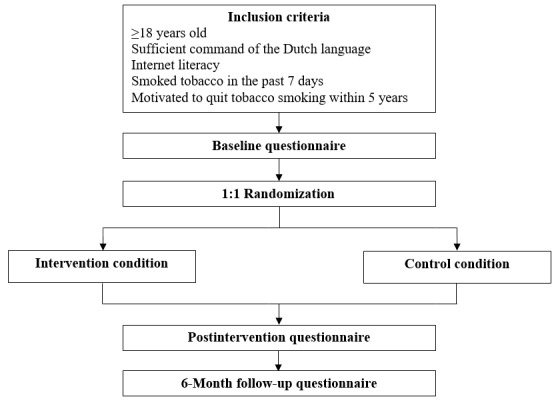
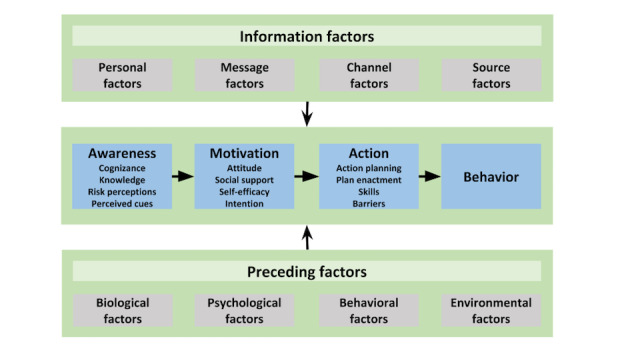
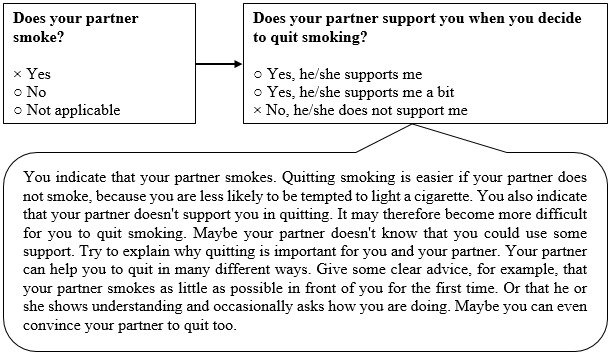
Methods: A randomized controlled trial with a 6-month follow-up period will be conducted among adult smokers motivated to quit smoking within 5 years. Participants will be 1:1 randomized into either the intervention condition or control condition. In this trial, which is grounded on the I-Change model, participants in both conditions will receive tailored feedback on attitude, social influence, preparatory plans, self-efficacy, and coping plans. Information on 6 clusters of smoking cessation methods (face-to-face counselling, eHealth interventions, telephone counselling, group-based programs, nicotine replacement therapy, and prescription medication) will be provided in both conditions. Smokers in the intervention condition will also receive detailed tailored information on e-cigarettes, while smokers in the control condition will not receive this information. The primary outcome measure will be the number of tobacco cigarettes smoked in the past 7 days. Secondary outcome measures will include 7-day point prevalence tobacco abstinence, 7-day point prevalence e-cigarette abstinence, and determinants of decision making (ie, knowledge and attitude regarding e-cigarettes). All outcomes will be self-assessed through web-based questionnaires.
Results: This project is supported by a research grant of the National Institute for Public Health and the Environment (Rijksinstituut voor Volksgezondheid en Milieu). Ethical approval was granted by the Ethics Review Committee Health, Medicine and Life Sciences at Maastricht University (FHML-REC/2019/072). Recruitment began in March 2020 and was completed by July 2020. We enrolled 492 smokers in this study. The results are expected to be published in June 2021.
Conclusions: The experimental design of this study allows conclusions to be formed regarding the effects of tailored information about e-cigarettes on decision making and smoking behavior. Our findings can inform the development of future smoking cessation interventions.
Trial registration: Dutch Trial Register Trial NL8330; https://www.trialregister.nl/trial/8330.
International registered report identifier (irrid): DERR1-10.2196/27088.
Keywords: ENDS; computer tailoring; digital health; e-cigarette; eHealth; electronic cigarette; electronic nicotine delivery system; mHealth; smoking; smoking cessation.
©Jan Mathis Elling, Rik Crutzen, Reinskje Talhout, Hein de Vries. Originally published in JMIR Research Protocols (https://www.researchprotocols.org), 14.05.2021.
Conflict of interest statement
Conflicts of Interest: None declared.
Figures
References
-
- U.S. Department of Health and Human Services 2014 Surgeon General's report: The health consequences of smoking: 50 years of progress. CDC. [2021-05-03]. https://www.cdc.gov/tobacco/data_statistics/sgr/50th-anniversary/index.htm.
-
- Rijksinstituut voor Volksgezondheid en Milieu Sterfte door roken. 2018. [2021-05-03]. https://www.volksgezondheidenzorg.info/onderwerp/roken/cijfers-context/g....
-
- Cohen S, Lichtenstein E, Prochaska JO, Rossi JS, Gritz ER, Carr CR, Orleans CT, Schoenbach VJ, Biener L, Abrams D. Debunking myths about self-quitting. Evidence from 10 prospective studies of persons who attempt to quit smoking by themselves. Am Psychol. 1989 Nov;44(11):1355–65. doi: 10.1037//0003-066x.44.11.1355. - DOI - PubMed
-
- Benowitz NL. Nicotine addiction. N Engl J Med. 2010 Jun 17;362(24):2295–303. doi: 10.1056/NEJMra0809890. http://europepmc.org/abstract/MED/20554984 - DOI - PMC - PubMed
LinkOut - more resources
Full Text Sources
Other Literature Sources
Research Materials
Miscellaneous
