


Molnupiravir promotes SARS-CoV-2 mutagenesis via the RNA template
- PMID: 33989635
- PMCID: PMC8110631
- DOI: 10.1016/j.jbc.2021.100770
Molnupiravir promotes SARS-CoV-2 mutagenesis via the RNA template
Abstract
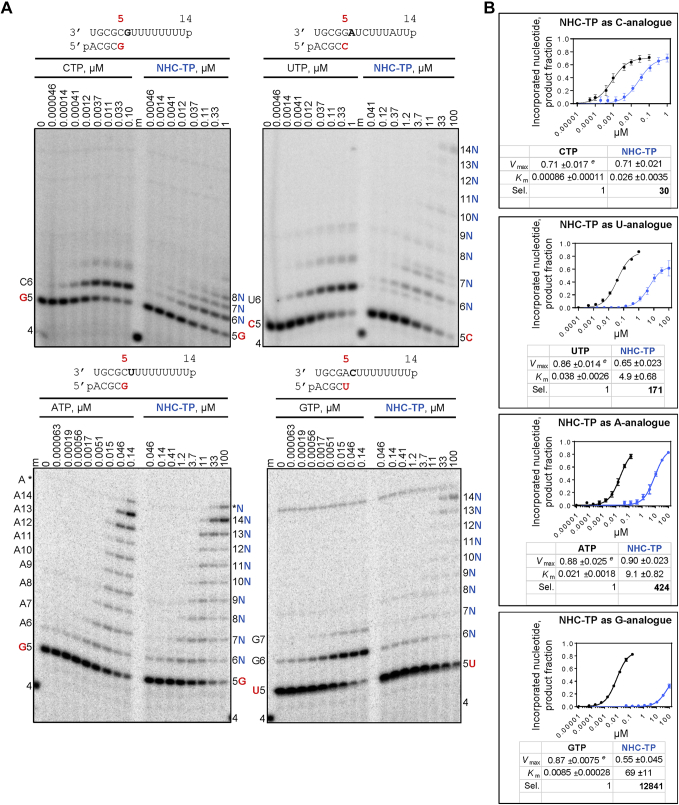
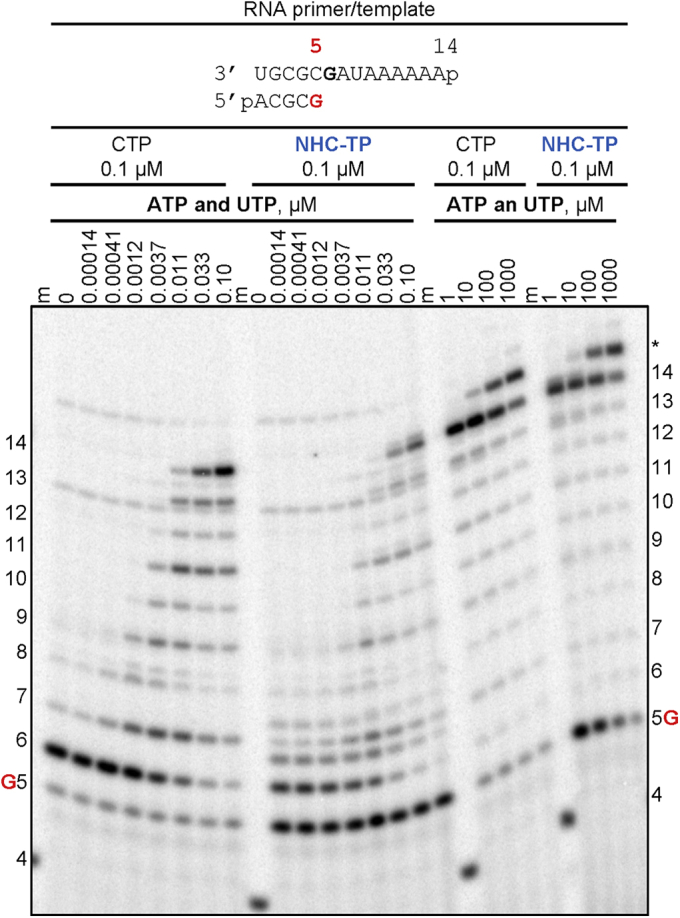
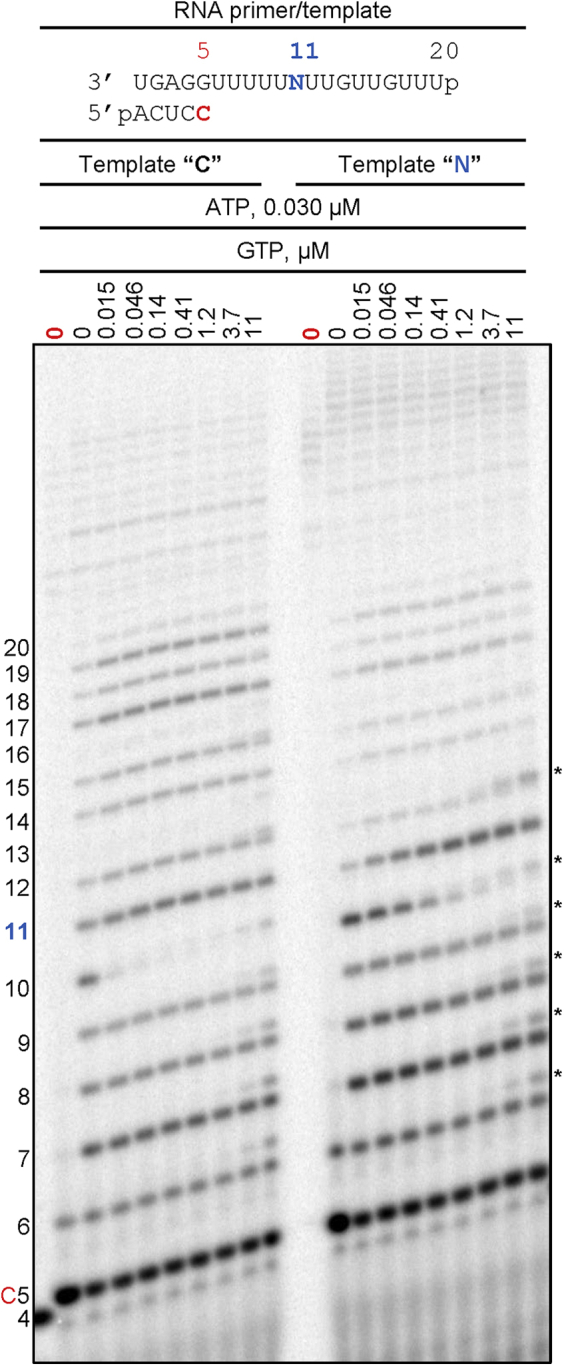
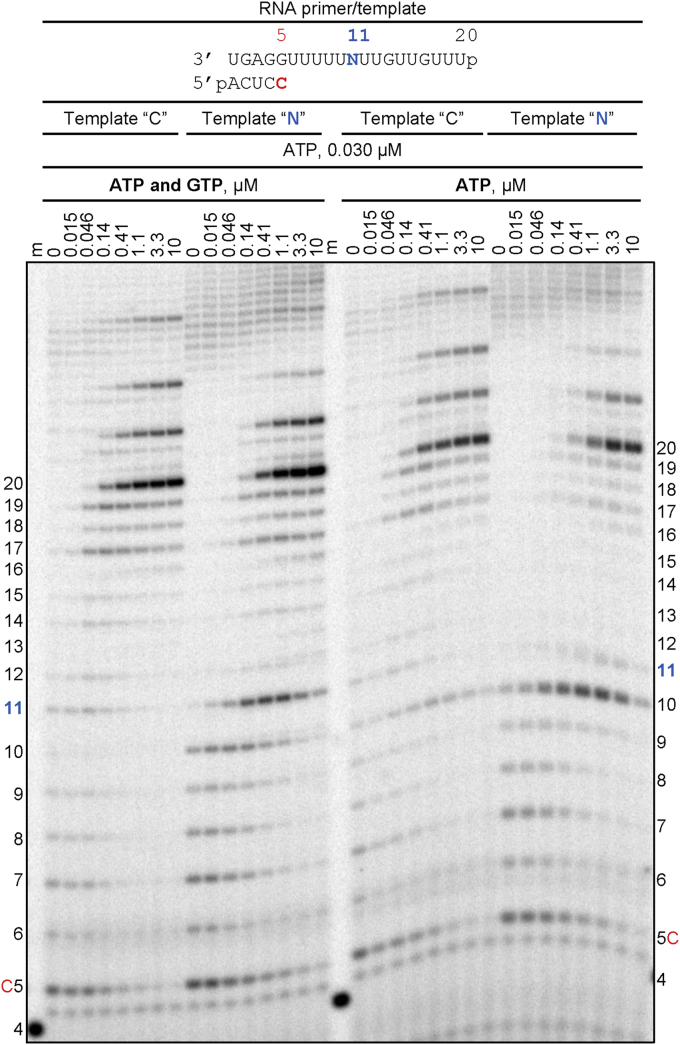
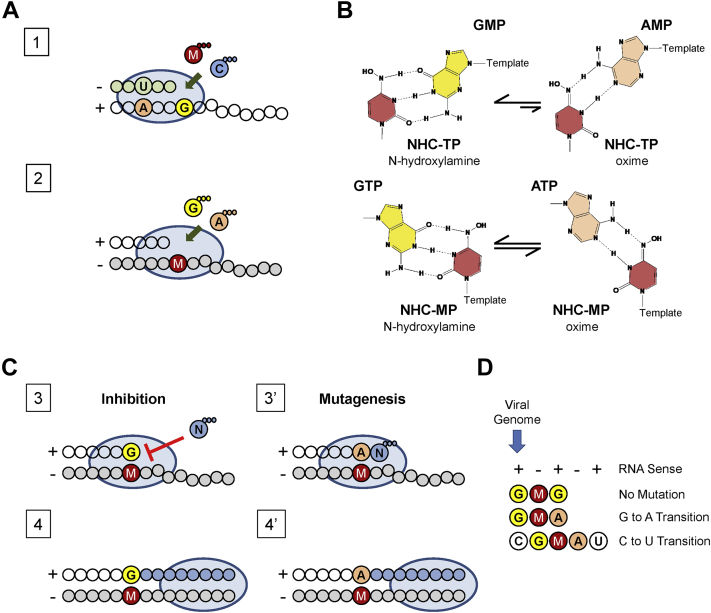
The RNA-dependent RNA polymerase of the severe acute respiratory syndrome coronavirus 2 is an important target in current drug development efforts for the treatment of coronavirus disease 2019. Molnupiravir is a broad-spectrum antiviral that is an orally bioavailable prodrug of the nucleoside analogue β-D-N4-hydroxycytidine (NHC). Molnupiravir or NHC can increase G to A and C to U transition mutations in replicating coronaviruses. These increases in mutation frequencies can be linked to increases in antiviral effects; however, biochemical data of molnupiravir-induced mutagenesis have not been reported. Here we studied the effects of the active compound NHC 5'-triphosphate (NHC-TP) against the purified severe acute respiratory syndrome coronavirus 2 RNA-dependent RNA polymerase complex. The efficiency of incorporation of natural nucleotides over the efficiency of incorporation of NHC-TP into model RNA substrates followed the order GTP (12,841) > ATP (424) > UTP (171) > CTP (30), indicating that NHC-TP competes predominantly with CTP for incorporation. No significant inhibition of RNA synthesis was noted as a result of the incorporated monophosphate in the RNA primer strand. When embedded in the template strand, NHC-monophosphate supported the formation of both NHC:G and NHC:A base pairs with similar efficiencies. The extension of the NHC:G product was modestly inhibited, but higher nucleotide concentrations could overcome this blockage. In contrast, the NHC:A base pair led to the observed G to A (G:NHC:A) or C to U (C:G:NHC:A:U) mutations. Together, these biochemical data support a mechanism of action of molnupiravir that is primarily based on RNA mutagenesis mediated via the template strand.
Keywords: Covid-19; RNA-dependent RNA polymerase; SARS-CoV-2; antiviral agent; coronavirus; drug development; mutagen; nucleoside analogue.
Copyright © 2021 The Authors. Published by Elsevier Inc. All rights reserved.
Conflict of interest statement
Conflict of interest The authors declare that they have no conflicts of interest with the contents of this article.
Figures
References
-
- U.S. Food and Drug Administration . U.S. Food and Drug Administration; Silver Spring, MD: 2020. Fact Sheet for Health Care Providers Emergency Use Authorization (EUA) of Remdesivir (GS-5734TM)
-
- U.S. Food and Drug Administration . U.S. Food and Drug Administration; Silver Spring, MD: 2020. Fact Sheet for Health Care Providers Emergency Use Authorization (EUA) of Casirivimab and Imdevimab.
-
- Vasudevan N., Ahlqvist G.P., McGeough C.P., Paymode D.J., Cardoso F.S.P., Lucas T., Dietz J.P., Opatz T., Jamison T.F., Gupton F.B., Snead D.R. A concise route to MK-4482 (EIDD-2801) from cytidine. Chem. Commun. (Camb.) 2020;56:13363–13364. - PubMed
-
- Stuyver L.J., Whitaker T., McBrayer T.R., Hernandez-Santiago B.I., Lostia S., Tharnish P.M., Ramesh M., Chu C.K., Jordan R., Shi J., Rachakonda S., Watanabe K.A., Otto M.J., Schinazi R.F. Ribonucleoside analogue that blocks replication of bovine viral diarrhea and hepatitis C viruses in culture. Antimicrob. Agents Chemother. 2003;47:244–254. - PMC - PubMed
Publication types
MeSH terms
Substances
Grants and funding
LinkOut - more resources
Full Text Sources
Other Literature Sources
Medical
Miscellaneous
