


A novel swine model of the acute respiratory distress syndrome using clinically relevant injury exposures
- PMID: 33991456
- PMCID: PMC8123544
- DOI: 10.14814/phy2.14871
A novel swine model of the acute respiratory distress syndrome using clinically relevant injury exposures
Abstract
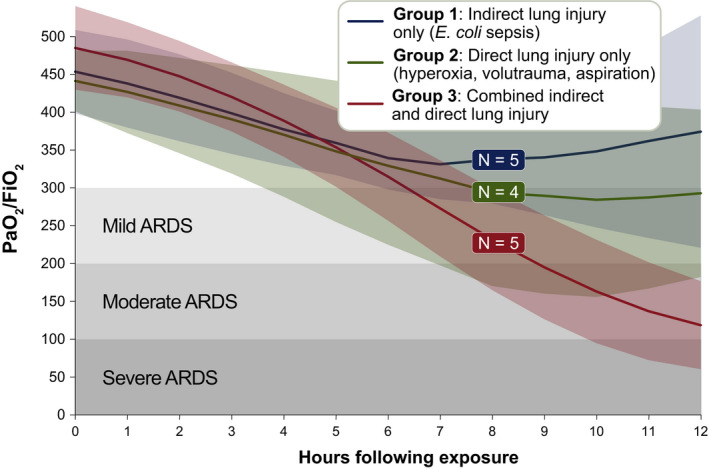
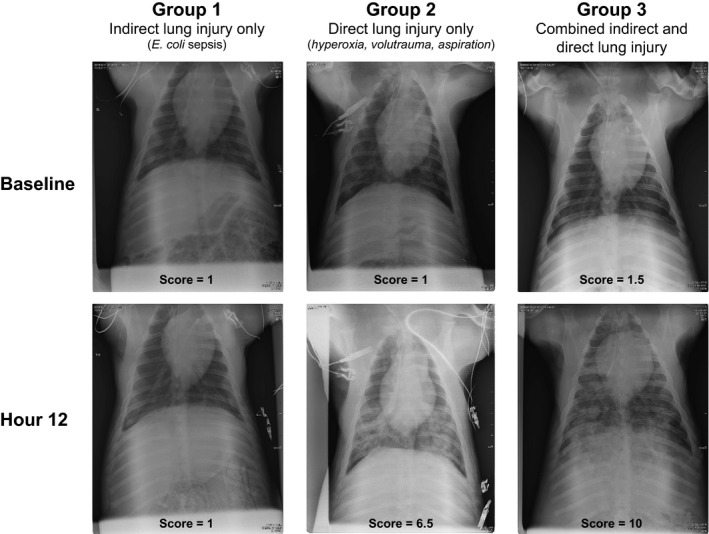
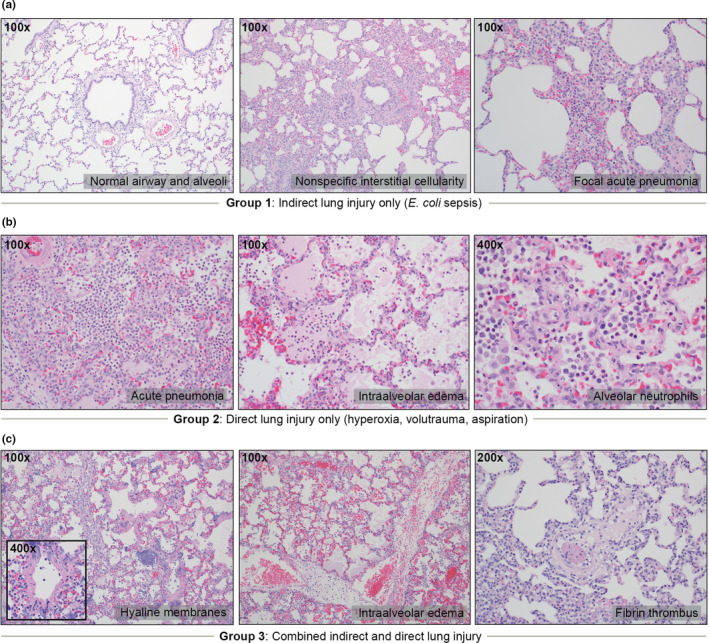
To date, existing animal models of the acute respiratory distress syndrome (ARDS) have failed to translate preclinical discoveries into effective pharmacotherapy or diagnostic biomarkers. To address this translational gap, we developed a high-fidelity swine model of ARDS utilizing clinically relevant lung injury exposures. Fourteen male swine were anesthetized, mechanically ventilated, and surgically instrumented for hemodynamic monitoring, blood, and tissue sampling. Animals were allocated to one of three groups: (1) Indirect lung injury only: animals were inoculated by direct injection of Escherichia coli into the kidney parenchyma, provoking systemic inflammation and distributive shock physiology; (2) Direct lung injury only: animals received volutrauma, hyperoxia, and bronchoscope-delivered gastric particles; (3) Combined indirect and direct lung injury: animals were administered both above-described indirect and direct lung injury exposures. Animals were monitored for up to 12 h, with serial collection of physiologic data, blood samples, and radiographic imaging. Lung tissue was acquired postmortem for pathological examination. In contrast to indirect lung injury only and direct lung injury only groups, animals in the combined indirect and direct lung injury group exhibited all of the physiological, radiographic, and histopathologic hallmarks of human ARDS: impaired gas exchange (mean PaO2 /FiO2 ratio 124.8 ± 63.8), diffuse bilateral opacities on chest radiographs, and extensive pathologic evidence of diffuse alveolar damage. Our novel porcine model of ARDS, built on clinically relevant lung injury exposures, faithfully recapitulates the physiologic, radiographic, and histopathologic features of human ARDS and fills a crucial gap in the translational study of human lung injury.
Keywords: acute lung injury; acute respiratory distress syndrome; critical care; diffuse alveolar damage; direct lung injury; indirect lung injury; porcine models; sepsis; septic shock.
© 2021 The Authors. Physiological Reports published by Wiley Periodicals LLC on behalf of The Physiological Society and the American Physiological Society.
Figures
References
-
- Bernard, G. R. , Artigas, A. , Brigham, K. L. , Carlet, J. , Falke, K. , Hudson, L. , Lamy, M. , LeGall, J. R. , Morris, A. , & Spragg, R. (1994). Report of the American‐European consensus conference on ARDS: Definitions, mechanisms, relevant outcomes and clinical trial coordination. The Consensus Committee. Intensive Care Medicine, 20, 225–232. - PubMed
-
- Dawson, H. D. , Loveland, J. E. , Pascal, G. , Gilbert, J. G. , Uenishi, H. , Mann, K. M. , Sang, Y. , Zhang, J. , Carvalho‐Silva, D. , Hunt, T. , Hardy, M. , Hu, Z. , Zhao, S. H. , Anselmo, A. , Shinkai, H. , Chen, C. , Badaoui, B. , Berman, D. , Amid, C. , … Tuggle, C. K. (2013). Structural and functional annotation of the porcine immunome. BMC Genomics, 14, 332. 10.1186/1471-2164-14-332 - DOI - PMC - PubMed
Publication types
MeSH terms
Grants and funding
- R01HL136141/NH/NIH HHS/United States
- K01 HL136687/HL/NHLBI NIH HHS/United States
- K01HL136687/NH/NIH HHS/United States
- R01LM013325/NH/NIH HHS/United States
- UL1TR002240/NH/NIH HHS/United States
- K23HL13064/NH/NIH HHS/United States
- UL1 TR002240/TR/NCATS NIH HHS/United States
- R35 GM136312/GM/NIGMS NIH HHS/United States
- K08AI128006/NH/NIH HHS/United States
- R35GM136312/NH/NIH HHS/United States
- R01GM111400/NH/NIH HHS/United States
- R01 HL136141/HL/NHLBI NIH HHS/United States
- R01GM112799/NH/NIH HHS/United States
- R01HL144599/NH/NIH HHS/United States
LinkOut - more resources
Full Text Sources
Other Literature Sources
Miscellaneous
