


Reduced virulence of the MARTX toxin increases the persistence of outbreak-associated Vibrio vulnificus in host reservoirs
- PMID: 33992647
- PMCID: PMC8191300
- DOI: 10.1016/j.jbc.2021.100777
Reduced virulence of the MARTX toxin increases the persistence of outbreak-associated Vibrio vulnificus in host reservoirs
Abstract
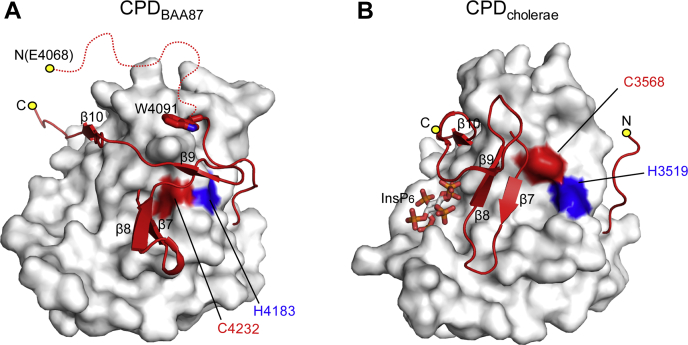
Opportunistic bacteria strategically dampen their virulence to allow them to survive and propagate in hosts. However, the molecular mechanisms underlying virulence control are not clearly understood. Here, we found that the opportunistic pathogen Vibrio vulnificus biotype 3, which caused an outbreak of severe wound and intestinal infections associated with farmed tilapia, secretes significantly less virulent multifunctional autoprocessing repeats-in-toxin (MARTX) toxin, which is the most critical virulence factor in other clinical Vibrio strains. The biotype 3 MARTX toxin contains a cysteine protease domain (CPD) evolutionarily retaining a unique autocleavage site and a distinct β-flap region. CPD autoproteolytic activity is attenuated following its autocleavage because of the β-flap region. This β-flap blocks the active site, disabling further autoproteolytic processing and release of the modularly structured effector domains within the toxin. Expression of this altered CPD consequently results in attenuated release of effectors by the toxin and significantly reduces the virulence of V. vulnificus biotype 3 in cells and in mice. Bioinformatic analysis revealed that this virulence mechanism is shared in all biotype 3 strains. Thus, these data provide new insights into the mechanisms by which opportunistic bacteria persist in an environmental reservoir, prolonging the potential to cause outbreaks.
Keywords: MARTX toxin; Vibrio vulnificus; cysteine protease domain; effector; infectious disease; virulence factor.
Copyright © 2021 The Authors. Published by Elsevier Inc. All rights reserved.
Conflict of interest statement
Conflicts of interest The authors declare that they have no conflicts of interest with the contents of this article.
Figures




References
Publication types
MeSH terms
Substances
LinkOut - more resources
Full Text Sources
Other Literature Sources
